



Magnesium improves ocular blood flow and may protect retinal ganglion cells through calcium-channel and vascular effects relevant to glaucoma. Small trials show improved visual fields in normal-tension glaucoma. This article reviews the ophthalmic evidence and where it remains preliminary.
The relationship between magnesium and eye health is one of the more underappreciated topics in nutritional ophthalmology. While most discussions about vision nutrients center on vitamins A, C, and E, or compounds like lutein and zeaxanthin, magnesium plays a quiet but structurally critical role in ocular blood flow, vascular tone, and neuronal signaling within the retina. For adults concerned with long-term visual function—particularly those monitoring glaucoma risk or managing age-related vascular changes—understanding what the evidence actually says about magnesium's ocular effects is worth the attention.
Magnesium and Eye Health: What the Research Landscape Shows
The clinical literature examining magnesium and eye health directly is modest but methodologically diverse. Human studies fall into three broad categories: epidemiological surveys of dietary or serum magnesium and glaucoma prevalence, small interventional trials in ocular hypertension, and mechanistic work in animal models of retinal ischemia. The quality of evidence varies significantly across these categories, and it is important not to overstate findings from any single study type.
Epidemiological data have produced the most consistent signal. Several large observational studies have reported inverse associations between dietary magnesium intake and primary open-angle glaucoma risk, meaning individuals with higher magnesium consumption tend to show lower incidence of the disease. However, these studies cannot establish causality. Confounding variables—including overall diet quality, physical activity, and concurrent intake of other vascular-supportive nutrients—make it impossible to isolate magnesium as the protective factor. As DiNicolantonio et al. (2018) noted in their broader review of subclinical magnesium deficiency, population-level associations with cardiovascular and microvascular outcomes are suggestive but require interventional confirmation.
Randomized controlled trials specifically targeting ocular endpoints are scarce. Most human studies to date are small-scale, short-duration, and use surrogate markers such as ocular blood flow or intraocular pressure rather than clinical outcomes like visual field progression. Animal studies, by contrast, are more plentiful. In rodent models of retinal ganglion cell injury, magnesium has demonstrated neuroprotective effects, but translation to human glaucoma remains speculative.
How Magnesium Supports Ocular Blood Flow and Retinal Function
The biological rationale for why magnesium and eye health are linked rests on well-characterized vascular and cellular mechanisms. Magnesium is a cofactor for over 300 enzymatic reactions and functions as a natural calcium channel antagonist. In the context of the eye, this property is particularly relevant.
First, magnesium regulates vascular tone in the ophthalmic artery and its branches, including the central retinal artery and posterior ciliary arteries that supply the optic nerve head. By antagonizing voltage-gated calcium channels in vascular smooth muscle, magnesium promotes vasodilation. In theory, improved blood flow to the optic nerve could support the metabolic demands of retinal ganglion cells, which are exquisitely sensitive to ischemic stress. This mechanism is conceptually similar to magnesium's established role in systemic blood pressure regulation, where modest supplementation has been associated with small reductions in both systolic and diastolic pressure. Readers interested in that broader cardiovascular context may find our coverage of magnesium and blood pressure relevant.
Second, magnesium modulates glutamate receptor activity. Excessive glutamatergic signaling is implicated in retinal ganglion cell excitotoxicity, a key pathophysiological process in glaucomatous neurodegeneration. Magnesium blocks NMDA receptor channels in a voltage-dependent manner, which in preclinical models has been shown to reduce neuronal calcium overload and downstream apoptotic signaling. Again, this is based on preclinical evidence, and whether oral magnesium supplementation achieves sufficient retinal tissue concentrations to produce this effect in humans is unknown.
Third, magnesium contributes to nitric oxide bioavailability. Nitric oxide is a critical mediator of ocular blood flow autoregulation. Low magnesium status has been associated with increased oxidative stress and endothelial dysfunction, both of which impair nitric oxide signaling. Gröber et al. (2015) summarized evidence indicating that magnesium deficiency promotes vascular dysfunction through multiple intersecting pathways, including oxidative stress and inflammatory signaling.
Magnesium Forms, Dosing, and Ocular Relevance
Not all magnesium preparations are equivalent in terms of bioavailability or tolerability. For readers considering supplementation in the context of magnesium and eye health, the form matters.
| Form | Elemental Mg per typical dose | Bioavailability estimate | Gastrointestinal tolerability | Notes |
|---|---|---|---|---|
| Magnesium glycinate | 100–200 mg | High | Excellent | Chelation with glycine enhances absorption; minimal laxative effect |
| Magnesium citrate | 150–300 mg | Moderate-high | Good | Well-studied; mild osmotic effect at higher doses |
| Magnesium oxide | 400 mg | Low (~4%) | Poor | Inexpensive but poorly absorbed; significant diarrhea risk |
| Magnesium chloride | 200–400 mg | Moderate | Moderate | Used in some transdermal preparations; limited oral data |
For systemic vascular support—and by extension, potential ocular benefit—glycinate and citrate forms are generally preferred in clinical practice due to superior absorption profiles. The glycinate chelate, in particular, is well tolerated at doses that provide meaningful elemental magnesium without the gastrointestinal side effects that limit adherence to oxide or even citrate formulations.
There is no established ocular-specific magnesium dose. General supplementation trials in adults have used elemental magnesium in the range of 200–400 mg daily. In the context of sleep and recovery, Abbasi et al. (2012) used 500 mg of magnesium oxide (providing roughly 300 mg elemental magnesium) in elderly adults with insomnia and reported improvements in sleep efficiency and melatonin regulation. Whether similar dosing affects ocular hemodynamics has not been tested in controlled trials.
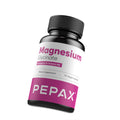
PEPAX Magnesium Glycinate with Vitamin C & D3 provides magnesium in the glycinate form, which aligns with the absorption and tolerability considerations above. The inclusion of vitamin D3 is relevant contextually: vitamin D receptor expression has been identified in retinal tissue, and low vitamin D status has been independently associated with glaucoma risk in some observational studies, though the evidence remains inconsistent.
Who Benefits Most from Magnesium for Eye Health
The populations in whom the magnesium and eye health connection is most biologically plausible—if not yet proven—share common vascular or metabolic risk profiles.
Individuals with systemic hypertension or borderline blood pressure. Ocular perfusion pressure is partially dependent on systemic blood pressure. Because magnesium has a modest, evidence-supported effect on vascular tone and blood pressure regulation, adults with untreated or suboptimally controlled hypertension may represent a group where magnesium repletion could theoretically support both systemic and ocular vascular health. DiNicolantonio et al. (2018) argued that subclinical magnesium deficiency is widespread and contributes to cardiovascular disease burden, a framework that extends naturally to microvascular beds including the retina.
Adults with diagnosed glaucoma or ocular hypertension. While no RCT has demonstrated that magnesium supplementation slows visual field loss, the mechanistic rationale—improved optic nerve head perfusion and potential neuroprotection—is sufficiently coherent that some clinicians discuss magnesium status with patients as part of a broader vascular risk assessment. This remains speculative and should not replace standard-of-care intraocular pressure management.
Older adults with poor dietary magnesium intake. Dietary surveys consistently show that a substantial proportion of adults over 60 consume less than the recommended dietary allowance for magnesium. Given that glaucoma prevalence rises with age, and that low magnesium status is associated with vascular dysfunction, this demographic represents a plausible target for dietary or supplemental intervention—though again, direct ocular outcome data are lacking.
Individuals with high digital screen exposure experiencing eye fatigue. While not directly a glaucoma-related concern, vascular dysregulation and ciliary muscle fatigue contribute to digital eye strain. Some readers exploring ocular nutrition broadly may also be interested in our article on hydrogen water and eye fatigue, which examines molecular hydrogen's antioxidant effects in the context of screen-induced oxidative stress.
Practical Takeaways on Magnesium and Eye Health
- Evidence quality is limited. Most human studies on magnesium and eye health are observational or small-scale; no large RCT has tested magnesium supplementation against glaucoma progression as a primary endpoint.
- Mechanisms are biologically plausible. Magnesium's roles in vascular tone regulation, NMDA receptor modulation, and nitric oxide bioavailability provide a coherent rationale for ocular benefit, but this is based on preclinical evidence and extrapolation from systemic vascular data.
- Form matters for absorption. Magnesium glycinate and citrate offer superior bioavailability compared to oxide, with glycinate showing the best gastrointestinal tolerability.
- Dosing for general vascular support ranges from 200–400 mg elemental magnesium daily. No ocular-specific dose has been established.
- Do not replace standard glaucoma care. Magnesium should be viewed as a potential adjunct within a broader vascular health strategy, not a substitute for intraocular pressure-lowering therapy or regular ophthalmologic monitoring.
- Consider broader ocular nutrition. Compounds that support cellular energy metabolism in retinal tissues—such as NMN, which has been studied for NAD+ replenishment in photoreceptor and retinal ganglion cell models—may complement a magnesium-focused approach. Our article on NMN and eye health covers that evidence separately.
The Bottom Line on Magnesium and Eye Health
The connection between magnesium and eye health is mechanistically compelling but clinically unfinished. Magnesium's established roles in vascular regulation and neuronal protection provide a strong biological foundation for hypothesizing ocular benefit, particularly in glaucoma-related perfusion and neurodegeneration. However, the human evidence base remains thin: most studies are small, observational, or reliant on surrogate endpoints. For now, maintaining adequate magnesium status through diet or well-absorbed supplementation represents a reasonable, low-risk component of a broader strategy for vascular and visual health—not a proven intervention for preventing or treating eye disease. Adults concerned about glaucoma risk should prioritize regular comprehensive eye examinations and evidence-based pressure management, with nutrition as a supporting consideration rather than a primary therapy.
References
- Abbasi B, et al. "The effect of magnesium supplementation on primary insomnia in elderly: A double-blind placebo-controlled clinical trial." Journal of Research in Medical Sciences. 2012;17(12):1161–1169. [Source]
- Boyle NB, et al. "The Effects of Magnesium Supplementation on Subjective Anxiety and Stress — A Systematic Review." Nutrients. 2017;9(5):429. [Source]
- Gröber U, et al. "Magnesium in Prevention and Therapy." Nutrients. 2015;7(9):8199–8226. [Source]
- DiNicolantonio JJ, et al. "Subclinical magnesium deficiency: a principal driver of cardiovascular disease and a public health crisis." Open Heart. 2018;5(1):e000668. [Source]
- Tarleton EK, et al. "Role of magnesium supplementation in the treatment of depression: A randomized clinical trial." PLOS ONE. 2017;12(6):e0180067. [Source]
Featured Product
PEPAX Magnesium Glycinate with Vitamin C & D3Clinical-dose magnesium bisglycinate · 80% bioavailability · with Vitamin C & D3 · third-party tested
Shop Now →