

Introduction: The Supplement Quality Problem
In 2023, researchers published a study in JAMA Network Open analyzing 30 melatonin gummy products purchased off retail shelves. Only 3 of the 30 products contained melatonin within 10% of their labeled dose. Four products had double the labeled amount. One contained CBD not listed on the label. Several others contained compounds not identified at all (Cohen et al., 2023).
This result is not an anomaly. A 2013 study by the same research group found that of 44 herbal supplements tested, 59% contained plant species not listed on the label, and 33% contained no trace of the advertised plant (Newmaster et al., BMC Medicine).
The dietary supplement industry in 2026 remains largely self-regulated. While the FDA has authority over supplements through the Dietary Supplement Health and Education Act (DSHEA) of 1994, the agency does not pre-approve supplements for safety or efficacy before they reach the market. This reality makes third-party verification the single most important factor consumers should evaluate before purchasing any supplement.
Part 1: The Regulatory Framework — What the FDA Does and Does Not Do
What the FDA Requires
Under DSHEA and subsequent amendments, dietary supplement manufacturers must:
- Adhere to cGMP (current Good Manufacturing Practices) as defined in 21 CFR Part 111
- Ensure products are accurately labeled (identity, purity, strength, composition)
- Report serious adverse events to the FDA within 15 business days
- Not make drug claims (cannot claim to "treat," "cure," or "prevent" disease)
- Submit structure/function claim notifications within 30 days of first marketing
What the FDA Does NOT Do
- Pre-approve supplements before they are sold
- Routinely test finished products for purity or potency
- Verify that ingredients match the label
- Certify manufacturing facilities unless they register for inspection voluntarily
The critical gap: A supplement can legally reach the market without any independent verification that it contains what the label claims. This is why third-party certification exists — to fill the verification gap that regulation does not cover.
Part 2: cGMP — The Legal Baseline
cGMP (21 CFR Part 111) establishes the minimum manufacturing standards for dietary supplements in the United States. A cGMP-compliant facility must:
| Requirement | What It Means |
|---|---|
| Identity testing | Every incoming raw material must be tested to verify it is what the supplier claims |
| Purity testing | Raw materials must be tested for contaminants (heavy metals, microbes, pesticides) |
| Strength verification | Finished products must contain the labeled amount of each active ingredient |
| Batch records | Every production batch must have a documented manufacturing record showing each step |
| Written SOPs | Standard Operating Procedures must exist for every process — from cleaning to packaging |
| Stability testing | Products must maintain potency through their labeled expiration date |
| Complaint handling | A documented system for receiving, investigating, and resolving quality complaints |
Important: cGMP compliance is mandatory under federal law, but the FDA only inspects facilities periodically. A manufacturer can claim cGMP compliance without current verification. The most reliable indicator of actual cGMP adherence is whether the facility has been registered with and inspected by NSF International or UL Solutions — organizations that perform physical facility audits against 21 CFR Part 111 standards.
Part 3: Third-Party Certification — The Real Quality Signal
Third-party certification means an independent organization — one with no financial stake in the sale of the product — has tested the finished product and verified label claims. The major certifiers operate differently, and knowing the distinctions helps you interpret what each seal means.
NSF International: NSF/ANSI 173 — Dietary Supplements
NSF certification under NSF/ANSI 173 is the most comprehensive for sports and performance supplements. The NSF Certified for Sport program includes:
- Finished product testing for 280+ banned substances (WADA/pro-sport panel)
- Facility GMP audit (physical inspection, not paper review)
- Label claim verification (identity, potency, purity)
- Ongoing surveillance: random retail purchase and re-testing of certified products
NSF is the certifier used by the NFL, MLB, NHL, and US Olympic Committee for supplement safety verification.
USP (United States Pharmacopeia) — Dietary Supplement Verification Program
USP sets legally recognized quality standards for medicines and supplements. The USP Verified Mark confirms:
- Product contains the ingredients listed on the label, in the declared potency and amounts
- Product does not contain harmful levels of specified contaminants (heavy metals, pesticides, microbes)
- Product has been manufactured according to FDA cGMP using sanitary and well-controlled procedures
- Product will break down and release into the body within a specified amount of time (dissolution)
Eurofins — ISO/IEC 17025 Laboratory Testing
Eurofins Scientific is the world's largest food and supplement testing laboratory network, operating 900+ laboratories across 61 countries. Unlike NSF or USP, Eurofins does not maintain a consumer-facing certification seal. Instead, they provide ISO/IEC 17025-accredited analytical chemistry testing that brands use for internal quality control and transparency reporting. Key capabilities include:
- HPLC-MS/MS potency verification (quantifying active compounds to microgram precision)
- Heavy metal screening (lead, arsenic, cadmium, mercury) to ICH Q3D limits
- Microbial enumeration (aerobic plate count, yeast/mold, E. coli, Salmonella)
- Aflatoxin and pesticide residue screening
- Disintegration and dissolution testing
Brands that publish batch-specific Certificates of Analysis (CoAs) from Eurofins or equivalent labs are providing a higher level of transparency than brands that display a certification seal alone.
ConsumerLab.com — Retail Surveillance Testing
ConsumerLab.com purchases products from retail shelves (the same way consumers do), tests them in independent laboratories, and publishes quality reports. Unlike NSF or USP — which test products submitted by manufacturers — ConsumerLab's model catches products that may differ between the "inspection batch" and the "shelf batch." Limitations: only products ConsumerLab selects are tested, and full reports require a paid subscription.
Part 4: How to Evaluate a Supplement Brand in 2026
Use this 5-point checklist when evaluating any supplement you are considering:
1. Does the brand publish batch-specific Certificates of Analysis (CoAs)?
A CoA is a laboratory report for a specific production batch that verifies potency, purity, and contaminant testing results. Look for CoAs that include: the batch/lot number (matching what is printed on your product), the testing laboratory name (should be an independent ISO 17025-accredited lab like Eurofins, not the manufacturer's internal lab), actual numerical results for potency and contaminants (not pass/fail summaries), and the date of testing.
2. Is the manufacturing facility NSF or UL Solutions registered?
Facility registration means a physical GMP audit has been conducted. You can verify NSF facility registration at: nsf.org/certified/facility. You can verify UL GMP registration at: verify.ul.com.
3. Are label claims consistent with published research?
A quality brand will specify:
- The exact chemical form (e.g., "Magnesium Glycinate Chelate" not just "Magnesium")
- The elemental quantity (e.g., "200 mg elemental magnesium from 1,575 mg magnesium glycinate chelate")
- The serving size and daily dose that matches clinical trial dosages
- Non-active ingredients (excipients, flow agents, capsule material)
Warning signs: proprietary blends that hide individual ingredient amounts, "fairy dusting" — listing many ingredients at doses far below clinical thresholds for the appearance of comprehensiveness, and undisclosed "other ingredients" with no transparency.
4. Are the structure/function claims legal and measured?
Under DSHEA, supplements can make structure/function claims (e.g., "supports cardiovascular health") but not drug claims (e.g., "lowers blood pressure"). If a supplement claims to cure, treat, or prevent a disease, that is both illegal and a strong indicator the brand disregards regulatory compliance. Quality brands include the FDA disclaimer: "These statements have not been evaluated by the Food and Drug Administration. This product is not intended to diagnose, treat, cure, or prevent any disease."
5. Does the brand have a transparent supply chain?
Look for information about: country of origin for key raw materials, whether the manufacturer owns or audits upstream suppliers, and whether the brand discloses supplier names (rare but ideal — companies like Thorne and Pure Encapsulations are known for this level of transparency).
Part 5: Common Quality Issues by Supplement Category
Different supplement categories have different quality risks. Understanding these helps you focus scrutiny where it matters most.
| Category | Primary Quality Risk | What to Check |
|---|---|---|
| Botanicals / Herbs | Species substitution (wrong plant), adulteration with undeclared pharmaceuticals | HPLC or DNA barcoding on CoA to confirm plant species identity |
| Amino Acids / Minerals | Under-dosing, wrong chemical form, poor bioavailability | Elemental quantity verified, chelate form specified (e.g., glycinate vs oxide) |
| NMN / NAD+ Precursors | Degradation from improper handling (NMN is hygroscopic and heat-sensitive) | Stability testing data, opaque packaging, desiccant inclusion |
| Probiotics | CFU count at manufacturing vs expiry — most die-off occurs during shelf storage | CFU guaranteed at expiry, not at manufacturing; strain-specific identification |
| Hydrogen Water Tablets | H₂ concentration below label claim due to improper storage or poor tablet formulation | Dissolved H₂ concentration verified by dissolved hydrogen meter, not calculated from ingredients |
| Fish Oil / Omega-3 | Oxidation (rancidity), inaccurate EPA/DHA content | TOTOX value (total oxidation) on CoA — should be under 26 per GOED monograph |
Part 6: How PEPAX Approaches Quality
We build our quality control system around three principles: manufactured in cGMP-compliant facilities, verified by independent ISO 17025-accredited laboratories, and fully transparent from raw material to finished product.
Ingredient Sourcing
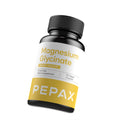
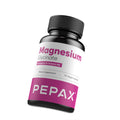
- Magnesium Glycinate Chelate: Sourced as fully reacted bisglycinate chelate (not a simple blend of magnesium oxide + glycine). Each batch includes an identity CoA confirming the chelate bond structure via FTIR spectroscopy.
- NMN (Beta-Nicotinamide Mononucleotide): Sourced from enzymatic synthesis (not chemical synthesis), which avoids residual solvents common in chemically synthesized NMN. Purity specification: 99%+ by HPLC at 254 nm.
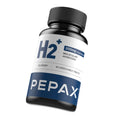
- Hydrogen Water Tablets: Formulated with elemental magnesium as the hydrogen-generating substrate. Each batch is tested for dissolved H₂ concentration at t=0, t=15min, and t=30min after dissolution to verify sustained release profile.
Finished Product Testing Protocol
Every finished product batch undergoes:
- Potency verification by HPLC-MS/MS (Eurofins or equivalent ISO 17025 lab)
- Heavy metal panel: lead (less than 0.5 ppm), arsenic (less than 1.0 ppm), cadmium (less than 0.5 ppm), mercury (less than 0.1 ppm)
- Microbial limits: TAMC (less than 10,000 CFU/g), TYMC (less than 100 CFU/g), absence of E. coli and Salmonella in 10g
- Disintegration testing: USP method (water at 37 degrees C, 30-minute limit)
Part 7: What to Ask Supplement Brands (Worksheet)
Here are direct questions you can email to any supplement company's customer support. If they provide clear, specific answers, it is a strong quality signal. If they deflect or provide vague responses, consider it a red flag:
- "Can you send me the Certificate of Analysis for lot number [printed on your bottle]?"
- "Which independent laboratory performed the finished product testing for this batch?"
- "Is your manufacturing facility currently registered with NSF International or UL Solutions for GMP compliance?"
- "What is the country of origin for your key active ingredients?"
- "What is the overage percentage for this product? (i.e., how much extra active ingredient is added to ensure the label claim is met through the expiration date?)"
Brands that answer all five questions completely and promptly are demonstrating the transparency that defines a quality supplement company.
Summary
The supplement industry places the final responsibility for quality verification on the consumer. Understanding the roles of cGMP (the mandatory baseline), third-party certifiers (NSF, USP — the voluntary quality signal), and independent laboratory testing (Eurofins, ConsumerLab — the analytical verification layer) gives you the framework to separate well-made products from marketing-driven ones.
Three rules to remember:
- cGMP compliance is required by law — but not routinely verified. Look for NSF or UL facility registration as proof.
- Third-party certification is voluntary — and the seal matters. NSF Certified for Sport is the strictest for athletes. USP Verified is the most stringent for general dietary supplements.
- Batch-specific CoAs from ISO 17025-accredited labs are the gold standard for transparency. A brand that publishes these is signaling confidence in its manufacturing quality.
The melatonin study from 2023 is not an exception — it is a symptom of an industry where verification is optional. Choose brands that make verification visible.
References
- Cohen, P. A., et al. (2023). Quantity of Melatonin and CBD in Melatonin Gummies Sold in the US. JAMA Network Open, 6(4), e238612.
- Newmaster, S. G., et al. (2013). DNA barcoding detects contamination and substitution in North American herbal products. BMC Medicine, 11, 222.
- FDA. (2024). Dietary Supplement Current Good Manufacturing Practices (cGMP) — 21 CFR Part 111. U.S. Food and Drug Administration.
- FDA. (1994). Dietary Supplement Health and Education Act (DSHEA). Public Law 103-417.
- NSF International. (2024). NSF/ANSI 173: Dietary Supplements — Certification Policies and Standards.
- USP. (2024). USP Dietary Supplement Verification Program — Requirements and Standards. United States Pharmacopeial Convention.
- Eurofins Scientific. (2024). ISO/IEC 17025:2017 Accreditation Scope — Dietary Supplement Testing Services.
- GOED. (2022). GOED Voluntary Monograph: Oxidation Standards for Omega-3 Oils. Global Organization for EPA and DHA Omega-3s.