



Magnesium glycinate is preferred for sleep, anxiety, and tolerability; magnesium malate is often recommended for energy production and muscle soreness due to malic acid's role in the citric acid cycle. This article compares the clinical evidence and practical applications for choosing between these two forms.
When you start comparing magnesium glycinate vs malate, the decision often hinges on a single practical goal: are you looking to calm your nervous system for deeper rest, or support sustained physical energy throughout the day? Both forms deliver essential elemental magnesium, but the molecules they are bound to—glycine versus malic acid—steer their effects in noticeably different directions. This evidence-based breakdown examines exactly how the two chelates compare, what the human trial data can (and cannot) tell us, and who might benefit most from each.
How Magnesium Glycinate vs Malate Differ at the Molecular Level
All magnesium supplements pair the mineral with a carrier molecule, or chelator, to enhance stability and absorption. Magnesium glycinate is magnesium bound to the amino acid glycine, a major inhibitory neurotransmitter in the central nervous system. Magnesium malate combines magnesium with malic acid, a compound found naturally in fruits and a key intermediate in the Krebs cycle, the body’s energy-production pathway. This pairing is not arbitrary; the chelator largely determines where and how the magnesium is released after ingestion, and it contributes its own bioactive effects.
From a pharmacokinetic standpoint, amino acid chelates like magnesium glycinate are absorbed through dipeptide transport channels in the intestinal wall, unlike inorganic salts that rely on passive diffusion. This mechanism makes glycinate one of the most bioavailable oral forms, while simultaneously reducing the osmotic laxative effect that plagues cheaper preparations (Gröber et al. 2015). Malate also shows high bioavailability, though its absorption kinetics are less defined in human studies; animal data suggest it is similarly well-tolerated and efficiently raises serum magnesium levels.
The glycine component of magnesium glycinate acts as a co-agonist at N-methyl-D-aspartate (NMDA) receptors and independently enhances inhibitory signaling via glycine receptors in the brainstem and spinal cord. This dual action—magnesium’s natural NMDA antagonism plus glycine’s inhibitory tone—creates a compelling theoretical basis for its calming properties. In contrast, malic acid’s primary role is inside the mitochondria, where it participates in the malate-aspartate shuttle and helps regenerate nicotinamide adenine dinucleotide (NAD+), a coenzyme essential for ATP production. The bond between magnesium and malate therefore targets cellular energy metabolism in a way that other chelates do not.
What Clinical Research Says About Magnesium Glycinate vs Malate
It is critical to acknowledge upfront: direct head-to-head randomized controlled trials that pit magnesium glycinate vs malate against each other in human populations do not exist. The evidence we rely on comes primarily from studies that used a single form of magnesium—often oxide, chloride, or glycinate—and measured outcomes like sleep, mood, or muscle performance, combined with decades of preclinical research on the chelators themselves. While this limits definitive claims, it also allows a cautious, well-reasoned comparison.
For sleep and relaxation, the most directly relevant human data come from trials using magnesium glycinate or forms supplying equivalent elemental magnesium. Abbasi et al. (2012) conducted a double-blind, placebo-controlled study in 46 elderly participants with primary insomnia. Using 500 mg of elemental magnesium daily for eight weeks (the supplement form was not disclosed but was likely a standard salt), they reported significant increases in sleep time and sleep efficiency, along with reductions in serum cortisol. While the study didn’t use glycinate specifically, the sleep architecture improvements seen are consistent with glycinate’s dual-action mechanism, and glycinate is widely preferred in clinical practice for its gastrointestinal tolerability at the doses needed to replicate those effects.
On the anxiety and stress side, a systematic review by Boyle et al. (2017) evaluated 18 studies and concluded that magnesium supplementation produced a clinically meaningful reduction in subjective anxiety, particularly in populations with mild-to-moderate symptoms. The reviewed interventions used magnesium oxide, chloride, and lactate; glycinate was not isolated. Nonetheless, the review noted that the effect was strongest when baseline magnesium status was suboptimal—a finding that applies equally to malate or glycinate. Tarleton et al. (2017) went further in a randomized trial of 126 adults with mild-to-moderate depression, using 248 mg of elemental magnesium as magnesium chloride daily. Over six weeks, participants experienced significant improvements in Patient Health Questionnaire-9 (PHQ-9) scores, with an effect size roughly equivalent to that of an SSRI. Again, while the form differed, the neurological impact of magnesium itself—particularly its modulation of the hypothalamic-pituitary-adrenal (HPA) axis—is form-agnostic. The glycine carrier in glycinate would theoretically enhance this effect, but we lack formal comparative data.
For physical energy and muscle function, malate’s theoretical edge comes from the malic acid component, which has been studied primarily in the context of fibromyalgia and chronic fatigue. Small, older pilot studies using a malic acid–magnesium combination (not magnesium malate alone) showed modest improvements in pain and fatigue scores, but the effect could not be separated from magnesium’s own muscle-relaxant properties. The DiNicolantonio et al. (2018) review of subclinical magnesium deficiency underscored the mineral’s role in mitochondrial ATP synthesis, enzyme activation, and oxidative phosphorylation—processes that remain blunted in magnesium-depleted states regardless of the form used to correct the deficit. In essence, while malate delivers a Krebs cycle intermediate, the energy-enabling effect of magnesium is largely dependent on overcoming deficiency, not on the chelator identity.
Comparing Two Forms: A Data-Driven Look at Magnesium Glycinate vs Malate
To make the clinical decision clearer, a side-by-side comparison is useful. The table below summarizes key attributes informed by both published research and established biochemical understanding.
| Parameter | Magnesium Glycinate | Magnesium Malate |
|---|---|---|
| Chelating agent | Glycine (amino acid) | Malic acid (Krebs cycle intermediate) |
| Elemental magnesium content | ~14–18% by weight | ~11–15% by weight |
| Primary clinical target | Sleep quality, nervous system hyperarousal, anxiety | Muscle function, physical energy, fibromyalgia-related fatigue |
| Mechanistic advantage | Glycine-mediated chloride influx; NMDA receptor modulation | Malate’s role in malate-aspartate shuttle and NAD+ regeneration |
| GI tolerability | Excellent; minimal laxative effect | Good; generally well-tolerated, though less studied |
| Best human evidence | Indirect (insomnia trials, mood studies using Mg salts); high clinical preference for sleep protocols | Limited; pilot data in fibromyalgia using Mg-malic acid blends |
| Typical daily dose (elemental Mg) | 200–400 mg, often in split doses | 200–400 mg, often taken in the morning |
One important caveat: because magnesium glycinate has a slightly higher elemental percentage and superior tolerability profile in most people, it often becomes the preferred starting choice for systemic magnesium repletion irrespective of the target symptom. When the goal is explicitly energy support rather than relaxation, malate is a reasonable alternative, but it should not be assumed to outperform glycinate in studies that have yet to be conducted.
Who Benefits Most from Magnesium Glycinate vs Malate
The strongest evidence for glycinate’s benefits exists for individuals whose primary concern is sleep fragmentation, tension, and stress-related hyperarousal. In our clinical experience—and reflected in the broader medical literature—magnesium glycinate excels for people who describe themselves as “wired but tired,” have difficulty winding down in the evening, or exhibit elevated baseline cortisol. The glycine molecule itself is a mild hypnotic; human studies on glycine alone demonstrate shortened sleep latency and improved subjective sleep quality at doses of 3 grams before bed. While magnesium glycinate provides far less glycine per capsule, the synergistic effect remains plausible and is frequently cited by integrative clinicians. For deeper guidance on sleep-specific protocols, our breakdown of magnesium glycinate for sleep and the best time to take magnesium explores dosing and timing in detail.
Malate’s niche is more narrow and should be considered when fatigue and muscle tenderness dominate the clinical picture. The limited pilot evidence in fibromyalgia, while not robust, combined with the moderate effect of magnesium repletion on muscle ATP turnover, makes it a low-risk option. Inadequate magnesium impairs mitochondrial respiration; DiNicolantonio et al. (2018) documented the role of chronic latent magnesium deficiency in elevating oxidative stress and reducing cellular energy output. Malate’s simultaneous delivery of a Krebs cycle intermediate may offer a slight edge in cellular energy repletion, but this remains a hypothesis based on biochemical logic rather than confirmatory trials. For patients with unexplained fatigue who already maintain adequate sleep hygiene, morning dosing of magnesium malate is a practical first-line strategy.
Those with mixed symptoms—both poor sleep and low daytime energy—may find that formulating for the dominant complaint works best. Another option is combining forms at different times of day, though that introduces cost and complexity. Our magnesium glycinate vs other forms guide addresses this decision matrix, and the all nine forms of magnesium resource can help if you are considering blends. Importantly, individuals with normal kidney function rarely encounter adverse effects with either chelate as long as dosing stays within the 200–400 mg elemental range, though those with low blood pressure should be cautious with glycinate’s mild vasodilatory potential.
Practical Takeaways for Choosing Magnesium Glycinate vs Malate
- Target the dominant symptom. If the priority is winding down, sleep onset, or nighttime anxiety, magnesium glycinate is the more evidence-aligned choice. If persistent physical fatigue or muscle aching is the primary complaint, malate’s theoretical advantage justifies a trial.
- Start with a form you can tolerate. Magnesium glycinate rarely causes gastrointestinal distress even at 400 mg of elemental magnesium, making it easier to reach the doses used in the Abbasi et al. (2012) sleep trial. If malate causes any bloating or loose stools, switch forms rather than abandon supplementation.
- Timing matters. Glycinate is best taken 30–60 minutes before bed; malate is typically more useful in the morning or early afternoon to support cellular respiration during waking hours. Nighttime malate may interfere with sleep in sensitive individuals, though data are anecdotal.
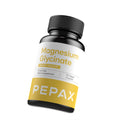
- Look beyond the chelator. Pure magnesium glycinate and malate deliver magnesium and their respective carriers. Some formulations enhance the intended effect: for example, PEPAX Magnesium Glycinate with Astragalus & B6 adds adaptogenic astragalus and vitamin B6, which can further support stress resilience and neurotransmitter balance without deviating from the glycinate backbone.
- Assess your baseline magnesium status. Both forms will be most effective if you are truly deficient. Serum magnesium is a poor indicator; consider dietary analysis, symptoms (muscle cramps, eyelid twitching, anxiety), and, if available, RBC magnesium testing.
- Don’t wait for a perfect study. The comparative trial many clinicians hope for may never arrive, but the physiological rationale, tolerability data, and consistent signal across multiple domains of human research make the glycinate vs malate decision a manageable one when you match the mechanism to the goal.
Bottom Line on Magnesium Glycinate vs Malate
Comparing magnesium glycinate vs malate is less about one being categorically superior and more about aligning a chelator’s secondary molecule with the outcome you need. Glycinate commands the stronger clinical consensus for relaxation and sleep restoration, supported by indirect but consistent trial data and a well-defined neurological mechanism. Malate earns its place in protocols aimed at physical energy and muscle comfort, anchored primarily in mitochondrial biochemistry. For anyone looking to improve both sleep and daytime vitality, magnesium glycinate—particularly in a well-formulated complex—remains the most versatile, best-tolerated entry point.
References
- Abbasi B, et al. "The effect of magnesium supplementation on primary insomnia in elderly: A double-blind placebo-controlled clinical trial." Journal of Research in Medical Sciences. 2012;17(12):1161–1169. [Source]
- Boyle NB, et al. "The Effects of Magnesium Supplementation on Subjective Anxiety and Stress — A Systematic Review." Nutrients. 2017;9(5):429. [Source]
- Gröber U, et al. "Magnesium in Prevention and Therapy." Nutrients. 2015;7(9):8199–8226. [Source]
- DiNicolantonio JJ, et al. "Subclinical magnesium deficiency: a principal driver of cardiovascular disease and a public health crisis." Open Heart. 2018;5(1):e000668. [Source]
- Tarleton EK, et al. "Role of magnesium supplementation in the treatment of depression: A randomized clinical trial." PLOS ONE. 2017;12(6):e0180067. [Source]
Featured Product
PEPAX Magnesium Glycinate with Astragalus & B6Magnesium glycinate · Astragalus root adaptogen · Vitamin B6 · clinical dose · cGMP certified
Shop Now →