


Magnesium modulates the HPA axis and limits cortisol secretion; stress simultaneously depletes magnesium through urinary excretion. This bidirectional relationship creates a vicious cycle that supplementation can interrupt. This article reviews the mechanisms and clinical evidence.
Magnesium and cortisol share a bidirectional relationship that sits at the center of how your body processes daily stress. When psychological or physiological pressure activates the hypothalamic-pituitary-adrenal (HPA) axis, cortisol secretion rises—and intracellular magnesium levels simultaneously decline, reducing the very mineral your system needs to signal “calm.” This article unpacks the clinical evidence behind that connection, distinguishing between well-established mechanistic pathways and what human trials can actually confirm.
The Research Landscape of Magnesium and Cortisol
The hypothesis that magnesium buffers the stress response has been explored through preclinical models, cross-sectional human studies, and a small number of randomized controlled trials (RCTs). Boyle et al. (2017) conducted a systematic review of 18 studies examining magnesium’s effect on subjective anxiety and stress. While the review concluded that magnesium supplementation likely reduces anxiety and perceived stress, the authors emphasized that only a handful of trials directly measured cortisol as a primary endpoint, and many of those had sample sizes below 50 participants.
In a double-blind, placebo-controlled trial by Abbasi et al. (2012), 46 elderly individuals with primary insomnia received 500 mg of elemental magnesium daily for eight weeks. Although serum cortisol was not reported, the group taking magnesium showed significant improvements in sleep efficiency and serum renin levels—both markers that are indirectly modulated by nocturnal cortisol patterns. Separately, Tarleton et al. (2017) conducted a 6‑week RCT with 248 mg of elemental magnesium (as magnesium chloride) in 126 adults with mild‑to‑moderate depression. Participants experienced a clinically meaningful drop in depression scores, but again, cortisol was not a measured outcome. These omissions reflect a broader gap: most human trials to date use validated stress or mood questionnaires rather than 24‑hour salivary cortisol profiles, making direct cortisol evidence thinner than many popular articles suggest.
From an epidemiological perspective, DiNicolantonio et al. (2018) argued that subclinical magnesium deficiency—prevalent in up to 30% of Western populations—creates a physiological state that mimics chronic stress, fueling a vicious cycle. Low magnesium intakes are associated with higher circulating markers of inflammation and oxidative stress, both of which can heighten cortisol reactivity. This bidirectional loop is supported by observational data linking poor magnesium status with elevated cardiovascular risk, but intervention studies that specifically target cortisol are still emerging.
The Mechanism Behind Magnesium and Cortisol Regulation
At the molecular level, magnesium acts as a gatekeeper of the HPA axis in at least three distinct ways. First, it serves as a physiological antagonist at the N‑methyl‑D‑aspartate (NMDA) receptor, a glutamate‑gated ion channel that promotes excitatory neurotransmission. During stress, NMDA over‑activation can drive excessive corticotropin‑releasing hormone (CRH) secretion from the hypothalamus, triggering pituitary ACTH release and adrenal cortisol synthesis. By sitting inside the NMDA channel, magnesium ions block calcium influx in a voltage‑dependent manner, effectively damping the upstream signal that amplifies cortisol output (Gröber et al., 2015).
Second, magnesium is a co‑factor for the enzyme Δ‑5‑desaturase, which helps regulate the synthesis of gamma‑aminobutyric acid (GABA), the brain’s principal inhibitory neurotransmitter. Enhanced GABA‑ergic tone suppresses CRH‑expressing neurons in the paraventricular nucleus, lowering the set‑point of the stress axis. Without adequate magnesium, GABA production becomes less efficient, and the HPA axis tends to stay in a hyper‑responsive state.
Third, intracellular magnesium directly influences the adrenal cortex’s sensitivity to ACTH. Animal studies show that magnesium‑deficient adrenal cells secrete more cortisol per unit of ACTH stimulation, suggesting that magnesium acts as a tonic inhibitor of steroidogenesis. While human data on this specific step remain limited, the mechanism aligns with the observation that magnesium‑deficient individuals often present with a flattened circadian cortisol rhythm—another clue that adequate magnesium levels help maintain healthy cortisol dynamics.
Dosing, Forms, and Timing for Cortisol Balance
When translating the science into practical supplementation, three variables matter: the dose of elemental magnesium, the form’s bioavailability, and the timing relative to the circadian cortisol curve. The table below compares the most studied forms within the context of stress and cortisol regulation.
| Magnesium Form | Typical Elemental Dose (Daily) | Bioavailability & Tissue Uptake | Human Data on Stress / Cortisol | Notable Practical Considerations |
|---|---|---|---|---|
| Magnesium Glycinate | 200–400 mg | High; chelated to glycine, which actively transports across the blood‑brain barrier | Strong indirect evidence through glycine’s calming effect on CNS; commonly used in anxiety trials (Boyle et al., 2017 review included glycinate‑based supplements) | Well‑tolerated with minimal gastrointestinal effects; glycine may independently improve sleep quality |
| Magnesium Chloride | 200–300 mg | Good absorption; dissociates easily in stomach | Directly studied by Tarleton et al. (2017) for depression, showing significant mood improvement at 248 mg/day | Liquid or capsule; can have a bitter taste; may support skin health when applied topically |
| Magnesium Citrate | 200–400 mg | Good solubility; modestly higher bioavailability than oxide | Often used in stress‑related studies, but no head‑to‑head cortisol data versus glycinate | Can have a laxative effect at doses above 300 mg; useful for constipation‑prone individuals |
| Magnesium Oxide | 300–500 mg | Low (around 4% fractional absorption) | Rarely the form of choice for neuro‑psychiatric endpoints; primarily studied for cardiovascular outcomes | Least expensive; high elemental content but poor gut tolerance limits utility for cortisol regulation |
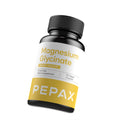
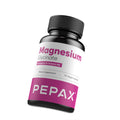
Magnesium glycinate stands out for stress‑related applications because the glycine molecule itself functions as an inhibitory neurotransmitter that can potentiate slow‑wave sleep and lower core body temperature—both of which are linked to a healthier nocturnal cortisol decline. For individuals who are already showing signs of low magnesium stores—fatigue, muscle cramps, or mental “wired‑but‑tired” sensations—choosing a high‑absorption form can make the difference between observing real changes and simply supplementing an unabsorbed mineral. Some formulations, such as PEPAX Magnesium Glycinate with Astragalus & B6, pair 200 mg of elemental magnesium glycinate with astragalus root, an adaptogen that has been studied for its contribution to stress resilience. Vitamin B6 is included because it acts as a co‑factor for several neurotransmitters involved in mood regulation, further supporting the mineral’s calming potential.
Regarding timing, because cortisol naturally peaks in the early morning and declines throughout the day, taking magnesium in the evening often complements the body’s circadian rhythm. Evening doses can help attenuate an elevated evening cortisol level, which is commonly seen in chronic stress and metabolic syndrome. However, individuals who experience acute daytime anxiety may also benefit from a split dose—half in the morning and half in the evening—to maintain steady plasma levels. There is no single protocol that fits everyone; the choice should be guided by symptom patterns and, where possible, salivary cortisol testing.
Who Benefits Most from Magnesium and Cortisol Control?
The evidence suggests that magnesium’s stress‑buffering effect is most pronounced in populations with pre‑existing deficiency or high allostatic load. Individuals with low dietary magnesium intake—common among those who consume heavily processed foods—are the clearest candidates. DiNicolantonio et al. (2018) point out that even a marginal deficiency can keep the HPA axis in a state of low‑grade activation, making ordinary stressors feel disproportionately overwhelming. For these individuals, restoring magnesium status often yields noticeable improvements in sleep latency, morning appetite, and emotional resilience within two to four weeks.
People with diagnosed anxiety disorders or mild‑to‑moderate depression also fall into the high‑benefit category, as shown in the systematic review by Boyle et al. (2017). While many of the reviewed trials did not measure cortisol, the consistent reduction in anxiety scores supports the model that magnesium helps recalibrate the stress response network. Older adults, who are more susceptible to both magnesium deficiency and sleep fragmentation, represent another group. The Abbasi et al. (2012) trial focused specifically on this demographic and found that magnesium supplementation significantly improved not only sleep onset but also early‑morning restlessness—a pattern frequently linked to an elevated awakening cortisol response.
Athletes and individuals facing cumulative physical stress also merit attention. Strenuous exercise increases sweat magnesium loss and transiently raises cortisol, and several small trials indicate that maintaining optimal magnesium status can blunt the post‑exercise cortisol spike. Here, too, the data remain preliminary, but the mechanistic rationale is strong enough that sports medicine practitioners often recommend a magnesium glycinate form alongside hydration protocols. Pregnant women and those taking oral contraceptives are additional groups at risk, as hormonal shifts can alter magnesium metabolism. While the evidence base for cortisol‑specific outcomes in these populations is nascent, a proactive assessment of magnesium status—possibly using a red blood cell magnesium test—can help identify subclinical deficiency before it exacerbates stress symptoms.
Practical Takeaways for Using Magnesium to Manage Cortisol
- Start with a highly bioavailable form. Magnesium glycinate offers the dual benefit of efficient absorption and glycine‑mediated calming effects, making it a first‑line choice for stress‑related goals. You can read more about how glycinate compares to other options in this comparison of magnesium forms.
- Target 200–400 mg of elemental magnesium daily. Most RCTs reporting positive mood or sleep outcomes have used doses in this range. Initiation at 200 mg per day and titrating upward based on tolerance minimizes gut discomfort.
- Pair magnesium with nutrients that enhance HPA axis balance. Vitamin B6 and astragalus root are two evidence‑supported co‑factors. Astragalus, in particular, has been explored as an adaptogen that can modulate cortisol rhythm and immune function—an approach that aligns with physiological stress management.
- Watch for signs of magnesium deficiency. Symptoms such as eyelid twitching, muscle cramps, constant fatigue, and heightened startle responses may indicate insufficient magnesium stores long before serum magnesium dips. This guide to magnesium deficiency warning signs provides a detailed checklist.
- Consider salivary cortisol testing if symptoms persist. While not always necessary, a four‑point salivary cortisol profile can reveal whether your circadian rhythm is disrupted and help tailor magnesium timing accordingly.
- Do not rely on magnesium alone for severe anxiety or high cortisol disorders. Clinical hypercortisolism (Cushing’s syndrome) or significant anxiety disorders require comprehensive medical treatment. Magnesium is a physiological modulator, not a pharmaceutical replacement.
Bottom Line on Magnesium and Cortisol
The link between magnesium and cortisol is mechanistically robust, but the human evidence remains in an early phase—most trials measure stress markers indirectly, and direct cortisol data are sparse. What the literature consistently shows is that individuals with low magnesium status experience a heightened physiological response to stress, and supplementing with a well‑absorbed form such as magnesium glycinate can help restore a healthier HPA axis setpoint. For those facing fatigue, poor sleep, or anxious arousal that seems disproportionate to life’s demands, optimizing magnesium intake is a low‑risk, evidence‑supported strategy that fits neatly into a broader stress‑management plan.
References
- Abbasi B, et al. "The effect of magnesium supplementation on primary insomnia in elderly: A double-blind placebo-controlled clinical trial." Journal of Research in Medical Sciences. 2012;17(12):1161–1169. [Source]
- Boyle NB, et al. "The Effects of Magnesium Supplementation on Subjective Anxiety and Stress — A Systematic Review." Nutrients. 2017;9(5):429. [Source]
- Gröber U, et al. "Magnesium in Prevention and Therapy." Nutrients. 2015;7(9):8199–8226. [Source]
- DiNicolantonio JJ, et al. "Subclinical magnesium deficiency: a principal driver of cardiovascular disease and a public health crisis." Open Heart. 2018;5(1):e000668. [Source]
- Tarleton EK, et al. "Role of magnesium supplementation in the treatment of depression: A randomized clinical trial." PLOS ONE. 2017;12(6):e0180067. [Source]
Featured Product
PEPAX Magnesium Glycinate with Astragalus & B6Magnesium glycinate · Astragalus root adaptogen · Vitamin B6 · clinical dose · cGMP certified
Shop Now →