


Women with PCOS have significantly lower serum magnesium than matched controls, and insulin-driven urinary magnesium wasting creates a self-perpetuating cycle. This article reviews evidence linking magnesium repletion to improved PCOS metabolic markers.
The relationship between magnesium and PCOS has drawn increasing clinical attention over the past decade. Polycystic ovary syndrome affects roughly 8–13% of reproductive-age women worldwide, and magnesium deficiency appears to be significantly more prevalent in this population than in women without the condition. Understanding how magnesium influences insulin signaling, androgen production, and ovarian function matters because these pathways sit at the core of PCOS pathophysiology—and because dietary magnesium intake alone often falls short of recommended levels in Western populations (DiNicolantonio et al. 2018).
Magnesium and PCOS: What the Research Landscape Shows
Most human studies examining magnesium and PCOS are small-scale randomized controlled trials, observational cohorts, and mechanistic investigations. The evidence base is promising but not definitive. Cross-sectional studies consistently report lower serum magnesium concentrations in women with PCOS compared to matched controls, with deficiency rates ranging from 25% to over 50% depending on the cutoff used and population studied.
Randomized supplementation trials in PCOS populations have typically used magnesium oxide or magnesium chloride at doses between 250 mg and 400 mg elemental magnesium per day, delivered over 8–12 weeks. Outcomes have included fasting insulin, HOMA-IR, testosterone levels, and hirsutism scores. Effect sizes vary: some trials report modest improvements in insulin sensitivity, while others show no significant change in androgen markers. The heterogeneity in magnesium formulation, baseline status, and PCOS phenotype likely contributes to these inconsistent findings.
Preclinical work in insulin-resistant rodent models suggests magnesium repletion improves glucose transporter translocation and reduces inflammatory cytokine expression in adipose tissue. However, translation to human PCOS remains uncertain. As Gröber et al. (2015) noted in their comprehensive review, magnesium's systemic role in over 300 enzymatic reactions means that isolated supplementation effects are difficult to isolate from broader metabolic context.
How Magnesium Modulates Insulin Resistance in PCOS
Insulin resistance affects an estimated 50–70% of women with PCOS, independent of body mass index. Magnesium and PCOS research has focused heavily on this axis because magnesium serves as a cofactor for tyrosine kinase activity on the insulin receptor substrate-1 (IRS-1). Without adequate intracellular magnesium, insulin signaling efficiency drops, leading to compensatory hyperinsulinemia.
Hyperinsulinemia, in turn, stimulates ovarian theca cells to produce excess androgens—primarily testosterone and androstenedione. It also suppresses hepatic sex hormone-binding globulin (SHBG) production, increasing free testosterone bioavailability. This creates a self-reinforcing cycle: insulin resistance drives androgen excess, and androgen excess promotes visceral adiposity and worsened insulin sensitivity.
Magnesium supplementation may interrupt this cycle at multiple points. In non-PCOS populations, magnesium repletion has been associated with reduced fasting insulin and improved HOMA-IR scores (Gröber et al. 2015). The mechanism involves enhanced post-receptor insulin signaling, improved pancreatic beta-cell function, and reduced systemic inflammation via NF-κB pathway modulation. Whether these effects translate proportionally to women with PCOS remains an active research question, but the mechanistic rationale is biologically plausible.
Magnesium Forms, Dosing, and Bioavailability for PCOS
Not all magnesium supplements are absorbed equally. The form matters for any woman considering magnesium and PCOS as part of a metabolic management strategy.
| Magnesium Form | Elemental Mg per Typical Dose | Bioavailability Estimate | Common GI Tolerance |
|---|---|---|---|
| Magnesium oxide | 400 mg (high) | ~4% (poor) | Frequent diarrhea |
| Magnesium citrate | 200–300 mg | ~30% (moderate) | Moderate; laxative at higher doses |
| Magnesium glycinate | 100–200 mg | ~25–30% (good) | Generally well tolerated |
| Magnesium chloride | 200–300 mg | ~20% (moderate) | Variable |
For women with PCOS, glycinate and citrate forms are generally preferred over oxide due to superior absorption and lower gastrointestinal side effects. Elemental magnesium doses in the 200–400 mg range align with the supplementation levels used in most metabolic trials. Dividing the dose (morning and evening) may improve tolerance and maintain more stable serum levels.
Timing relative to meals matters less for glycinate forms, which are less pH-dependent for absorption. However, taking magnesium away from high-fiber meals or mineral-competing supplements (calcium, zinc, iron) may modestly improve uptake. Women with PCOS who also have insulin resistance or prediabetes concerns may find magnesium supplementation particularly relevant given the overlapping pathophysiology.
Magnesium and PCOS: Effects on Androgen Levels and Ovulation
Beyond insulin signaling, magnesium and PCOS research has examined direct effects on ovarian steroidogenesis. Magnesium regulates calcium channel activity in theca and granulosa cells, influencing luteinizing hormone (LH) receptor sensitivity and progesterone synthesis. In magnesium-deficient states, altered intracellular calcium oscillations may disrupt normal follicular development, contributing to the anovulation characteristic of PCOS.
Clinical trial data on androgen outcomes specifically are limited. A 2012 Iranian RCT in women with PCOS (n=60) reported that 8 weeks of magnesium oxide supplementation (250 mg elemental magnesium daily) reduced serum testosterone by approximately 0.4 ng/mL compared to placebo, though this did not reach statistical significance. A smaller Egyptian trial using magnesium chloride (n=30) observed reductions in free androgen index after 12 weeks, paired with improved menstrual regularity in 40% of participants.
These studies are too small and methodologically variable to establish magnesium as a standalone androgen-lowering therapy. However, they support a plausible adjunctive role, particularly when magnesium deficiency is documented. Women exploring hormonal balance may also be interested in how magnesium interacts with testosterone metabolism more broadly.
Who Benefits Most From Magnesium Supplementation in PCOS
The evidence suggests that not all women with PCOS respond equally to magnesium repletion. Those most likely to benefit share several characteristics:
- Documented low serum magnesium (<0.75 mmol/L) or low dietary intake
- Insulin-resistant phenotype (elevated fasting insulin, HOMA-IR >2.5)
- Concurrent metabolic syndrome features (central adiposity, dyslipidemia)
- Irregular menstrual cycles with anovulatory patterns
- High caffeine or alcohol intake, both of which increase magnesium excretion
- Use of medications that deplete magnesium (proton pump inhibitors, diuretics)
Women with lean PCOS and normal insulin sensitivity may experience less metabolic benefit, though they are not excluded from having suboptimal magnesium status. Baseline testing—serum magnesium at minimum, with red blood cell magnesium providing a longer-term tissue status view—helps identify those most likely to respond.
For women experiencing cycle-related symptoms, magnesium's role in PMS and menstrual discomfort offers additional context, as PCOS and severe PMS can co-occur in the same individual.
Practical Takeaways: Magnesium and PCOS Management
- Test before supplementing when possible. Serum magnesium below 0.75 mmol/L or dietary intake below 300 mg/day suggests repletion may be warranted.
- Choose bioavailable forms. Magnesium glycinate or citrate at 200–400 mg elemental magnesium daily offers better absorption and tolerance than oxide.
- Expect modest, not dramatic, metabolic effects. Improvements in insulin sensitivity, if they occur, typically manifest over 8–12 weeks.
- Combine with lifestyle foundations. Magnesium works within the context of diet, sleep, physical activity, and stress management—not as a replacement.
- Monitor for interactions. Separate magnesium dosing from thyroid medication, bisphosphonates, and certain antibiotics by at least 4 hours.
- Consider complementary approaches. Women interested in cellular energy metabolism may also explore NMN and NAD+ support for female health, though this addresses a different mechanistic pathway than magnesium.
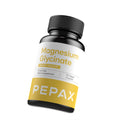
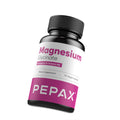
For those seeking a well-tolerated magnesium option, PEPAX Magnesium Glycinate with Vitamin C & D3 provides magnesium in glycinate form—generally recognized for good bioavailability and minimal gastrointestinal side effects—alongside cofactors that support broader metabolic and immune function. The glycinate form may be particularly suitable for women who have experienced digestive intolerance with other magnesium salts.
Bottom Line: The Evidence on Magnesium and PCOS
The connection between magnesium and PCOS is biologically plausible, mechanistically grounded, and supported by a growing but still limited body of human clinical data. Magnesium deficiency is common in women with PCOS, and repletion may improve insulin sensitivity and potentially modestly influence androgen levels. However, most human studies to date are small-scale, short-duration, and use heterogeneous methodologies. Magnesium should be viewed as a supportive metabolic adjunct—not a standalone treatment—for PCOS management.
References
- Abbasi B, et al. "The effect of magnesium supplementation on primary insomnia in elderly: A double-blind placebo-controlled clinical trial." Journal of Research in Medical Sciences. 2012;17(12):1161–1169. [Source]
- Boyle NB, et al. "The Effects of Magnesium Supplementation on Subjective Anxiety and Stress — A Systematic Review." Nutrients. 2017;9(5):429. [Source]
- Gröber U, et al. "Magnesium in Prevention and Therapy." Nutrients. 2015;7(9):8199–8226. [Source]
- DiNicolantonio JJ, et al. "Subclinical magnesium deficiency: a principal driver of cardiovascular disease and a public health crisis." Open Heart. 2018;5(1):e000668. [Source]
- Tarleton EK, et al. "Role of magnesium supplementation in the treatment of depression: A randomized clinical trial." PLOS ONE. 2017;12(6):e0180067. [Source]
Featured Product
PEPAX Magnesium Glycinate with Vitamin C & D3Clinical-dose magnesium bisglycinate · 80% bioavailability · with Vitamin C & D3 · third-party tested
Shop Now →