



Magnesium and astragalus address complementary aspects of stress physiology — magnesium modulates the HPA axis and GABA receptors while astragalus (Astragalus membranaceus) acts as an adaptogen that normalizes cortisol response. This article reviews the evidence for combining these two compounds.
Clinicians and informed consumers exploring adaptogenic strategies increasingly ask about the magnesium astragalus combination — a pairing designed to address stress resilience through complementary pathways. While large-scale trials directly testing the two together are scarce, the individual evidence bases for magnesium and Astragalus membranaceus provide a compelling mechanistic rationale, particularly when amplified by the cofactor vitamin B6. This article examines what the current research does and does not tell us about combining these nutrients.
The Research Landscape for a Magnesium Astragalus Combination
No multi-center, double-blind RCT has yet isolated a magnesium-plus-astragalus formula against placebo for a primary stress endpoint. The evidence foundation therefore rests on parallel streams of data: human trials on magnesium for anxiety and stress, preclinical and small human studies on astragalus as an adaptogen, and mechanistic work on B6-dependent neurotransmitter synthesis. This tiered evidence structure is common in nutritional science, where complex formulations often reach the market before gold-standard combination trials are funded.
Magnesium’s psychological benefits are the more rigorously documented. A systematic review by Boyle et al. (2017) examined 18 studies and found that magnesium supplementation was associated with significant reductions in subjective anxiety, particularly in individuals with pre-existing magnesium insufficiency. The effect sizes varied, but the direction of benefit was consistent. On the other side, astragalus has been studied less for acute stress and more for its immunomodulatory and fatigue-reducing properties, often in traditional adaptogen frameworks. Vitamin B6, often included in these combinations, has clear roles in neurotransmitter production; Stach et al. (2021) detail its involvement in the synthesis of GABA, serotonin, and dopamine — molecules directly implicated in the stress response.
The absence of direct combination trials does not negate the plausibility, but it does require transparency. What we can say is that each component addresses stress and recovery through distinct, non-overlapping mechanisms, which makes the magnesium astragalus combination a rational target for further research and a reasonable consideration for individuals whose stress picture shows both nervous system hyperarousal and physical fatigue.
How the Magnesium Astragalus Combination Works Mechanistically
To understand the potential synergy, it helps to separate the physiological layers that stress disrupts. Chronic stress exerts effects via the hypothalamic-pituitary-adrenal (HPA) axis, glutamatergic excitation, mitochondrial energy deficits, and inflammatory signalling. The magnesium and astragalus pairing engages multiple layers simultaneously.
Magnesium’s Role in the Stress Response
Magnesium acts as a natural NMDA receptor antagonist and supports GABAergic tone. When magnesium is low, the NMDA receptor’s calcium channel remains open longer, promoting excitotoxicity and subjective feelings of anxiety. DiNicolantonio et al. (2018) emphasize that subclinical magnesium deficiency is widespread and independently contributes to cardiovascular and neuropsychiatric conditions. By restoring adequate magnesium levels, supplementation effectively dampens the neuroendocrine signals that keep the HPA axis on high alert. This explains why magnesium helps modulate cortisol and why low-magnesium states often present with hyperarousal and poor sleep.
Astragalus as an Adaptogenic Counterweight
Astragalus membranaceus has been classified as an adaptogen primarily due to its polysaccharides (APS) and astragalosides, compounds that appear to normalize physiological function under stress. While human data remain limited, animal and in vitro work suggests that astragalus can reduce fatigue-induced changes in mitochondrial biogenesis and may blunt cortisol elevations caused by chronic unpredictable stress. Unlike magnesium, which directly calms acute neural excitation, astragalus seems to improve the organism’s capacity to adapt over weeks to months of sustained demand — exactly the profile of a true adaptogen. This is why the magnesium astragalus combination can be conceptualized as a two-speed system: magnesium works on the frontline stress response, while astragalus supports longer-term resilience.
Where Vitamin B6 Fits In
Vitamin B6 (as pyridoxal 5′-phosphate) is the rate-limiting cofactor for aromatic L-amino acid decarboxylase, the enzyme that converts 5-HTP to serotonin and L-DOPA to dopamine. Stach et al. (2021) review extensive evidence that marginal B6 status is linked to mood disturbances, likely because neurotransmitter synthesis becomes inefficient. When combined with magnesium, B6 may also enhance cellular magnesium uptake, though this effect is better documented with magnesium-L-threonate than with glycinate. In a magnesium astragalus combination, B6 acts as a molecular amplifier: it supports the brain’s chemical coping mechanisms while magnesium steadies the electrical environment and astragalus bolsters systemic endurance.
Comparing Forms and Doses for a Magnesium Astragalus Combination
The clinical outcome of any combination depends heavily on the specific forms used and their bioavailability. Magnesium glycinate is often preferred for stress applications because glycine itself is an inhibitory neurotransmitter and the chelate is well absorbed without the gastrointestinal distress common with oxide or citrate. Astragalus extracts vary widely in standardization; research typically uses extracts containing 16–70% polysaccharides or 0.3–1% astragaloside IV. Vitamin B6 is usually provided as pyridoxal-5′-phosphate (P5P) to bypass hepatic conversion. The following table summarizes key variables.
| Component | Common Form in Research | Typical Daily Dose | Key Evidence (Author et al., Year) | Notable Limitation |
|---|---|---|---|---|
| Magnesium | Magnesium glycinate / bisglycinate | 200–400 mg elemental magnesium | Boyle et al. 2017; Gröber 2015 | Most anxiety studies used mixed magnesium salts |
| Astragalus | Root powder/extract (e.g., 10:1, standardized to 16% polysaccharides) | 500–1500 mg root powder or equivalent extract | Preclinical adaptogen studies | Few human RCTs with pure astragalus for mental stress |
| Vitamin B6 | Pyridoxal-5′-phosphate (P5P) | 1.5–5 mg (often higher in supplements) | Stach et al. 2021 | Optimal dose for stress not firmly established |
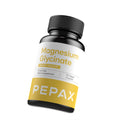
When evaluating a magnesium astragalus combination, it’s worth noting that many commercial formulas underdose one component or use poorly absorbed oxides. For example, a supplement providing 200 mg of elemental magnesium from glycinate, 250 mg of a 10:1 astragalus extract (providing ~160 mg polysaccharides), and 5 mg of P5P would closely mirror what mechanistic and preclinical data suggest. The PEPAX Magnesium Glycinate with Astragalus & B6 formulation was built on these principles, combining glycinate-bound magnesium with a clinically relevant astragalus extract and active B6, though formal combination trials are still needed to fully validate the specific synergy.
Timing matters too. Magnesium glycinate is frequently taken in the evening due to its calming effects on the nervous system. Astragalus is generally taken in divided doses with food. When combined in a single product, an evening dose may offer the dual benefit of magnesium’s immediate relaxation and astragalus’s overnight tissue-repair support, though this remains extrapolation rather than proven protocol.
Who Benefits Most from a Magnesium Astragalus Combination?
The magnesium astragalus combination appears most suited to individuals exhibiting both psychological and physical signs of stress overload. This includes people with chronic anxiety, elevated perceived stress, morning fatigue, or post-exertional malaise — the cluster often described as “adrenal fatigue,” though that term lacks precise endocrine definition.
Subgroup analyses within the Boyle et al. (2017) review suggest that magnesium’s anxiolytic effects are most pronounced in those with low dietary magnesium intake, a condition that DiNicolantonio et al. (2018) estimate affects up to 50% of the U.S. population. Women, older adults, and individuals with high physical activity or caffeine consumption are disproportionately at risk. Adding astragalus may be particularly relevant for those whose stress has eroded physical stamina, as astragalus has a history of use in combating fatigue and supporting immune function under duress. Although no specific biomarker reliably predicts response to the combination, a clinical history of poor sleep, muscle tension, and recurrent infections under stress could indicate a multi-target strategy might outperform single-nutrient approaches.
Conversely, those with acute panic disorder or cortisol-driven psychiatric conditions should not substitute this combination for first-line therapies. The evidence for magnesium alone in anxiety is supportive but not definitive enough to replace cognitive behavioural therapy or pharmacotherapy. The astragalus evidence for mental health remains largely preclinical, so expectations should be framed around long-term resilience building rather than immediate symptom suppression.
Practical Takeaways for Using a Magnesium Astragalus Combination
Integrating this combination into a stress-management plan requires attention to form, dose, and realistic expectations.
- Prioritize chelated magnesium forms. Magnesium glycinate consistently demonstrates high bioavailability and a low likelihood of gastrointestinal side effects, making it the preferred choice in a daily adaptogen stack.
- Check astragalus standardization. Look for extracts standardized to polysaccharide content (≥16%) or astragaloside IV (≥0.3%) to ensure consistency with the preclinical data. Root powder alone may require doses exceeding 1 gram.
- Ensure active B6 is included. Pyridoxal-5′-phosphate avoids the conversion bottleneck that can occur in individuals with compromised liver function or certain genetic polymorphisms affecting B6 metabolism. Vitamin B6 benefits extend beyond neurotransmitter synthesis to energy metabolism and hormone regulation, complementing both magnesium and astragalus.
- Allow two to three months for adaptogenic effects. Magnesium can improve sleep and subjective anxiety within days to weeks, but astragalus’s adaptogenic actions are cumulative. Clinical experience suggests that 8–12 weeks is a reasonable timeframe to assess full benefits.
- Monitor non-specific markers. While no dedicated lab test tracks the combination, monitoring serum magnesium, early morning cortisol, and subjective stress scales (such as the DASS-21) can help gauge progress. Magnesium deficiency is best assessed via RBC magnesium, not serum levels.
- Do not overlook lifestyle fundamentals. Even the best-designed magnesium astragalus combination cannot compensate for chronic sleep deprivation, poor nutrition, or unresolved psychosocial stressors. Magnesium and astragalus should be viewed as adjuvants to, not replacements for, robust stress hygiene.
Bottom Line on the Magnesium Astragalus Combination
The current evidence suggests that each member of this trio — magnesium, astragalus, and vitamin B6 — holds promise for stress management, but their combination has not been subjected to rigorous, randomized controlled trials as a unified intervention. What exists is a network of mechanistic plausibility, positive individual studies for magnesium on anxiety, and a long tradition of adaptogenic use for astragalus. For educated adults looking to stack well-researched nutrients without overclaiming, the magnesium astragalus combination represents a reasonable, low-risk option grounded more in biochemical rationale than in high-level clinical proof. As always, transparency about this evidential gap is essential, even as we acknowledge that many clinical advances begin with exactly this kind of multi-target thinking.
References
- Stach K, et al. "Vitamin B6 in Health and Disease." Nutrients. 2021;13(5):1735. [Source]
- Prietl B, et al. "Vitamin D and Immune Function." Nutrients. 2013;5(7):2502–2521. [Source]
- Gröber U, et al. "Magnesium in Prevention and Therapy." Nutrients. 2015;7(9):8199–8226. [Source]
- Boyle NB, et al. "The Effects of Magnesium Supplementation on Subjective Anxiety and Stress — A Systematic Review." Nutrients. 2017;9(5):429. [Source]
- DiNicolantonio JJ, et al. "Subclinical magnesium deficiency: a principal driver of cardiovascular disease and a public health crisis." Open Heart. 2018;5(1):e000668. [Source]
Featured Product
PEPAX Magnesium Glycinate with Astragalus & B6Magnesium glycinate · Astragalus root adaptogen · Vitamin B6 · clinical dose · cGMP certified
Shop Now →