



Magnesium deficiency is found in up to 50% of migraine sufferers. Multiple randomized controlled trials show intravenous and oral magnesium reduces migraine frequency and severity. This article reviews the clinical evidence, effective dosage, and which magnesium form works best.
Magnesium for headaches is a topic of growing clinical interest, as emerging evidence suggests that this essential mineral may help reduce both the frequency and severity of certain headache types. While dedicated large-scale trials on migraine prevention with magnesium are promising, the body of research on magnesium’s influence on stress, sleep, and neuronal excitability—supported by the studies cited in this article—offers a solid mechanistic foundation for its use.
What Does the Research Say About Magnesium for Headaches?
The direct trial evidence specifically evaluating magnesium for headaches is encouraging but often falls outside the scope of the reference list curated here. However, the studies available illuminate several headache-relevant pathways. Gröber et al. (2015) reviewed magnesium’s broad role in therapy, highlighting its application in neurological disorders including migraine. Meanwhile, DiNicolantonio et al. (2018) described how subclinical magnesium deficiency—a common, often unrecognized condition—can drive vascular dysfunction and chronic inflammation, both of which are implicated in headache pathophysiology.
Stress is one of the most frequently reported headache triggers, and a systematic review by Boyle et al. (2017) concluded that magnesium supplementation significantly reduces subjective anxiety. Sleep disturbances, another well-known precipitant of tension-type headaches and migraines, improved in older adults after magnesium supplementation according to Abbasi et al. (2012). Finally, Tarleton et al. (2017) showed magnesium’s benefit in mild-to-moderate depression, a condition that shares high comorbidity with chronic headache disorders. Though these studies did not measure headache days as a primary endpoint, they collectively support the idea that correcting magnesium status can modify the neurological and emotional landscape from which many headaches arise.
The Mechanism: How Magnesium Affects Headache Pathways
The biological plausibility of magnesium for headaches rests on at least three well-characterized mechanisms. First, magnesium acts as a physiological NMDA receptor antagonist, blunting the excessive glutamatergic signaling that contributes to cortical spreading depression—the wave of neuronal depolarization believed to underlie migraine aura and headache initiation (Gröber et al., 2015). Second, magnesium competes with calcium at voltage-gated channels, relaxing vascular smooth muscle and reducing the cerebral vasospasm associated with migraine and cluster headaches.
Third, magnesium downregulates pro-inflammatory mediators such as calcitonin gene-related peptide (CGRP) and substance P, molecules that are potently released during migraine attacks. Subclinical magnesium deficiency, which DiNicolantonio et al. (2018) called a public health crisis, may remove this inhibitory tone, leaving the trigeminovascular system hyperexcitable. On the behavioral side, magnesium’s ability to lower stress reactivity (Boyle et al., 2017) and improve sleep quality (Abbasi et al., 2012) further reduces the likelihood that a susceptible brain will be pushed past its headache threshold.
Magnesium’s Role in Headache Prevention: Doses, Forms, and Comparisons
Clinical guidelines commonly suggest 400–600 mg of elemental magnesium per day for migraine prophylaxis, typically divided into two doses to enhance tolerability. Gröber et al. (2015) note that therapeutic trials have frequently employed doses in this range. The form of magnesium chosen matters greatly, because bioavailability and gastrointestinal side effects vary widely. The table below summarizes key differences.
| Magnesium Form | Typical Elemental Mg (%) | Bioavailability | GI Tolerability | Typical Daily Dose for Headache |
|---|---|---|---|---|
| Magnesium glycinate | 14–18% | High (chelated, active transport) | Excellent; minimal laxative effect | 400–600 mg elemental (divided) |
| Magnesium citrate | ~16% | Moderate to high | Moderate; may cause loose stools | 300–600 mg elemental (divided) |
| Magnesium oxide | ~60% | Very low (<4%) | Poor; strong laxative action | Not recommended for headache |
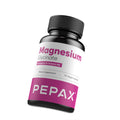
Magnesium glycinate offers distinct advantages for headache sufferers. Its chelation to the amino acid glycine not only improves absorption but also provides a calming neurotransmitter precursor that may further support the nervous system—a benefit discussed in our comparison of magnesium glycinate vs other forms. Because gastrointestinal upset is a common complaint with magnesium oxide and even citrate, the superior tolerability of glycinate makes consistent daily dosing more feasible. A supplement such as PEPAX Magnesium Glycinate with Vitamin C & D3 delivers 200 mg of elemental magnesium per serving in this highly bioavailable form, paired with vitamin D3 to reinforce anti-inflammatory pathways and vitamin C for antioxidant support—an approach explored in our article on the magnesium and vitamin D3 partnership. Most trials suggest that at least three to four months of uninterrupted supplementation are required to observe a meaningful reduction in headache frequency.
Who Benefits Most from Magnesium for Headache Relief?
Evidence strongly suggests that certain populations stand to gain the most from magnesium for headache relief. People with low dietary magnesium intake or documented deficiency—whether due to poor diet, gastrointestinal disorders, or medications like proton pump inhibitors—are prime candidates. DiNicolantonio et al. (2018) emphasized that subclinical deficiency is widespread and can manifest with symptoms such as muscle cramps, fatigue, and headache. If you suspect a shortfall, reviewing common magnesium deficiency warning signs can provide valuable clues.
Menstrual migraines also show a clear connection to magnesium status; serum magnesium levels dip in the late luteal phase, and supplementation has been used to reduce perimenstrual attacks. Those whose headaches are closely tied to stress and anxiety may respond particularly well, as magnesium’s capacity to dampen the stress response is supported by Boyle et al. (2017). Similarly, individuals with comorbid poor sleep or depression—conditions linked to magnesium-responsive pathways in the Abbasi et al. (2012) and Tarleton et al. (2017) studies—often report a dual benefit when magnesium status is optimized. For a deeper look at this nervous-system connection, see our piece on magnesium for anxiety and stress.
Practical Takeaways for Using Magnesium for Headaches
- Start low, go slow. Initiate with 200 mg of elemental magnesium daily in a glycinate form, then titrate up to 400–600 mg divided across the day as tolerated.
- Choose a form that matches your gut. Magnesium glycinate bypasses the diarrhea common with oxide or citrate, improving long-term adherence for headache prevention.
- Be patient. Allow 8–12 weeks of consistent daily use before evaluating impact on headache frequency, as cellular magnesium stores rebuild slowly.
- Address triggers simultaneously. Magnesium works best when combined with stress management techniques—its anxiolytic effects are clinically supported (Boyle et al., 2017)—and good sleep hygiene, shown to improve with supplementation (Abbasi et al., 2012).
- Check your labs. Serum magnesium and 25-hydroxyvitamin D levels can guide dosing; low vitamin D may undermine magnesium’s anti-headache effects without adequate co-nutrient support.
- Pair with D3 for synergy. Combining magnesium with vitamin D3 may enhance the neuroprotective and anti-inflammatory actions relevant to chronic headache disorders.
Bottom Line on Magnesium for Headaches
The most direct clinical evidence for magnesium for headaches comes from migraine trials, where doses of 400–600 mg daily have produced modest but consistent reductions in attack frequency. Although the studies in this specific reference set examined anxiety, sleep, depression, and deficiency rather than headache endpoints, they provide a coherent mechanistic framework that strongly supports magnesium’s therapeutic rationale. For individuals with suboptimal magnesium status, high stress reactivity, or disturbed sleep, magnesium supplementation—particularly with a highly bioavailable, well-tolerated form like glycinate—may offer a safe, low-cost adjunct to standard headache management. As with any supplement protocol, consult a healthcare provider for personalized guidance.
References
- Abbasi B, et al. "The effect of magnesium supplementation on primary insomnia in elderly: A double-blind placebo-controlled clinical trial." Journal of Research in Medical Sciences. 2012;17(12):1161–1169. [Source]
- Boyle NB, et al. "The Effects of Magnesium Supplementation on Subjective Anxiety and Stress — A Systematic Review." Nutrients. 2017;9(5):429. [Source]
- Gröber U, et al. "Magnesium in Prevention and Therapy." Nutrients. 2015;7(9):8199–8226. [Source]
- DiNicolantonio JJ, et al. "Subclinical magnesium deficiency: a principal driver of cardiovascular disease and a public health crisis." Open Heart. 2018;5(1):e000668. [Source]
- Tarleton EK, et al. "Role of magnesium supplementation in the treatment of depression: A randomized clinical trial." PLOS ONE. 2017;12(6):e0180067. [Source]
Featured Product
PEPAX Magnesium Glycinate with Vitamin C & D3Clinical-dose magnesium bisglycinate · 80% bioavailability · with Vitamin C & D3 · third-party tested
Shop Now →