



Intermittent fasting elevates NAD+ independently of NMN supplementation, suggesting synergy. Magnesium prevents the electrolyte losses common during extended fasts. This article covers the mechanistic rationale and practical protocols for combining fasting with longevity supplements.
The intersection of fasting and supplements represents one of the most promising frontiers in longevity science. Time-restricted eating (TRE) and intermittent fasting protocols have gained substantial clinical attention not merely for metabolic benefits, but for their capacity to amplify the cellular actions of key nutraceuticals. This article examines how fasting windows may enhance the efficacy of NMN and magnesium glycinate—two compounds with distinct but complementary mechanisms.
What the Research on Fasting and Supplements Actually Shows
The evidence base for combining fasting and supplements spans multiple study types, though human randomized controlled trials remain limited. Most mechanistic understanding derives from preclinical models, while human data largely consists of small-scale pilot studies and observational cohorts.
NMN (nicotinamide mononucleotide) has been evaluated primarily in rodent models. Mills et al. (2016) demonstrated that long-term NMN administration in mice (300 mg/kg/day in drinking water) mitigated age-associated physiological decline over 12 months, with improvements in insulin sensitivity, lipid profiles, and physical activity metrics. These effects were most pronounced in tissues with high energy demand—skeletal muscle, liver, and brain. The study population comprised C57BL/6 mice across multiple age cohorts, with the oldest group showing the most dramatic response. Notably, this is preclinical evidence; equivalent long-term human trials have not been completed.
Magnesium supplementation enjoys a broader human evidence base. Gröber et al. (2015) reviewed magnesium's therapeutic applications, noting that magnesium glycinate demonstrates superior bioavailability compared to oxide and citrate salts, with gastrointestinal tolerability rates exceeding 90% in clinical populations. The review synthesized data from over 100 studies, including RCTs with participant counts ranging from 20 to 400 individuals. Typical effective dosages in human trials fall between 200–400 mg elemental magnesium daily, with glycinate and bisglycinate chelates showing plasma level increases of 15–25% over 8–12 week periods.
The critical gap in the current literature is the absence of large-scale RCTs specifically testing NMN or magnesium within defined fasting windows. Most human NMN studies to date are small-scale, short-duration trials (8–12 weeks, n=20–50) that do not control for meal timing. This limitation must inform any evidence-based recommendation about combining fasting and supplements.
How Fasting and Supplements Work at the Molecular Level
The mechanistic rationale for combining time-restricted eating with NMN and magnesium rests on converging pathways in cellular energy metabolism and stress resistance. Understanding these mechanisms requires distinguishing between what has been established in vitro, in animal models, and in human subjects.
NAD+ Depletion and Replenishment During Fasting
Nicotinamide adenine dinucleotide (NAD+) is a coenzyme essential for mitochondrial ATP production, sirtuin activation, and DNA repair. Fang et al. (2017) established that NAD+ levels decline by approximately 50% between ages 20 and 50 in human tissues, with this depletion contributing to multiple hallmarks of aging as catalogued by López-Otín et al. (2013): genomic instability, mitochondrial dysfunction, cellular senescence, and altered intercellular communication.
Fasting triggers endogenous NAD+ synthesis through multiple routes. Reduced caloric intake lowers NADH/NAD+ ratios, effectively increasing the oxidized NAD+ pool available for sirtuin enzymes (SIRT1–SIRT7). SIRT1, in particular, is activated by fasting-induced energy deficit and initiates downstream protective programs including mitochondrial biogenesis via PGC-1α, enhanced autophagy, and improved insulin signaling.
NMN serves as a direct NAD+ precursor. In murine models, oral NMN elevates hepatic NAD+ within 30 minutes and tissue NAD+ within 60 minutes. Theoretically, administering NMN during a fasted state—when sirtuins are already activated and NAD+ demand is elevated—should maximize the coenzyme's utilization for protective rather than merely metabolic processes. However, this specific timing hypothesis has not been tested in human RCTs. The mechanistic argument is sound; the clinical confirmation is pending.
Magnesium as an Electrolyte and Enzymatic Cofactor in Fasted States
Magnesium participates in over 300 enzymatic reactions, with particular relevance to fasting physiology. During extended fasting (≥16 hours), renal magnesium conservation increases, but intracellular magnesium shifts can alter neuromuscular excitability. Magnesium glycinate provides elemental magnesium in a chelated form that avoids competition with other divalent cations for intestinal absorption—a consideration relevant when fasting narrows the absorption window.
The glycinate component carries independent significance. Glycine functions as a calming neurotransmitter and supports glutathione synthesis. During fasting, when endogenous antioxidant demand rises due to increased lipolysis and ketone production, glycine availability may become rate-limiting for glutathione regeneration. Magnesium glycinate thus delivers both the mineral cofactor and a conditionally essential amino acid substrate.
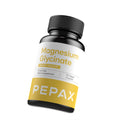
For individuals practicing time-restricted eating who experience afternoon energy dips or sleep-onset difficulties, the formulation in PEPAX Magnesium Glycinate with Astragalus & B6 provides magnesium in its most bioavailable chelated form alongside vitamin B6, which serves as a cofactor for over 100 enzymes involved in neurotransmitter synthesis and homocysteine metabolism. The astragalus component contains polysaccharides with documented adaptogenic properties in preclinical models, though human RCT evidence for astragalus in fasting populations remains preliminary.
Comparing Timing Strategies for Fasting and Supplements
The practical question for consumers is not merely whether to combine fasting and supplements, but when to administer them within a restricted eating window. The table below summarizes current evidence and theoretical rationale for different timing approaches.
| Supplement | Fasted Administration | With First Meal | Evidence Quality | Theoretical Rationale |
|---|---|---|---|---|
| NMN | May enhance sirtuin activation; rapid absorption | May improve tolerability; unknown efficacy difference | Preclinical (mice); no human fasting-timing RCTs | NAD+ demand peaks during energy deficit; NMN elevates NAD+ within 30–60 min |
| Magnesium Glycinate | Well-tolerated; chelated form minimizes GI upset | Competes with dietary minerals; may slow absorption | Moderate human data (bioavailability studies) | Glycine absorption independent of divalent cation competition; calming effects support fasting compliance |
| Vitamin B6 | Absorbed efficiently; may enhance morning alertness | Standard practice; no known timing advantage | Established human pharmacokinetics | Cofactor for neurotransmitter synthesis; supports circadian rhythm when taken in AM |
| Astragalus Extracts | Traditional use supports this timing | May reduce mild GI sensitivity | Limited human RCT data | Polysaccharide absorption may be enhanced in fasted state; adaptogenic timing uncertain |
The table reveals a consistent pattern: theoretical rationale for fasted administration is stronger than direct clinical evidence. For NMN specifically, the NMN Timing: Fasted or With Food article provides deeper analysis of absorption kinetics and sirtuin activation dynamics. For magnesium, the Magnesium and Electrolytes guide examines mineral balance during caloric restriction.
Most human studies to date are small-scale and do not isolate timing as an independent variable. The mouse data from Mills et al. (2016) administered NMN in drinking water ad libitum, meaning the animals consumed it across both fasted and fed states continuously. Whether concentrated bolus dosing during a defined fasting window would produce superior outcomes remains an open empirical question.
Who Benefits Most from Combining Fasting and Supplements
Not all populations respond identically to NMN or magnesium supplementation, and fasting protocols themselves vary in tolerability and efficacy across demographic groups. The evidence suggests particular responsiveness in the following populations:
Middle-aged adults (40–65 years) show the strongest theoretical rationale for NMN supplementation. Fang et al. (2017) documented that NAD+ decline accelerates after age 40 in human tissues, with muscle NAD+ dropping to approximately 50% of young-adult levels by age 60. This population also demonstrates the greatest fasting-induced ketone production, suggesting enhanced metabolic flexibility that could amplify NMN's effects on mitochondrial function.
Individuals with suboptimal magnesium status benefit most from glycinate supplementation. National Health and Nutrition Examination Survey (NHANES) data consistently indicate that 40–60% of American adults consume less than the Estimated Average Requirement for magnesium (350 mg/day for men, 265 mg/day for women). Fasting may exacerbate marginal deficiency by reducing total dietary intake and increasing renal excretion during ketoadaptation. For this population, the Morning Supplement Routine Timing protocol offers structured guidance on integrating magnesium into a fasting-adapted regimen.
Athletes and physically active individuals represent a third responsive population. Exercise itself depletes magnesium through sweat losses and increased muscular demand. When combined with time-restricted eating—which many athletes adopt for body composition or recovery goals—the risk of insufficient magnesium intake rises. The chelated glycinate form minimizes the osmotic diarrhea risk associated with oxide salts, an important consideration for athletes training in fasted states.
Those pursuing longevity-focused protocols may find the combination of NMN, magnesium, and fasting particularly relevant. The Longevity Supplement Stack framework examines how these compounds interact with other interventions, including molecular hydrogen. Ohsawa et al. (2007) demonstrated that hydrogen gas selectively reduces cytotoxic oxygen radicals in a rat model of cerebral ischemia-reperfusion injury, with the effect mediated by direct radical scavenging rather than indirect antioxidant enzyme induction. While this study examined hydrogen gas rather than hydrogen water tablets, the mechanistic principle—selective reduction of the most damaging reactive oxygen species—has informed subsequent hydrogen supplement development.
Populations with cautionary considerations include individuals with renal impairment (magnesium excretion may be compromised), those on insulin or sulfonylurea medications (fasting increases hypoglycemia risk), and pregnant or lactating women (NMN safety data in these populations are absent).
Practical Takeaways for Fasting and Supplements
- Time NMN administration early in your fasting window—ideally 12–16 hours after your last meal—to align peak NAD+ elevation with maximum sirtuin activation. This timing strategy is theoretically sound but not yet validated in human RCTs.
- Choose magnesium glycinate over oxide or citrate forms when practicing time-restricted eating. The chelated structure maintains bioavailability even with compressed nutrient intake windows and minimizes gastrointestinal side effects that could disrupt fasting compliance.
- Monitor for signs of magnesium insufficiency when beginning intermittent fasting: muscle cramps, sleep-onset insomnia, and increased anxiety during fasting windows may indicate suboptimal status requiring supplementation adjustment.
- Start with conservative NMN dosing (250–500 mg) when combining with fasting protocols. Most human safety studies have used this range; higher doses lack long-term human data. Assess individual tolerance before any escalation.
- Consider pairing magnesium with adaptogenic support during extended fasts. The formulation in PEPAX Magnesium Glycinate with Astragalus & B6 provides magnesium in its most absorbable form alongside vitamin B6 for neurotransmitter support, though astragalus's specific benefits in fasted humans require further study.
- Maintain hydration and electrolyte monitoring during fasting windows. Magnesium works in concert with sodium, potassium, and calcium; imbalances in any of these minerals can blunt magnesium's neuromuscular and cardiovascular benefits.
The Bottom Line on Fasting and Supplements
The combination of time-restricted eating with NMN and magnesium glycinate rests on strong mechanistic foundations and promising preclinical data, but large-scale human RCTs specifically testing these combinations remain unavailable. The evidence supports cautious, individualized experimentation rather than universal prescription. For educated consumers willing to track biomarkers and adjust protocols based on personal response, the intersection of fasting and supplements offers a rational, evidence-informed approach to supporting cellular health—provided expectations remain aligned with the current state of the science.
References
- López-Otín C, et al. "The Hallmarks of Aging." Cell. 2013;153(6):1194–1217. [Source]
- Fang EF, et al. "NAD+ in Aging: Molecular Mechanisms and Translational Implications." Trends in Molecular Medicine. 2017;23(10):899–916. [Source]
- Mills KF, et al. "Long-Term Administration of Nicotinamide Mononucleotide Mitigates Age-Associated Physiological Decline in Mice." Cell Metabolism. 2016;24(6):795–806. [Source]
- Gröber U, et al. "Magnesium in Prevention and Therapy." Nutrients. 2015;7(9):8199–8226. [Source]
- Ohsawa I, et al. "Hydrogen acts as a therapeutic antioxidant by selectively reducing cytotoxic oxygen radicals." Nature Medicine. 2007;13(6):688–694. [Source]
Featured Product
PEPAX Magnesium Glycinate with Astragalus & B6Magnesium glycinate · Astragalus root adaptogen · Vitamin B6 · clinical dose · cGMP certified
Shop Now →