


The Most Abundant Amino Acid Nobody Talks About
Of the 20 proteinogenic amino acids, glycine receives remarkably little attention — which is ironic, given that it is the single most abundant amino acid in the human body. Glycine constitutes approximately 33% of collagen, 30% of elastin, and serves as a major inhibitory neurotransmitter in the central nervous system. The glycine benefits that research has uncovered span from improved sleep architecture to joint preservation, skin health, metabolic regulation, and even longevity signaling. Yet most people are unaware of its importance.
Part of the reason for glycine's low profile is its classification as a "conditionally essential" amino acid. Unlike the nine essential amino acids that must come from diet, the body can synthesize glycine from serine and threonine. However, the biosynthetic capacity is limited — and research by Melendez-Hevia and colleagues (2020) demonstrated that human glycine synthesis falls significantly short of metabolic demand, particularly under conditions of stress, injury, or aging.
This gap between synthesis and demand is what makes dietary and supplemental glycine so important — and what elevates glycine benefits from interesting biochemistry to actionable health strategy.
Glycine Health Benefits: A Comprehensive Overview
| Health Domain | Primary Mechanism | Key Clinical Evidence | Optimal Daily Intake | Synergistic Nutrients |
|---|---|---|---|---|
| Sleep Quality | Glycine lowers core body temperature and acts as an inhibitory neurotransmitter via glycine receptors in the brainstem, promoting faster sleep onset and deeper slow-wave sleep | Yamadera et al. (2007): 3g glycine before bed significantly reduced sleep latency and improved subjective sleep quality in chronically fatigued adults (RCT, n=53) | 3 grams (pre-sleep) | Magnesium (glycinate form), GABA, L-theanine |
| Skin Health | As the primary collagen constituent (every third amino acid in the collagen triple helix), glycine provides the structural scaffold for dermal integrity; also supports hyaluronic acid synthesis | Multiple collagen supplementation trials (glycine-rich collagen hydrolysates) demonstrate improved skin elasticity and hydration; Proksch et al. (2014): significant wrinkle reduction with collagen peptides | 2-5 grams (collagen-bound) | Vitamin C, proline, lysine, copper |
| Joint Integrity | Glycine-rich collagen type II is the primary structural protein in articular cartilage; glycine also supports glycosaminoglycan synthesis in synovial fluid | de Paz-Lugo et al. (2018): comprehensive review of glycine's role in connective tissue metabolism; glycine supplementation improved markers of cartilage turnover | 3-5 grams (collagen-bound) | Glucosamine, chondroitin, vitamin C, MSM |
| Longevity and Metabolic Health | Methionine restriction mimetic — glycine modulates the methionine cycle, reducing oxidative stress from homocysteine and activating longevity-associated pathways including autophagy | Sekhar et al. (2011): glycine + NAC (GlyNAC) supplementation reversed multiple age-associated deficits including glutathione deficiency, mitochondrial dysfunction, and insulin resistance in older adults | 5-10 grams (therapeutic range) | NAC (N-acetyl cysteine), taurine |
| Detoxification | Glycine conjugation (phase II hepatic detoxification) neutralizes xenobiotics, benzoate, and salicylates for urinary excretion | Bannai et al. (2012): glycine supplementation increased hepatic glutathione and improved detoxification capacity in animal models; human data supports glycine for acetaminophen overdose protection | 2-5 grams | Glutathione, NAC, selenium |
| Metabolic Regulation | Glycine is a gluconeogenic substrate and modulates insulin signaling via the glycine receptor in pancreatic alpha cells | Multiple epidemiological studies show inverse correlation between plasma glycine and type 2 diabetes risk; McCarty & DiNicolantonio (2014) proposed glycine as a metabolic health intervention | 3-5 grams | Magnesium, chromium, berberine |
Deep Dive: Glycine and Sleep
The most well-studied glycine benefit relates to sleep. A landmark 2007 randomized controlled trial by Yamadera and colleagues published in Sleep and Biological Rhythms found that 3 grams of glycine taken 30 minutes before bedtime significantly:
- Reduced the time to fall asleep (sleep onset latency)
- Decreased the number of nocturnal awakenings
- Improved subjective ratings of sleep quality and daytime alertness
- Reduced fatigue upon waking
The mechanism is distinctive and fascinating: glycine acts as a cooling agent. By binding to glycine receptors in the suprachiasmatic nucleus and brainstem, glycine promotes peripheral vasodilation, which dissipates body heat and lowers core temperature — precisely the thermoregulatory shift that facilitates sleep onset (Bannai & Kawai, 2012). This makes glycine different from sedative-hypnotics that force sleep through GABA receptor agonism — glycine supports the body's natural sleep transition.
This sleep connection is one reason we formulated our magnesium as a glycinate chelate. As we discuss in detail in our magnesium glycinate comparison guide, the glycine component actively contributes to sleep quality while the magnesium supports GABAergic tone and muscle relaxation — a genuine synergy, not just a delivery mechanism.
Glycine and Longevity: The Methionine Connection
One of the most intriguing glycine benefits operates through the methionine cycle. Methionine is an essential amino acid, but excess methionine accelerates aging in animal models — likely through increased oxidative stress from homocysteine and activation of pro-aging mTOR pathways. Methionine restriction extends lifespan across species, but strict dietary methionine restriction is impractical for humans.
Glycine provides an elegant solution: it acts as a methionine buffer. The glycine N-methyltransferase (GNMT) enzyme uses glycine to clear excess methionine, effectively creating the biochemical benefits of methionine restriction without the dietary extremes (McCarty & DiNicolantonio, 2018). In a 2011 study by Sekhar and colleagues, older adults receiving glycine plus NAC (GlyNAC) for 14 days showed remarkable improvements in glutathione levels, mitochondrial function, and markers of oxidative stress — all core aging biomarkers.
Glycine and Metabolic Health: The Insulin Sensitivity Connection
An emerging dimension of glycine benefits involves metabolic regulation. Epidemiological studies consistently find that low circulating glycine levels are among the strongest amino acid predictors of incident type 2 diabetes — stronger even than branched-chain amino acids, which have received far more research attention. A meta-analysis by Guasch-Ferre and colleagues (2016) found that individuals in the highest quintile of plasma glycine had approximately a 35% lower risk of developing type 2 diabetes compared to those in the lowest quintile.
The mechanisms appear to be bidirectional. Glycine directly stimulates glucagon-like peptide-1 (GLP-1) secretion from intestinal L-cells, enhancing insulin secretion in response to glucose. Additionally, glycine receptors on pancreatic alpha cells modulate glucagon secretion, helping to stabilize glucose homeostasis. The inverse relationship between glycine and diabetes risk persists even after adjusting for BMI, physical activity, and dietary patterns, suggesting an independent metabolic role rather than a mere marker of protein intake.
For individuals concerned about metabolic health, the combination of glycine (for GLP-1 potentiation and methionine buffering) with magnesium (for insulin receptor function — magnesium is a cofactor for the insulin receptor tyrosine kinase) in our PEPAX Magnesium Glycinate + Astragalus + B6 formulation represents a metabolically rational pairing with complementary mechanisms.
Practical Applications of Glycine Supplementation
For Sleep Support
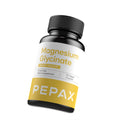
3 grams of glycine powder dissolved in water, taken 30-60 minutes before bed. Alternatively, magnesium glycinate provides approximately 800 mg of glycine per standard 200 mg elemental magnesium dose, plus magnesium's own sleep benefits. Our PEPAX Magnesium Glycinate + Vitamin C + D3 combines these synergists in a single formulation.
For Joint and Skin Health
Collagen peptides (which are approximately 30% glycine by weight) at 10-15 grams daily provide roughly 3-5 grams of glycine in a matrix optimized for connective tissue synthesis. Adding vitamin C enhances collagen cross-linking.
For Longevity and Metabolic Health
The GlyNAC protocol (glycine + NAC) used in Sekhar's trials provides a foundation for comprehensive anti-aging glycine supplementation. For a broader perspective on supplement stacking, see our science-backed supplement stack guide.
For General Wellness
Powdered glycine has a naturally sweet taste and dissolves easily in water, coffee, or tea. Starting with 2-3 grams daily and titrating to effect is a reasonable approach for most adults.
Glycine also supports phase II hepatic detoxification. The glycine conjugation pathway neutralizes a wide range of xenobiotics — including benzoate (a common food preservative), salicylates (aspirin metabolites), and various environmental toxins — by conjugating them with glycine for urinary excretion. This pathway's capacity depends directly on glycine availability, and studies by Bannai and colleagues (2012) demonstrated that glycine loading increases detoxification throughput. For individuals with high toxicant exposure — whether from diet, environment, or medication — adequate glycine status is an underappreciated aspect of metabolic resilience.Safety and Side Effects
Glycine has an excellent safety profile. The FDA classifies it as Generally Recognized as Safe (GRAS), and clinical trials have used doses up to 15 grams daily without significant adverse effects. The most common side effect at higher doses (>10 grams) is mild gastrointestinal looseness, which typically resolves with dose reduction. Glycine does not cause drowsiness during the day — its sleep-promoting effects are context-dependent and tied to circadian temperature regulation.
Individuals with kidney disease should consult their healthcare provider before supplemental amino acid use, as amino acid metabolism places demand on renal function.
Frequently Asked Questions
Can I get enough glycine from food?
The richest dietary sources of glycine — bone broth, skin-on poultry, pork skin, and gelatinous cuts of meat — are increasingly absent from modern diets. A typical Western diet provides 2-3 grams of glycine daily, but metabolic demand is estimated at 10-15 grams. This 8-10 gram daily deficit accumulates over decades and may contribute to age-related connective tissue deterioration.
Is magnesium glycinate better than glycine alone for sleep?
They work through complementary mechanisms. Glycine lowers core body temperature to facilitate sleep onset, while magnesium supports GABAergic neurotransmission and muscle relaxation. The combination — as provided by our PEPAX Magnesium Glycinate + Astragalus + B6 — delivers both mechanisms simultaneously. For pure sleep applications, standalone glycine at 3 grams is well-supported by evidence.
How long does it take to see glycine benefits?
Sleep benefits are typically noticeable within 1-3 nights at 3 grams pre-bed. Joint and skin benefits from collagen-bound glycine typically require 4-8 weeks of consistent supplementation, reflecting the slower turnover rate of connective tissue proteins. Metabolic benefits emerge over 2-4 weeks.
The Bottom Line
Glycine benefits span multiple systems and are grounded in well-characterized biochemistry rather than speculative mechanisms. From its role as the primary structural amino acid in the body's connective tissues to its function as a key neurotransmitter, metabolic regulator, and longevity signaling molecule, glycine deserves far more attention than it receives.
The evidence suggests that most people — particularly those over 40 — are in a chronic glycine deficit that contributes subtly but meaningfully to age-related decline in sleep quality, skin integrity, joint function, and metabolic health. Addressing this deficit is straightforward, safe, and supported by clinical evidence.
For readers interested in the specific connection between glycine and magnesium — including why the glycinate chelate form offers unique advantages — our magnesium glycinate comparison article provides an in-depth analysis.
References
- Yamadera, W., Inagawa, K., Chiba, S., Bannai, M., Takahashi, M., & Nakayama, K. (2007). Glycine ingestion improves subjective sleep quality in human volunteers, correlating with polysomnographic changes. Sleep and Biological Rhythms, 5(2), 126-131.
- Melendez-Hevia, E., de Paz-Lugo, P., Cornish-Bowden, A., & Cardenas, M.L. (2020). A weak link in metabolism: The metabolic capacity for glycine biosynthesis does not satisfy the need for collagen synthesis. Journal of Biosciences, 45(1), 46.
- Bannai, M., & Kawai, N. (2012). New therapeutic strategy for amino acid medicine: Glycine improves the quality of sleep. Journal of Pharmacological Sciences, 118(2), 145-148.
- Sekhar, R.V., Patel, S.G., Guthikonda, A.P., et al. (2011). Deficient synthesis of glutathione underlies oxidative stress in aging and can be corrected by dietary cysteine and glycine supplementation. American Journal of Clinical Nutrition, 94(3), 847-853.
- McCarty, M.F., & DiNicolantonio, J.J. (2018). Dietary glycine is rate-limiting for glutathione synthesis and may have broad potential for health protection. Ochsner Journal, 18(1), 81-87.
- de Paz-Lugo, P., Lupianez, J.A., & Melendez-Hevia, E. (2018). High glycine concentration increases collagen synthesis by articular chondrocytes in vitro: Acute glycine deficiency could contribute to osteoarthritis. Amino Acids, 50(10), 1357-1365.
- Proksch, E., Schunck, M., Zague, V., Segger, D., Degwert, J., & Oesser, S. (2014). Oral intake of specific bioactive collagen peptides reduces skin wrinkles and increases dermal matrix synthesis. Skin Pharmacology and Physiology, 27(3), 113-119.