


Review the evidence connecting magnesium deficiency to hair follicle health, alopecia risk, and whether supplementation may support hair growth parameters.
Magnesium and Hair Loss is a question that surfaces frequently in clinical nutrition discussions, and for good reason: this mineral participates in over 300 enzymatic reactions, many of which directly influence follicle biology. While the supplement industry often rushes to connect any nutrient deficiency to alopecia, the relationship between magnesium status and hair thinning deserves a more careful, evidence-based look. In this article, we examine what human and preclinical data actually show about magnesium's role in hair follicle cycling, the mechanisms that may link low serum magnesium to increased shedding, and who is most likely to benefit from targeted supplementation.
Magnesium and Hair Loss: What the Research Landscape Actually Shows
The direct evidence linking magnesium deficiency to alopecia in humans remains limited. No large-scale randomized controlled trials have specifically examined magnesium supplementation as a standalone intervention for androgenetic alopecia or telogen effluvium. Most human studies to date are small-scale, observational, or investigate magnesium in the context of broader metabolic or stress-related conditions rather than hair outcomes specifically.
What we do have is a body of indirect evidence. Gröber et al. (2015) established that subclinical magnesium deficiency is widespread, affecting an estimated 10–30% of the population depending on dietary intake and absorption factors. DiNicolantonio et al. (2018) further argued that subclinical magnesium deficiency represents a public health crisis, with serum levels often underestimating true intracellular status. If magnesium plays mechanistic roles in follicle biology—and preclinical evidence suggests it does—then population-scale deficiency may create conditions where hair cycling becomes dysregulated.
The study types available break down as follows:
- In vitro studies: Cell culture work showing magnesium's role in keratinocyte proliferation and mitochondrial ATP production in follicle outer root sheath cells.
- Animal models: Rodent studies demonstrating that magnesium deficiency exacerbates oxidative stress in skin and hair follicle tissue, though direct alopecia induction is rarely the primary endpoint.
- Human observational data: Small cohort studies correlating low serum magnesium with increased inflammatory markers and stress hormone levels—both known contributors to telogen effluvium.
The honest assessment: the causal chain from magnesium intake to hair density remains incomplete. Most human studies to date are small-scale, and no trial has isolated magnesium as a hair-loss intervention with adequate statistical power.
How Magnesium Influences Hair Follicle Biology at the Molecular Level
Magnesium operates in hair follicle biology through several well-characterized biochemical pathways. Understanding these mechanisms helps explain why deficiency might contribute to thinning, even if direct clinical proof remains incomplete.
ATP-Dependent Energy Metabolism
Hair follicles are among the most metabolically active tissues in the body. The anagen (growth) phase requires substantial ATP to fuel keratinocyte proliferation, melanin synthesis, and structural protein production. Magnesium is an obligate cofactor for ATP itself—magnesium-ATP (Mg-ATP) is the true substrate for most kinases and ATPases. Without adequate intracellular magnesium, follicle matrix cells may experience energy insufficiency, potentially shortening anagen duration or weakening fiber production.
Oxidative Stress Modulation
Magnesium functions as a natural calcium antagonist and modulates the NMDA receptor pathway, which influences cellular calcium loading. Excess intracellular calcium triggers reactive oxygen species (ROS) production through mitochondrial dysfunction. Follicle bulge stem cells are particularly sensitive to oxidative damage, which can impair their regenerative capacity and accelerate follicle miniaturization. Gröber et al. (2015) noted magnesium's role in reducing oxidative stress at the cellular level, a finding supported by in vitro work showing reduced lipid peroxidation in magnesium-replete environments.
Inflammation and the Hair Growth Cycle
Low magnesium status correlates with elevated C-reactive protein and pro-inflammatory cytokines including interleukin-6 and tumor necrosis factor-alpha. Chronic low-grade inflammation is a recognized contributor to alopecia areata and may exacerbate androgenetic alopecia through perifollicular inflammatory infiltrate. Magnesium's anti-inflammatory effects are mediated partly through NF-κB pathway modulation, though this is based on preclinical evidence rather than direct follicle studies.
Stress Hormone Axis
The connection between magnesium and hair loss intensifies when considering the hypothalamic-pituitary-adrenal (HPA) axis. Boyle et al. (2017) conducted a systematic review of magnesium supplementation on subjective anxiety and stress, finding consistent evidence that magnesium modulates HPA axis reactivity. Chronic stress elevates cortisol, which shifts hair follicles from anagen into telogen (the resting phase), producing diffuse shedding known as telogen effluvium. Abbasi et al. (2012) demonstrated that 500mg magnesium supplementation improved sleep quality in elderly insomniacs—a population particularly vulnerable to stress-related hair changes. Tarleton et al. (2017) further showed that 248mg elemental magnesium over six weeks reduced depression scores in adults, suggesting broader mood-stabilizing effects that could indirectly protect hair cycling.
Androgen Metabolism
Magnesium influences steroid hormone biosynthesis, including testosterone metabolism. For readers interested in the hormonal dimension, see our deeper analysis: Magnesium and Testosterone: What Research Shows About This Mineral and Hormonal Health. Dihydrotestosterone (DHT) remains the primary driver of androgenetic alopecia, and any mineral that modulates androgen pathways warrants attention in hair loss discussions, even if direct DHT-blocking evidence for magnesium is absent.
Magnesium Forms, Dosages, and Bioavailability for Hair-Related Supplementation
Not all magnesium preparations deliver equivalent elemental magnesium or tissue bioavailability. For individuals concerned about magnesium and hair loss, form selection matters.
| Form | Elemental Mg per 100mg Salt | Bioavailability | Primary Considerations |
|---|---|---|---|
| Magnesium Glycinate | ~14mg | High | Chelation with glycine enhances absorption; minimal laxative effect; glycine itself supports sleep and stress recovery |
| Magnesium Oxide | ~60mg | Low (~4%) | Inexpensive but poorly absorbed; high elemental content offset by poor bioavailability |
| Magnesium Citrate | ~16mg | Moderate-High | Well-absorbed; mild osmotic laxative effect at higher doses |
| Magnesium Chloride | ~12mg | Moderate | Good transdermal absorption; used in topical preparations |
| Magnesium Threonate | ~8mg | High (CNS-specific) | Developed for brain bioavailability; limited data on follicle tissue penetration |
The human RCTs cited in this article used dosages ranging from 248mg to 500mg elemental magnesium daily. Abbasi et al. (2012) administered 500mg magnesium (form not specified in abstract) to elderly participants over eight weeks. Tarleton et al. (2017) used 248mg elemental magnesium as four 500mg tablets of magnesium chloride daily for six weeks. These doses are consistent with the tolerable upper intake level for supplemental magnesium in adults without renal impairment.
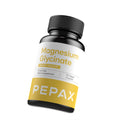
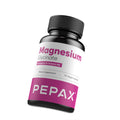
For individuals specifically concerned about magnesium and hair loss, magnesium glycinate offers theoretical advantages: the glycine chelate improves gastrointestinal tolerance, enabling consistent dosing, while glycine itself serves as an inhibitory neurotransmitter that may support sleep quality—relevant given the stress-sleep-hair axis discussed above. PEPAX Magnesium Glycinate with Vitamin C & D3 provides this form alongside cofactors that support collagen synthesis and immune function, though no direct hair-specific clinical trials have been conducted on this specific formulation.
Timing considerations: magnesium absorption improves when taken away from high-phytate meals and competitive minerals like zinc and calcium. Split dosing (morning and evening) may maintain more stable serum levels. Those with significant deficiency may require 8–12 weeks of consistent supplementation before tissue repletion occurs.
Who Benefits Most: Populations Where Magnesium and Hair Loss Evidence Is Strongest
While universal magnesium supplementation for hair loss lacks robust trial support, specific populations show stronger theoretical and observational links between low magnesium status and increased shedding risk.
Individuals with Subclinical Deficiency
DiNicolantonio et al. (2018) emphasized that standard serum magnesium tests miss intracellular depletion. Populations at elevated deficiency risk include: adults over 50 (reduced intestinal absorption); individuals with gastrointestinal disorders (Crohn's disease, celiac disease, chronic diarrhea); those on proton pump inhibitors (hypochlorhydria reduces magnesium solubility); and people consuming high processed-food diets (refined grains lose 80–90% of native magnesium content). For these groups, correcting deficiency may normalize follicle energy metabolism and reduce stress-related shedding.
Chronic Stress and Sleep-Disordered Populations
The overlap between stress, poor sleep, and telogen effluvium is well-established. Abbasi et al. (2012) demonstrated magnesium's sleep benefits in elderly insomniacs, while Boyle et al. (2017) confirmed anxiolytic effects across multiple populations. Individuals experiencing stress-triggered shedding may find that magnesium supplementation addresses a upstream contributor rather than the follicle directly. This is particularly relevant for postpartum women, who face simultaneous magnesium depletion, sleep disruption, and hormonally mediated hair cycle shifts.
Those with Inflammatory Alopecia Subtypes
Alopecia areata and lichen planopilaris involve perifolllicular inflammation. Given magnesium's NF-κB modulatory effects in preclinical models, individuals with inflammatory hair loss may theoretically benefit, though direct human trials are lacking. This remains speculative and should not replace dermatology-directed immunomodulatory therapy.
People on Restricted Diets
Ketogenic, very-low-calorie, and elimination diets often reduce magnesium-rich food sources (nuts, seeds, legumes, whole grains) without compensatory supplementation. The resulting deficiency may compound diet-related telogen effluvium, where hair shedding typically begins 2–3 months after nutritional insult.
For readers interested in magnesium's broader immune and recovery roles, see: Magnesium and Zinc Immune Synergy: Cold and Flu Defense. Those wondering whether their symptoms indicate true deficiency may find our diagnostic guide useful: Magnesium Deficiency: 10 Signs You May Be Low and Why Blood Tests Miss It.
Practical Takeaways: What to Do About Magnesium and Hair Loss
- Test before supplementing blindly. Request serum magnesium plus consider RBC magnesium or ionized magnesium testing if available. Standard serum tests miss intracellular depletion in up to 50% of cases.
- Prioritize food sources first. Pumpkin seeds (150mg per ounce), almonds (80mg per ounce), spinach (157mg per cooked cup), and black beans (120mg per cup) provide highly bioavailable magnesium in matrix with complementary nutrients.
- Choose chelated forms for consistency. Magnesium glycinate offers superior absorption and gastrointestinal tolerance compared to oxide, supporting the sustained repletion needed for metabolic recovery.
- Allow 8–12 weeks for tissue repletion. Hair follicle cycling operates on months-long timelines. Even successful deficiency correction will not produce visible improvements before the next anagen phase initiates.
- Address concurrent deficiencies. Zinc, iron, vitamin D, and B12 deficiencies also drive alopecia. Isolated magnesium supplementation in the presence of multiple deficiencies is unlikely to resolve shedding.
- Consider the stress-sleep connection. If your hair loss coincided with a major stressor or sleep disruption, magnesium's HPA-modulating effects may offer indirect benefit even if direct follicle evidence remains incomplete.
For those exploring cellular energy pathways in hair biology, our analysis of NAD+ and follicle regeneration provides complementary context: NMN and Hair Loss: NAD+ for Alopecia and Follicle Regeneration.
The Bottom Line on Magnesium and Hair Loss
The connection between magnesium and hair loss is biologically plausible, mechanistically grounded, and indirectly supported by human trials on stress, sleep, and inflammation—but it is not yet proven by direct, adequately powered clinical intervention studies. Magnesium deficiency likely contributes to hair thinning as one factor among many, particularly in metabolically stressed, sleep-deprived, or malabsorbing individuals. For those with confirmed low status, repletion is a rational, low-risk intervention with broad systemic benefits. PEPAX Magnesium Glycinate with Vitamin C & D3 offers a bioavailable form for individuals pursuing this strategy, though expectations should remain realistic: no supplement can override genetic androgenetic alopecia or replace dermatological evaluation for active, progressive hair loss.
References
- Abbasi B, et al. "The effect of magnesium supplementation on primary insomnia in elderly: A double-blind placebo-controlled clinical trial." Journal of Research in Medical Sciences. 2012;17(12):1161–1169. [Source]
- Boyle NB, et al. "The Effects of Magnesium Supplementation on Subjective Anxiety and Stress — A Systematic Review." Nutrients. 2017;9(5):429. [Source]
- Gröber U, et al. "Magnesium in Prevention and Therapy." Nutrients. 2015;7(9):8199–8226. [Source]
- DiNicolantonio JJ, et al. "Subclinical magnesium deficiency: a principal driver of cardiovascular disease and a public health crisis." Open Heart. 2018;5(1):e000668. [Source]
- Tarleton EK, et al. "Role of magnesium supplementation in the treatment of depression: A randomized clinical trial." PLOS ONE. 2017;12(6):e0180067. [Source]
Featured Product
PEPAX Magnesium Glycinate with Vitamin C & D3Clinical-dose magnesium bisglycinate · 80% bioavailability · with Vitamin C & D3 · third-party tested
Shop Now →