



Palpitations and skipped beats are among the most common signs of subclinical magnesium deficiency. Magnesium stabilizes cardiac membrane potential and modulates calcium influx in heart muscle. This article reviews when palpitations are magnesium-related and what the evidence says about supplementation.
The connection between magnesium and heart palpitations is one of the most underappreciated relationships in clinical cardiology. Millions of people experience occasional skipped beats, fluttering sensations, or rapid rhythms without a clear structural cause — and accumulating evidence suggests that suboptimal magnesium status may be a contributing factor. Understanding this mineral's role in cardiac electrophysiology can help patients and clinicians distinguish between benign ectopy and symptoms that warrant deeper investigation.
What the Research Shows About Magnesium and Heart Palpitations
Clinical research on magnesium and heart palpitations spans several decades and includes observational studies, small randomized trials, and mechanistic investigations. The overall evidence base is suggestive but not definitive — most human studies to date are small-scale, and large cardiovascular outcome trials with magnesium supplementation as a primary intervention remain limited.
Gröber et al. (2015), in a comprehensive review of magnesium in prevention and therapy, noted that magnesium deficiency is associated with cardiac arrhythmias including ventricular and supraventricular tachycardias. The authors emphasized that intracellular magnesium depletion — which standard serum testing often misses — can disrupt normal cardiac conduction even when blood levels appear normal. This finding is particularly relevant for patients who report palpitations despite "normal" laboratory results.
DiNicolantonio et al. (2018) went further, characterizing subclinical magnesium deficiency as a principal driver of cardiovascular disease and a public health crisis. Their analysis highlighted that an estimated 10–30% of the population may have suboptimal magnesium intake, with higher prevalence among older adults, individuals with gastrointestinal disorders, and those using diuretics or proton pump inhibitors. For these populations, the link between magnesium and heart palpitations may be especially pronounced.
It is important to distinguish the quality of evidence. In vitro studies demonstrate that magnesium directly modulates ion channel function in cardiomyocytes. Animal models show that magnesium depletion increases susceptibility to arrhythmias. Human data, however, consists primarily of small clinical trials, case series, and observational cohorts. No large-scale randomized controlled trial has specifically examined magnesium supplementation for isolated palpitations in otherwise healthy adults.
How Magnesium Regulates Cardiac Rhythm
Magnesium is not merely a cofactor — it is an essential regulator of cardiac electrophysiology at multiple levels. Understanding these mechanisms clarifies why magnesium and heart palpitations are mechanistically linked and why supplementation may help certain individuals.
At the cellular level, magnesium serves as a natural calcium channel antagonist. It competes with calcium for binding sites on the sarcolemma and within the sarcoplasmic reticulum, thereby moderating calcium influx during depolarization. Excessive intracellular calcium — whether from magnesium deficiency, excessive catecholamine stimulation, or other factors — can trigger delayed afterdepolarizations and ectopic beats, the physiological substrate for many palpitation sensations.
Magnesium also regulates potassium channels, particularly the inward rectifier potassium current (IK1) and the rapid delayed rectifier current (IKr). These channels are critical for maintaining the resting membrane potential and for repolarization. Hypomagnesemia increases the risk of early afterdepolarizations and prolongs the QT interval in susceptible individuals, creating an electrophysiological environment favorable to arrhythmias.
Additionally, magnesium functions as a cofactor for Na+/K+-ATPase, the enzyme responsible for maintaining the transmembrane sodium and potassium gradients. When magnesium is deficient, intracellular potassium decreases even if serum potassium levels appear adequate. This "refractory hypokalemia" further destabilizes cardiac myocyte membrane potential and increases automaticity in pacemaker tissues.
The clinical implication is clear: correcting magnesium deficiency addresses multiple arrhythmogenic mechanisms simultaneously. This may explain why intravenous magnesium is a first-line therapy for torsades de pointes and why oral supplementation appears beneficial for some patients with benign ectopy.
Magnesium Forms, Dosing, and Bioavailability for Heart Rhythm Support
Not all magnesium preparations are equivalent when it comes to cardiac applications. The form, dose, and timing of supplementation all influence efficacy and tolerability. The following table summarizes the most relevant options for individuals exploring magnesium and heart palpitations:
| Form | Elemental Mg per typical dose | Bioavailability | Gastrointestinal tolerability | Relevance for palpitations |
|---|---|---|---|---|
| Magnesium glycinate | 100–200 mg | High | Excellent | Preferred: high absorption, minimal GI side effects |
| Magnesium citrate | 150–300 mg | High | Good | Effective; may have mild laxative effect |
| Magnesium oxide | 400 mg | Low (~4%) | Poor | Not recommended for cardiac applications |
| Magnesium chloride | 200–400 mg | Moderate | Moderate | Alternative; well-absorbed but can cause GI upset |
| Magnesium taurate | 100–200 mg | Moderate | Good | Theoretical cardiac benefit from taurine; limited human data |
For individuals experiencing palpitations, magnesium glycinate is generally the preferred form due to its superior bioavailability and minimal gastrointestinal side effects. Diarrhea from magnesium supplementation — common with oxide and sometimes citrate forms — can itself trigger electrolyte shifts and potentially worsen symptoms.
The optimal supplemental dose for cardiac rhythm support typically ranges from 200 to 400 mg of elemental magnesium daily, divided into two doses. This aligns with the dosages used in clinical trials for related conditions. Gröber et al. (2015) noted that magnesium supplementation at 300–400 mg/day is often necessary to replete suboptimal stores, particularly in individuals with ongoing losses from medications or malabsorption.
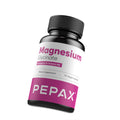
For those seeking a well-formulated option, PEPAX Magnesium Glycinate with Vitamin C & D3 provides magnesium in the glycinate form alongside cofactors that support overall cardiovascular health. Vitamin D status itself influences magnesium metabolism, and many individuals with palpitations may have multiple concurrent nutritional gaps.
Timing matters as well. Dividing the dose between morning and evening maintains more stable serum and tissue levels. Taking magnesium with food enhances absorption and reduces the already-low risk of gastrointestinal discomfort with glycinate formulations.
Who Benefits Most From Addressing Magnesium and Heart Palpitations
The evidence for magnesium and heart palpitations is strongest in specific, identifiable populations. Rather than recommending universal supplementation, a targeted approach based on risk factors and clinical context yields better outcomes.
Individuals with documented magnesium deficiency. This includes patients with low serum magnesium (<0.75 mmol/L) or, more sensitively, low red blood cell magnesium. Diuretic use, chronic alcohol consumption, gastrointestinal disorders (Crohn's disease, celiac disease, chronic diarrhea), and proton pump inhibitor therapy all increase deficiency risk. DiNicolantonio et al. (2018) identified these populations as having the highest cardiovascular risk from subclinical deficiency.
Older adults. Magnesium absorption declines with age, and dietary intake often decreases due to reduced appetite and medication interactions. Abbasi et al. (2012) demonstrated that magnesium supplementation improved sleep quality in elderly subjects — a population that also frequently reports nocturnal palpitations. The overlap between sleep architecture and autonomic tone suggests a shared mechanistic pathway.
Patients with anxiety or chronic stress. Boyle et al. (2017), in a systematic review of magnesium supplementation for subjective anxiety and stress, found that magnesium doses of 75–360 mg daily showed efficacy for mild-to-moderate anxiety. Since catecholamine surges and heightened autonomic tone frequently trigger palpitations, addressing the underlying stress-magnesium axis may reduce symptom frequency. Tarleton et al. (2017) similarly found that 248 mg of elemental magnesium daily for 6 weeks reduced depression scores in adults with mild-to-moderate depression — another condition associated with somatic symptoms including palpitations.
Athletes and individuals with high sweat losses. Sweat contains significant magnesium, and endurance athletes can lose 10–20 mg per liter of sweat. In the context of high training volumes, these losses compound dietary insufficiency and may contribute to exercise-associated arrhythmias or post-exercise palpitations.
Individuals with benign ectopy on monitoring. Patients with structurally normal hearts who experience premature ventricular contractions (PVCs) or premature atrial contractions (PACs) may notice symptom reduction with magnesium repletion. While not all will respond, the low risk and low cost of a therapeutic trial make this a reasonable approach after excluding more serious pathology.
For readers interested in the broader cardiovascular context, the relationship between magnesium and atrial fibrillation follows similar mechanistic principles, as does the connection between magnesium and blood pressure regulation. Those experiencing concurrent muscle symptoms may also find relevant information in our article on magnesium for muscle cramps.
Practical Takeaways on Magnesium and Heart Palpitations
- Assess magnesium status through both serum and red blood cell testing if palpitations are recurrent — serum levels alone miss up to half of deficiencies.
- Choose magnesium glycinate or citrate for optimal absorption and tolerability; avoid oxide due to poor bioavailability.
- Target 200–400 mg of elemental magnesium daily, divided into two doses, for a 6–8 week therapeutic trial.
- Identify and address contributing factors: diuretic use, PPI therapy, alcohol consumption, gastrointestinal disorders, and high sweat losses.
- Rule out structural or ischemic heart disease before attributing palpitations solely to nutritional factors — magnesium supplementation complements but does not replace appropriate cardiac evaluation.
- Combine magnesium repletion with stress reduction strategies, given the bidirectional relationship between autonomic tone, anxiety, and ectopic beats.
The Bottom Line on Magnesium and Heart Palpitations
The relationship between magnesium and heart palpitations is biologically plausible, mechanistically well-supported, and clinically relevant for specific populations — particularly those with documented deficiency, older adults, and individuals under chronic stress. However, most human studies to date are small-scale, and the evidence for isolated benign palpitations specifically is extrapolated from broader cardiovascular and neuromuscular research. Magnesium supplementation is a low-risk, evidence-informed intervention that may reduce symptom burden in appropriately selected individuals, but it should be pursued within the context of a comprehensive cardiac evaluation rather than as a standalone solution.
References
- Abbasi B, et al. "The effect of magnesium supplementation on primary insomnia in elderly: A double-blind placebo-controlled clinical trial." Journal of Research in Medical Sciences. 2012;17(12):1161–1169. [Source]
- Boyle NB, et al. "The Effects of Magnesium Supplementation on Subjective Anxiety and Stress — A Systematic Review." Nutrients. 2017;9(5):429. [Source]
- Gröber U, et al. "Magnesium in Prevention and Therapy." Nutrients. 2015;7(9):8199–8226. [Source]
- DiNicolantonio JJ, et al. "Subclinical magnesium deficiency: a principal driver of cardiovascular disease and a public health crisis." Open Heart. 2018;5(1):e000668. [Source]
- Tarleton EK, et al. "Role of magnesium supplementation in the treatment of depression: A randomized clinical trial." PLOS ONE. 2017;12(6):e0180067. [Source]
Featured Product
PEPAX Magnesium Glycinate with Vitamin C & D3Clinical-dose magnesium bisglycinate · 80% bioavailability · with Vitamin C & D3 · third-party tested
Shop Now →