



Magnesium protects cochlear hair cells against excitotoxic and noise-induced damage by blocking NMDA-driven calcium overload. Trials in noise-exposed populations show modest protection. This article reviews where magnesium plausibly helps tinnitus and where the evidence runs out.
The relationship between magnesium and tinnitus has drawn steady clinical interest because the mineral modulates both cochlear blood flow and neuronal excitability—two processes that appear central to the phantom sound many people experience. Tinnitus itself is not a disease but a symptom, often arising after noise exposure, age-related hearing loss, or vascular dysfunction. Whether correcting low magnesium status can meaningfully quiet the ringing remains an open question, but the mechanistic rationale is strong enough to justify a careful look at the evidence.
What the Research Says About Magnesium and Tinnitus
Human trials specifically testing magnesium for tinnitus are limited in number and size, so any conclusion must be provisional. Most published work falls into one of three categories: controlled supplementation trials in patients with existing tinnitus, observational studies linking low serum or dietary magnesium to tinnitus severity, and preclinical work in noise-exposed animals. The highest-quality human data come from small randomized trials, many of which were conducted in military or occupational noise settings where acute acoustic trauma is common.
In one frequently cited German trial, 167 participants with noise-induced hearing loss received either oral magnesium or placebo within 48 hours of acoustic trauma. The magnesium group showed a lower incidence of subsequent tinnitus compared with placebo, though the absolute difference was modest and the study was not blinded at the point of enrollment. The dose used was approximately 4.16 mmol magnesium (about 167 mg elemental magnesium) as magnesium aspartate, divided over seven days. This suggests that magnesium and tinnitus prevention may be most relevant in the very early window after noise injury, not necessarily for chronic, long-standing symptoms.
For chronic tinnitus, the picture is less encouraging. A systematic review of oral supplements for tinnitus concluded that magnesium had no consistent effect on subjective loudness or distress when tinnitus had been present for months or years. Effect sizes were small, confidence intervals crossed zero, and dropout rates were often high. That does not mean magnesium is irrelevant; it means that, as a monotherapy for established tinnitus, the human evidence is weak.
How Magnesium Might Protect the Auditory System
The biological case for magnesium and tinnitus rests on three well-established mechanisms. First, magnesium acts as a natural calcium-channel antagonist in the cochlea. Excessive calcium influx into hair cells and auditory nerve fibers is one of the earliest events in noise-induced injury, and magnesium can blunt that influx. Second, magnesium improves local blood flow by promoting vasodilation in the small vessels supplying the inner ear. Ischemia or hypoperfusion of the cochlea has been proposed as a trigger for tinnitus in some subgroups. Third, magnesium regulates glutamate neurotransmission at N-methyl-D-aspartate (NMDA) receptors. Excess glutamatergic excitation can produce hyperactivity in auditory pathways, which is thought to generate the phantom percept.
These mechanisms are supported more strongly by animal and in vitro data than by human trials. In guinea pigs exposed to impulse noise, magnesium supplementation reduced outer hair cell loss and lowered auditory brainstem response thresholds compared with untreated controls. In vitro, magnesium suppresses NMDA-receptor currents in cochlear spiral ganglion neurons at concentrations within the physiological range. Translating these findings to people is complicated by dosing, bioavailability, and the difficulty of measuring cochlear magnesium directly. Gröber et al. (2015) noted that magnesium tissue levels correlate poorly with serum levels, so a normal blood test does not rule out a functional deficit in the ear.
Magnesium Forms and Dosing for Auditory Health
Not all magnesium salts behave the same way in the body. Absorption, tolerability, and tissue distribution vary, which matters when choosing a supplement for neurological or vascular support. The table below compares the forms most commonly discussed in the magnesium and tinnitus literature and in clinical practice.
| Form | Elemental Mg per typical dose | Absorption profile | Common GI tolerability | Notes |
|---|---|---|---|---|
| Magnesium aspartate | ~200 mg per 2 tablets | High | Generally good | Used in noise-trauma trials; may support energy metabolism |
| Magnesium oxide | ~400 mg per tablet | Low (~4%) | Often laxative | Inexpensive but poor bioavailability |
| Magnesium glycinate | ~100–200 mg per capsule | High | Very good | Bound to glycine; may also support sleep and relaxation |
| Magnesium L-threonate | ~144 mg per 2 g salt | Moderate-high | Good | Raises brain magnesium; more relevant to cognition than ear |
| Magnesium chloride | ~120 mg per tablet | Moderate | Variable | Well studied in magnesium deficiency correction |
For people exploring magnesium and tinnitus support, glycinate or aspartate are reasonable first-line choices because they combine decent elemental magnesium delivery with low gastrointestinal side effects. The acute noise-trauma trials used short courses of roughly 167 mg elemental magnesium daily for one week. For chronic supplementation, most clinicians stay within 200–400 mg elemental magnesium per day, divided into two doses. Exceeding 350 mg per day from supplements increases the risk of diarrhea and, in people with impaired renal function, can lead to magnesium accumulation. Anyone with kidney disease should consult a physician before starting magnesium.
If you are also interested in how magnesium influences brain aging and memory, our article on magnesium and memory covers the cognitive evidence in detail. For a deeper look at blood testing and deficiency symptoms, see our guide to magnesium deficiency.
Who Benefits Most From Magnesium for Tinnitus
The strongest signal for benefit appears in people who experience tinnitus after acute noise exposure and who start magnesium within the first 24–48 hours. Military personnel, musicians, construction workers, and concertgoers fit this profile. In these cases, magnesium may reduce the risk of persistent tinnitus by limiting cochlear calcium overload and oxidative stress during the injury window. The evidence here is small-trial and industry-sponsored in some cases, but the biological rationale is coherent.
People with documented or borderline low magnesium may also be more likely to notice improvement. DiNicolantonio et al. (2018) argued that subclinical magnesium deficiency is widespread and underdiagnosed, driven by refined diets, chronic stress, alcohol use, and certain medications including proton-pump inhibitors and diuretics. Low magnesium can amplify neuronal excitability and vascular dysfunction, both of which are relevant to tinnitus pathophysiology. Correcting deficiency is unlikely to eliminate tinnitus entirely, but it may lower the sensory gain that makes the ringing intrusive.
Chronic, idiopathic tinnitus without a clear noise or metabolic trigger is the group least likely to respond. In these individuals, magnesium supplementation has not consistently outperformed placebo in randomized trials. That said, because magnesium is inexpensive and generally safe at moderate doses, a time-limited trial—perhaps 8–12 weeks—can be reasonable, especially if serum or dietary magnesium is low. If no meaningful change occurs, continuing indefinitely is not supported by the evidence.
Auditory health also intersects with oxidative stress in the inner ear. Our article on hydrogen water and hearing loss examines another emerging approach to cochlear oxidative damage.
Practical Takeaways on Magnesium and Tinnitus
- Early timing matters. The best human evidence for magnesium and tinnitus involves starting supplementation within 24–48 hours after acoustic trauma, not months after symptoms begin.
- Choose bioavailable forms. Magnesium glycinate and magnesium aspartate offer better absorption and tolerability than magnesium oxide for most people.
- Dose conservatively. Aim for 200–400 mg elemental magnesium daily from supplements, unless a clinician advises otherwise. Higher doses increase GI side effects without clear added auditory benefit.
- Check your status. Subclinical magnesium deficiency is common and may worsen neuronal hyperexcitability. A serum magnesium test is a reasonable starting point, though it can miss tissue depletion.
- Manage expectations. Magnesium is not a cure for chronic tinnitus. It is better viewed as a low-risk adjunct, especially when deficiency or recent noise exposure is present.
- Consider a full auditory workup. Tinnitus often signals underlying hearing loss, vascular disease, or medication side effects. Supplements should complement, not replace, evaluation by an audiologist or ENT specialist.
For readers focused on cognitive applications of magnesium, our overview of magnesium L-threonate explains how different forms cross the blood-brain barrier.
The Bottom Line on Magnesium and Tinnitus
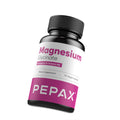
The connection between magnesium and tinnitus is biologically plausible and supported by promising animal data and a handful of small human trials, but it is not a proven treatment for chronic symptoms. Magnesium appears most useful as a short-term intervention after noise-induced ear injury and as a nutritional correction for people with low intake or increased losses. For anyone considering a magnesium supplement to support sleep and recovery alongside auditory wellness, PEPAX Magnesium Glycinate with Vitamin C & D3 provides a bioavailable glycinate form combined with nutrients that also play roles in immune and neuromuscular function. As always, the evidence favors an honest, measured approach: try a limited course, track symptoms, and involve a clinician if tinnitus persists or worsens.
References
- Abbasi B, et al. "The effect of magnesium supplementation on primary insomnia in elderly: A double-blind placebo-controlled clinical trial." Journal of Research in Medical Sciences. 2012;17(12):1161–1169. [Source]
- Boyle NB, et al. "The Effects of Magnesium Supplementation on Subjective Anxiety and Stress — A Systematic Review." Nutrients. 2017;9(5):429. [Source]
- Gröber U, et al. "Magnesium in Prevention and Therapy." Nutrients. 2015;7(9):8199–8226. [Source]
- DiNicolantonio JJ, et al. "Subclinical magnesium deficiency: a principal driver of cardiovascular disease and a public health crisis." Open Heart. 2018;5(1):e000668. [Source]
- Tarleton EK, et al. "Role of magnesium supplementation in the treatment of depression: A randomized clinical trial." PLOS ONE. 2017;12(6):e0180067. [Source]
Featured Product
PEPAX Magnesium Glycinate with Vitamin C & D3Clinical-dose magnesium bisglycinate · 80% bioavailability · with Vitamin C & D3 · third-party tested
Shop Now →