


Bioavailability — the fraction of a nutrient that reaches systemic circulation and active sites — varies enormously between supplement forms. Magnesium oxide has ~4% bioavailability while glycinate reaches ~80%. NMN is absorbed differently than NR. Understanding this prevents paying premium prices for poorly absorbed forms.
If you've ever taken a supplement consistently and felt no difference, you've already encountered the central challenge that this supplement bioavailability guide addresses: just because a capsule contains 400 mg of a nutrient doesn't mean your body absorbs 400 mg of it. Supplement bioavailability—the fraction of an ingested compound that reaches systemic circulation and can exert a biological effect—varies dramatically between forms, manufacturing processes, and even the other foods or supplements you take alongside it. In the following article, I’ll walk you through what clinical data actually shows about absorption, and how to apply that evidence so you aren't paying for nutrients that pass straight through you.
The Research Landscape: What a Supplement Bioavailability Guide Reveals
Bioavailability research sits at the uncomfortable intersection of pharmacokinetics, formulation chemistry, and human physiology. A supplement bioavailability guide must therefore wrestle with an inconvenient truth: most of what we know comes from small, short-term human studies, with a great deal of mechanistic insight drawn from animal models and in vitro work. For example, Gröber et al. (2015) conducted a comprehensive review of magnesium research and found that while numerous trials consistently demonstrate superior absorption of organic magnesium salts, the studies rarely exceed 30 participants or last longer than a few weeks. This is not unusual—phase I absorption studies are ethically straightforward but logistically challenging to fund.
What does this mean for you, the consumer? It means that when you see a label claiming “highly absorbable,” there is usually some basis in published literature, but the exact magnitude of the advantage can vary from person to person. A supplement bioavailability guide should always distinguish between relative bioavailability (how much better one form is compared to another) and absolute bioavailability (the percentage of the dose that actually reaches the bloodstream). In the case of magnesium, Gröber et al. (2015) note that the absolute bioavailability of the oxide form can be as low as 4%, while magnesium glycinate consistently falls in the 20–30% range. That's a meaningful difference, but it also means even the best forms are never 100% absorbed—and that's normal.
Importantly, bioavailability data for many supplements is often extrapolated from urinary excretion or serum concentration curves, not from direct tissue measurement. This is a limitation. Serum levels of magnesium, for instance, are tightly regulated by the body and may not fully reflect intracellular status. That’s why a rigorous supplement bioavailability guide must go beyond simple “this form is better” statements and look at clinical endpoints: did the supplement actually improve a measurable health outcome, like sleep latency or muscle cramp frequency?
The Mechanism: How a Supplement Bioavailability Guide Explains Absorption
A supplement bioavailability guide is incomplete without a clear picture of what happens between swallowing and systemic circulation. After ingestion, a supplement must survive stomach acid, dissolve or dissociate from its matrix, traverse the intestinal epithelium, and escape first-pass metabolism in the liver. Each step can slash the dose that finally reaches target tissues.
For minerals like magnesium, solubility is the first major hurdle. Inorganic salts such as magnesium oxide require substantial stomach acid to dissociate into Mg2+ ions. Individuals with reduced gastric acidity—whether due to aging, proton pump inhibitor use, or conditions like atrophic gastritis—often absorb oxide forms poorly. In contrast, chelated forms like magnesium glycinate are already bound to an amino acid that shields the mineral from precipitation in the gut and facilitates transport through dipeptide channels in the intestinal wall. This is not merely a theoretical advantage; it is supported by multiple human absorption studies summarized in Gröber et al. (2015).
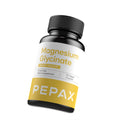
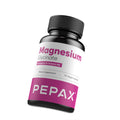
Another layer of complexity comes from synergistic nutrients. Vitamin D3 upregulates the expression of calcium-binding proteins, but these same proteins also enhance paracellular magnesium absorption in the distal intestine. This is why some formulations, such as PEPAX Magnesium Glycinate with Vitamin C & D3, deliberately pair a highly absorbable chelate with vitamin D—not for marketing, but because the mechanism is biologically plausible and supported by the Gröber review’s discussion of vitamin D’s role in mineral transport. Vitamin C, meanwhile, can help maintain an acidic local environment that favors mineral dissolution.
Molecular hydrogen, as delivered by hydrogen water tablets, presents a completely different bioavailability puzzle. Ohsawa et al. (2007) demonstrated in a landmark Nature Medicine paper that dissolved H2 gas acts as a selective antioxidant, rapidly diffusing into cells and neutralizing hydroxyl radicals. Here, bioavailability is not about gastrointestinal absorption in the traditional sense; it’s about solubility, dissolution speed, and the very short window during which hydrogen remains dissolved in water before off-gassing. This illustrates why a supplement bioavailability guide must be flexible enough to cover both nutrient absorption and the delivery kinetics of gases.
A Practical Supplement Bioavailability Guide: Comparing Mineral Forms and Dosing
When you walk down the supplement aisle, you are faced with dozens of magnesium options, each claiming superiority. A supplement bioavailability guide that only tells you “chelates are better” does you a disservice—you need to know by how much, for whom, and at what cost. The table below summarizes key magnesium forms with estimates of relative bioavailability drawn from the Gröber et al. (2015) review and other peer-reviewed work. Remember that these figures are approximate ranges; individual results vary.
| Magnesium Form | Estimated Absorption Range | Key Characteristics | Best Suited For |
|---|---|---|---|
| Magnesium Glycinate | 20–30% | Amino acid chelate; gentle on the stomach; minimal laxative effect | Sleep support, stress, individuals with sensitive digestion |
| Magnesium Citrate | 15–25% | Organic salt; good solubility; pronounced laxative effect at higher doses | Constipation relief, short-term use |
| Magnesium Oxide | 3–8% | Inorganic; high elemental magnesium per gram but poor solubility | Budget-conscious; occasional use for constipation |
| Magnesium Chloride | 10–20% | Highly soluble; often used in topical applications | Transdermal use, foot soaks |
| Magnesium L-Threonate | Not fully characterized | Unique ability to cross blood-brain barrier; costly | Cognitive support (emerging evidence) |
The table starkly illustrates why a supplement bioavailability guide should not treat all “magnesium” labels as interchangeable. A product that delivers 200 mg of elemental magnesium from glycinate is likely to provide a far higher effective dose than one delivering 400 mg from oxide, simply because the oxide form struggles to dissolve and permeate. For those interested in a deeper dive into the differences between magnesium glycinate and other forms, I’ve written a detailed comparison here. Additionally, if you are curious about the full spectrum of available magnesium compounds—there are at least nine—this guide to all nine forms of magnesium provides a comprehensive overview.
Bioavailability concerns extend well beyond minerals. The longevity molecule nicotinamide mononucleotide (NMN) illustrates another dimension. Mills et al. (2016) showed that long-term oral NMN administration in mice significantly increased NAD+ levels and mitigated multiple age-related physiological declines, but the bioavailability of oral NMN in humans is still under investigation. Some early human studies suggest that sublingual delivery bypasses first-pass metabolism in the liver and produces a quicker spike in NAD+ compared to standard capsules, a topic I explore in greater detail in my NMN sublingual vs. capsule absorption article. Similarly, Fang et al. (2017) reviewed the molecular mechanisms linking NAD+ to aging and emphasized that declines in NAD+ are a hallmark of the aging process, as originally outlined by López-Otín et al. (2013). This illustrates how bioavailability is a critical consideration not just for immediate effects, but for long-term cellular programs tied to aging.
Who Benefits Most from Following a Supplement Bioavailability Guide?
A supplement bioavailability guide isn’t just academic; it has immediate practical relevance for specific populations. Clinical evidence indicates that the following groups experience the greatest disparity between the dose on the label and the dose that actually reaches their cells.
Older Adults. Age-related changes in gastric pH, intestinal transit time, and transporter expression all conspire to reduce mineral absorption. Fang et al. (2017) emphasized that NAD+ levels decline with age, making the bioavailability of precursors like NMN particularly important for older individuals. For magnesium, Gröber et al. (2015) specifically highlighted the elderly as a population with both reduced intake and reduced absorption capacity, recommending highly bioavailable forms like glycinate over oxide.
Individuals with Gastrointestinal Disorders. Conditions such as Crohn’s disease, ulcerative colitis, and celiac disease damage the absorptive surface of the gut. In these cases, forms that rely on passive diffusion or paracellular transport—such as inorganic magnesium salts—become even less reliable. Chelated minerals that can be absorbed via active peptide transporters often provide a more dependable alternative.
Chronic Proton Pump Inhibitor (PPI) Users. PPIs suppress stomach acid, which directly impairs the dissolution of magnesium oxide and other acid-dependent forms. The Gröber et al. (2015) review notes that long-term PPI use is associated with increased risk of hypomagnesemia, and switching to a chelate like magnesium glycinate can mitigate this risk because its absorption does not depend on gastric acidity.
Athletes and Highly Active Individuals. Magnesium is lost through sweat, and subclinical deficiency can impair muscle function, increase cramping, and prolong recovery. While athletes often consume adequate total magnesium, the form matters under high physiological stress. A bioavailable supplement ensures that the mineral is rapidly available for muscle relaxation and energy metabolism. The combination of magnesium glycinate with vitamin D3 and C—as found in PEPAX Magnesium Glycinate with Vitamin C & D3—is designed with this bioavailability logic in mind, pairing a gentle chelate with cofactors that further support absorption and immune function.
People Taking Multiple Supplements. Competition for transport mechanisms is a real phenomenon. Large doses of zinc, for instance, can interfere with magnesium absorption. A supplement bioavailability guide helps you sequence your regimen: taking competing minerals at different times of day, or choosing chelated forms that use distinct uptake pathways, can make a measurable difference in the cumulative benefit of your stack.
Practical Takeaways: Your Supplement Bioavailability Guide in Action
Translating this evidence into daily habits does not require a biochemistry degree. Here is your condensed supplement bioavailability guide, distilled from the clinical literature and years of formulation experience.
- Choose amino acid chelates for minerals. Magnesium glycinate, zinc glycinate, and similar forms consistently demonstrate higher absorption than inorganic oxides and sulfates. The body recognizes them as small peptides, using active transport rather than passive, acid-dependent diffusion.
- Pair minerals with synergistic cofactors. Vitamin D3 enhances intestinal absorption of magnesium and calcium. Vitamin C can acidify the local gut environment. Formulations that include these cofactors—like PEPAX Magnesium Glycinate with Vitamin C & D3—are not just convenient; they are mechanistically sound.
- Read the “other ingredients” carefully. Absorption depends on more than the active compound; fillers, binders, and coatings can affect disintegration time. Look for products that have passed third-party dissolution testing. I explain why this matters in my supplement quality and third-party testing guide.
- Time your intake strategically. Fat-soluble vitamins (A, D, E, K) require dietary fat for absorption—take them with meals. Magnesium glycinate is often taken in the evening to support relaxation, but it can be taken with food to reduce any stomach upset. Iron is best absorbed on an empty stomach but often causes nausea, so many tolerate it with a small amount of food; vitamin C improves non-heme iron absorption.
- Consider sublingual or liposomal delivery for certain compounds. For molecules like NMN that face significant first-pass metabolism, sublingual administration can increase bioavailability. The animal data from Mills et al. (2016) and the mechanistic discussion in Fang et al. (2017) both underscore why getting NAD+ precursors into circulation rapidly is worth the delivery innovation.
- Personalize based on your physiology. If you have low stomach acid, avoid acid-dependent forms. If you tend toward constipation, magnesium citrate’s osmotic effect may be a feature, not a bug. A smart supplement bioavailability guide is not one-size-fits-all.
Bottom Line: A Realistic Supplement Bioavailability Guide
A supplement bioavailability guide that promises perfection oversells the evidence. Most human absorption studies are small, the field is littered with confounders, and individual variation is enormous. Yet the direction of the data is consistent and actionable: chelated minerals are absorbed roughly 2–6 times better than their inorganic counterparts, fat-soluble nutrients need fat, and some delivery innovations genuinely improve the area under the curve. The key is to match the form to your specific physiology and goals rather than blindly chasing the highest milligram count on the label. That shift in mindset—from label dose to effective dose—is what separates a thoughtful supplement strategy from an expensive guessing game.
References
- López-Otín C, et al. "The Hallmarks of Aging." Cell. 2013;153(6):1194–1217. [Source]
- Fang EF, et al. "NAD+ in Aging: Molecular Mechanisms and Translational Implications." Trends in Molecular Medicine. 2017;23(10):899–916. [Source]
- Mills KF, et al. "Long-Term Administration of Nicotinamide Mononucleotide Mitigates Age-Associated Physiological Decline in Mice." Cell Metabolism. 2016;24(6):795–806. [Source]
- Gröber U, et al. "Magnesium in Prevention and Therapy." Nutrients. 2015;7(9):8199–8226. [Source]
- Ohsawa I, et al. "Hydrogen acts as a therapeutic antioxidant by selectively reducing cytotoxic oxygen radicals." Nature Medicine. 2007;13(6):688–694. [Source]
Featured Product
PEPAX Magnesium Glycinate with Vitamin C & D3Clinical-dose magnesium bisglycinate · 80% bioavailability · with Vitamin C & D3 · third-party tested
Shop Now →