


Explore how magnesium deficiency may exacerbate histamine release, mast cell activation, and what the evidence says about magnesium for histamine intolerance.
Magnesium and Histamine Intolerance is a topic that sits at the intersection of mineral nutrition and immune regulation. For people who experience flushing, headaches, digestive distress, or skin reactions after certain foods, the question of whether magnesium can stabilize mast cells and modulate histamine release is clinically relevant. This article examines what the evidence actually shows — and where the gaps remain.
What the Research Says About Magnesium and Histamine Intolerance
The direct clinical trial literature on magnesium and histamine intolerance is sparse. No large-scale randomized controlled trial has specifically tested magnesium supplementation as a primary intervention for histamine intolerance or mast cell activation syndrome. Most human studies to date are small-scale, and the mechanistic connections rely heavily on preclinical evidence and indirect clinical data from related conditions.
What we do have is a body of research on magnesium's role in immune modulation, mast cell stabilization, and inflammatory regulation. Magnesium in Prevention and Therapy by Gröber et al. (2015) provides a comprehensive overview of magnesium's physiological functions, noting that magnesium acts as a natural calcium antagonist and influences the release of inflammatory mediators. Gröber et al. (2015) highlight that intracellular magnesium levels affect the stability of mast cells and their degranulation response — though this is derived primarily from in vitro and animal models rather than human RCTs.
The connection between magnesium deficiency and broader inflammatory markers has been documented. DiNicolantonio et al. (2018) argue that subclinical magnesium deficiency is a principal driver of cardiovascular disease and a public health crisis, noting that low magnesium status is associated with elevated C-reactive protein (CRP) and other inflammatory markers. While this does not directly establish magnesium as a treatment for histamine intolerance, it provides a plausible mechanistic bridge: chronic low-grade inflammation and mast cell hyperactivity often coexist.
For readers interested in the broader inflammation context, see our article on Magnesium and Inflammation: The Link Between Deficiency and CRP Levels.
How Magnesium Influences Mast Cell Stability and Histamine Release
Magnesium modulates histamine biology through several well-characterized biochemical pathways. Understanding these mechanisms helps explain why magnesium and histamine intolerance are frequently discussed together in functional medicine contexts — even when direct human trial evidence is limited.
Magnesium as a Calcium Channel Regulator
Mast cell degranulation — the process by which mast cells release histamine, tryptase, and other inflammatory mediators — is calcium-dependent. Magnesium functions as a physiological calcium antagonist. At the cellular level, magnesium competes with calcium for binding sites on membrane channels and intracellular proteins. When intracellular magnesium is adequate, it helps limit excessive calcium influx, which in turn reduces the signaling cascade that triggers mast cell degranulation. Gröber et al. (2015) describe this calcium-magnesium antagonism as fundamental to magnesium's anti-inflammatory and potentially mast cell-stabilizing effects.
Histamine N-Methyltransferase (HNMT) and Magnesium
The enzyme histamine N-methyltransferase (HNMT) is responsible for degrading histamine intracellularly, particularly in the central nervous system and bronchial epithelium. HNMT requires S-adenosylmethionine (SAMe) as a methyl donor, and the methylation cycle itself is magnesium-dependent. Magnesium serves as a cofactor for multiple enzymes in the methylation pathway, including methionine adenosyltransferase. Inadequate magnesium could theoretically slow histamine clearance via reduced HNMT activity, though this specific mechanism has not been quantified in human studies of histamine intolerance.
Diamine Oxidase (DAO) and Mineral Cofactors
Diamine oxidase (DAO) is the primary extracellular enzyme that degrades dietary histamine in the gut. DAO is a copper-containing enzyme, but its activity is influenced by broader mineral status and oxidative stress. Magnesium's role in supporting antioxidant systems — particularly through its function in the glutathione peroxidase and superoxide dismutase pathways — may indirectly preserve DAO activity by reducing oxidative damage to the enzyme. This remains speculative based on current evidence; no human trial has measured DAO activity before and after magnesium supplementation.
The Stress-Histamine Connection
Psychological stress activates the hypothalamic-pituitary-adrenal (HPA) axis and increases cortisol release. Stress also primes mast cells for degranulation via corticotropin-releasing hormone (CRH) and nerve growth factor (NGF). Magnesium has been shown to modulate the stress response. Boyle et al. (2017) conducted a systematic review of magnesium supplementation on subjective anxiety and stress, finding that available studies suggest a beneficial effect, though the authors note that the quality of evidence is poor and better-designed trials are needed. For a deeper look at this pathway, see our article on Magnesium and Cortisol: How This Mineral Regulates Your Stress Response.
The practical implication: individuals with histamine intolerance often report symptom flares during periods of stress. Magnesium's role in HPA axis regulation may offer indirect support for mast cell stability through stress reduction, though this is not the same as direct mast cell stabilization.
Magnesium Forms and Dosages: What the Evidence Supports
Not all magnesium formulations are equivalent in absorption, tolerability, or clinical application. For people exploring magnesium and histamine intolerance, the choice of form matters — particularly for those with digestive sensitivity, which is common in histamine intolerance.
| Magnesium Form | Elemental Mg per Common Dose | Absorption Characteristics | Gastrointestinal Tolerability | Relevant Clinical Notes |
|---|---|---|---|---|
| Magnesium Glycinate | 100–200 mg | High; chelated to amino acid | Excellent; least likely to cause diarrhea | Preferred for sensitive GI systems; glycine may have additional calming effects |
| Magnesium Citrate | 150–300 mg | Good | Moderate; osmotic laxative effect at higher doses | Well-studied; Tarleton et al. (2017) used magnesium chloride equivalent to 248 mg elemental Mg |
| Magnesium Oxide | 250–500 mg | Low (~4% bioavailable) | Poor; frequent diarrhea | Not recommended for therapeutic magnesium repletion |
| Magnesium Threonate | 144 mg | High; crosses blood-brain barrier | Good | Primarily studied for cognitive outcomes; limited inflammation or mast cell data |
Tarleton et al. (2017) used magnesium chloride in a randomized clinical trial for depression, providing 248 mg of elemental magnesium per day. Over 126 adults completed the trial, and significant improvement in depression scores was observed. While this study did not measure histamine or mast cell markers, it establishes that magnesium supplementation at this dose is bioactive in human populations. Abbasi et al. (2012) used 500 mg magnesium (as magnesium oxide, though bioavailability is poor) in elderly patients with insomnia, finding improved sleep metrics. The effective dose range in most clinical trials falls between 200–400 mg elemental magnesium daily.
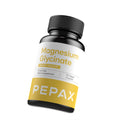
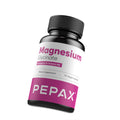
For individuals with histamine intolerance who also experience stress-related symptom flares, a magnesium glycinate formulation provides high bioavailability without the osmotic GI effects of citrate or oxide forms. The glycinate chelate is absorbed via amino acid transporters, bypassing some of the intestinal irritation that can exacerbate histamine-related gut symptoms. PEPAX Magnesium Glycinate with Astragalus & B6 combines this well-tolerated magnesium form with vitamin B6, which functions as a cofactor for histamine degradation enzymes including DAO, and astragalus, an adaptogen with traditional use in immune modulation — though astragalus clinical data for mast cell conditions is limited.
Who Benefits Most from Magnesium for Histamine and Mast Cell Support
Given the current evidence landscape, magnesium and histamine intolerance should be viewed as a supportive strategy rather than a primary treatment. Certain populations have stronger theoretical and indirect clinical rationale for magnesium supplementation:
Individuals with documented magnesium deficiency. DiNicolantonio et al. (2018) estimate that subclinical magnesium deficiency affects a substantial portion of the population, particularly those consuming processed diets, using proton pump inhibitors, or living with chronic stress. For these individuals, repleting magnesium status may improve overall inflammatory tone and indirectly support mast cell stability.
People with stress-exacerbated histamine symptoms. Boyle et al. (2017) found that magnesium supplementation showed promise for subjective anxiety and stress. Since psychological stress is a known trigger for mast cell degranulation via CRH and NGF pathways, individuals whose histamine intolerance flares during stressful periods may experience indirect benefit. See our detailed review on Magnesium for Anxiety: Reviewing the Clinical Trial Evidence and Effective Dosage.
Those with sleep disruption and histamine dysregulation. Abbasi et al. (2012) demonstrated that 500 mg magnesium supplementation improved sleep quality in elderly insomniacs. Poor sleep increases histamine release in the CNS and impairs immune regulation. Magnesium's role in sleep quality may indirectly benefit individuals whose histamine intolerance is worsened by sleep deprivation.
Patients with broader immune dysregulation. For readers interested in how magnesium affects white blood cell function and broader immune competence, our article on Magnesium and Immunity: How Deficiency Affects White Blood Cell Function and Inflammation covers the clinical data on magnesium's role in immune cell proliferation and cytokine production.
Important caveat: Most human studies to date are small-scale. The largest magnesium RCTs have been conducted in depression, anxiety, insomnia, and cardiovascular disease — not in histamine intolerance or mast cell activation syndrome specifically. The extrapolation to mast cell conditions is mechanistically plausible but not clinically proven.
Practical Takeaways for Magnesium and Histamine Intolerance
- Test, don't guess. Serum magnesium is a poor marker of total body status. Consider RBC magnesium or magnesium loading tests if available, especially if you have symptoms of deficiency.
- Target 200–400 mg elemental magnesium daily. This range aligns with doses used in clinical trials for depression (Tarleton et al. 2017) and insomnia (Abbasi et al. 2012). Split into two doses for better absorption.
- Choose glycinate for GI sensitivity. If you have histamine-related digestive symptoms, magnesium glycinate is the best-tolerated form with high bioavailability and minimal osmotic GI effect.
- Address magnesium deficiency as part of a broader protocol. Magnesium alone is unlikely to resolve histamine intolerance if underlying triggers — high-histamine foods, DAO deficiency, gut dysbiosis, or chronic stress — are not addressed.
- Allow 4–8 weeks for assessment. Mineral repletion takes time. Track symptoms systematically before concluding whether magnesium is helping your histamine tolerance.
- Consult a clinician if symptoms are severe. Histamine intolerance and mast cell activation syndrome can range from mild food sensitivity to serious multisystem disorders. Self-supplementation should not replace medical evaluation.
For those considering a formulation that combines magnesium glycinate with cofactors relevant to histamine metabolism, PEPAX Magnesium Glycinate with Astragalus & B6 provides the glycinate form at a dose compatible with clinical research ranges, plus vitamin B6 as a DAO cofactor. This is not a claim that it treats histamine intolerance — the evidence does not support that — but it is a formulation designed with the biochemical pathways in mind.
The Bottom Line on Magnesium and Histamine Intolerance
The connection between magnesium and histamine intolerance is mechanistically plausible and indirectly supported by magnesium's roles in mast cell calcium regulation, methylation support, and stress response modulation. However, no RCT has directly tested magnesium as an intervention for histamine intolerance. Most human studies to date are small-scale, and the evidence quality for this specific application remains low. Magnesium repletion is a reasonable supportive strategy for individuals with deficiency, stress-related symptom flares, or sleep disruption — but it should not be expected to resolve histamine intolerance as a standalone treatment.
References
- Abbasi B, et al. "The effect of magnesium supplementation on primary insomnia in elderly: A double-blind placebo-controlled clinical trial." Journal of Research in Medical Sciences. 2012;17(12):1161–1169. [Source]
- Boyle NB, et al. "The Effects of Magnesium Supplementation on Subjective Anxiety and Stress — A Systematic Review." Nutrients. 2017;9(5):429. [Source]
- Gröber U, et al. "Magnesium in Prevention and Therapy." Nutrients. 2015;7(9):8199–8226. [Source]
- DiNicolantonio JJ, et al. "Subclinical magnesium deficiency: a principal driver of cardiovascular disease and a public health crisis." Open Heart. 2018;5(1):e000668. [Source]
- Tarleton EK, et al. "Role of magnesium supplementation in the treatment of depression: A randomized clinical trial." PLOS ONE. 2017;12(6):e0180067. [Source]
Featured Product
PEPAX Magnesium Glycinate with Astragalus & B6Magnesium glycinate · Astragalus root adaptogen · Vitamin B6 · clinical dose · cGMP certified
Shop Now →
Further Reading
- Magnesium and Immunity: How Deficiency Affects White Blood Cell Function and Inflammation
- Magnesium and Inflammation: The Link Between Deficiency and CRP Levels
- Magnesium and Cortisol: How This Mineral Regulates Your Stress Response
- Magnesium for Anxiety: Reviewing the Clinical Trial Evidence and Effective Dosage