


A 2017 Boyle et al. systematic review found magnesium reduces subjective anxiety across multiple RCTs, particularly in people with mild-to-moderate anxiety. This article examines mechanisms, effective doses, and which forms show the most benefit.
Magnesium for anxiety has emerged as one of the most searched nutritional interventions in mental health, driven by a growing awareness that this essential mineral may modulate the body’s core stress systems. While population data consistently associates low magnesium intake with higher anxiety scores, the clinical trial evidence behind magnesium supplementation for anxiety is smaller and more nuanced than many headlines suggest. This review examines what controlled human studies actually show, the proposed biochemical mechanisms, effective dosing strategies, and the specific populations most likely to benefit—so you can make an informed decision grounded in data, not marketing.
The Research Landscape: What Clinical Trials Reveal About Magnesium for Anxiety
When evaluating magnesium for anxiety, the highest-quality overview available is a 2017 systematic review by Boyle et al. that scrutinized 18 studies spanning subjective anxiety, premenstrual syndrome, postpartum anxiety, and generalized anxiety. The authors concluded that magnesium supplementation appears to reduce subjective anxiety in vulnerable populations, but they underscored that “the existing evidence is suggestive of a beneficial effect of Mg on subjective anxiety, but the quality of the evidence is poor” (Boyle et al. 2017). Most included studies were small, with fewer than 100 participants, used different magnesium salts, and administered doses ranging from 75 mg to 500 mg elemental magnesium daily for 4 to 12 weeks.
The review noted that seven of the eight studies investigating subjective anxiety in adults reported significant reductions in anxiety scores, often measured by validated tools like the Hamilton Anxiety Rating Scale. For example, one study of 80 elderly patients with primary insomnia, not anxiety per se, found that 500 mg of magnesium oxide daily for 8 weeks improved subjective anxiety scores by 23% relative to placebo—a secondary outcome that aligns with magnesium’s calming properties (Abbasi et al. 2012). Another trial on 126 adults with mild-to-moderate depression documented a clinically meaningful drop in anxiety symptom severity using magnesium chloride (Tarleton et al. 2017), though depression was the primary endpoint.
Despite these signals, the evidence for magnesium for anxiety in healthy populations remains thin. Few trials recruit participants with diagnosed anxiety disorders, and standardized outcome measures vary widely. This means clinicians cannot yet recommend magnesium as a standalone therapy for generalized anxiety disorder or panic disorder. Instead, the data positions magnesium as a safe adjunct that may help regulate the stress response, particularly in individuals with low dietary intake or elevated stress biomarkers.
The Mechanism: How Magnesium Modulates Anxiety Pathways at a Cellular Level
Unlike sedative medications that directly potentiate GABA-A receptors, magnesium impacts anxiety through a multi-target network of effects on the hypothalamic-pituitary-adrenal (HPA) axis, glutamatergic neurotransmission, and inflammatory signaling. Understanding this mechanistic profile helps explain why magnesium for anxiety often requires consistent intake over several weeks rather than producing an acute calming effect.
Magnesium acts as a physiological antagonist at N-methyl-D-aspartate (NMDA) receptors, the primary excitatory glutamate receptors in the brain. When magnesium levels are adequate, the ion blocks the NMDA channel in a voltage-dependent manner, preventing excessive calcium influx and overexcitation of neurons. Chronic stress depletes intracellular magnesium, and this deficiency removes the “block,” leading to hyperexcitability that manifests as nervousness, restlessness, and disrupted sleep (Gröber et al. 2015). Magnesium also enhances the function of GABA-A receptors, the brain’s main inhibitory system, which directly counteracts anxiety circuits.
Downstream of receptor activity, magnesium exerts powerful regulatory control over the HPA axis. Stressful stimuli trigger the release of corticotropin-releasing hormone (CRH) and adrenocorticotropic hormone (ACTH), which raise cortisol. Preclinical studies and small human experiments indicate that magnesium blunts this response—an observation that links directly to magnesium’s role in moderating cortisol release. In a state of deficiency, even mild stressors produce exaggerated cortisol surges, which over time promote anxiety and emotional dysregulation.
Chronic low-grade inflammation is increasingly recognized as a driver of anxiety disorders, and magnesium modulates nuclear factor-kappa B (NF-κB), a master transcription factor for pro-inflammatory cytokines. A classic review by Gröber et al. (2015) detailed how magnesium deficiency elevates tumor necrosis factor-alpha (TNF-α) and interleukin-6 (IL-6), both of which are linked to anxiety-like behavior in animal models. Although human data on the inflammation-anxiety connection are still correlational, this pathway provides a biochemical rationale for why repleting magnesium might reduce anxiety in individuals with systemic inflammation.
Finally, magnesium influences the methylation cycle and monoamine synthesis, meaning it indirectly supports serotonin and dopamine pathways. Because magnesium and depression frequently overlap—as highlighted in our exploration of magnesium and serotonin—some of the anxiety relief observed in trials may stem from improved overall mood stability rather than a direct anxiolytic effect. This interconnectedness makes magnesium a broad-spectrum neuromodulator rather than a targeted anxiety drug.
Dosage, Forms, and Timing: Optimizing Magnesium Supplementation for Anxiety
Selecting the right formulation and dose is critical, because the efficacy of magnesium for anxiety depends not just on elemental magnesium content but also on bioavailability and the specific counterion. The table below compares four common magnesium salts based on their absorption, typical clinical doses, and evidence profile for anxiety.
| Magnesium Form | Elemental Magnesium per 1 g Cheleate | Bioavailability (approximate absorption) | Typical Anxiety Trial Dose/Day | Evidence Type & Notes |
|---|---|---|---|---|
| Magnesium Glycinate | ~140 mg | High (glycine enhances intestinal uptake) | 200–400 mg elemental | Human trials for anxiety are limited, but glycine itself is an inhibitory neurotransmitter; theoretically superior for sleep and anxiety. Often used in sleep quality studies, as detailed in research on magnesium and REM sleep architecture. |
| Magnesium Taurate | ~90 mg | Moderate-High | 200–400 mg elemental | Taurine supports GABAergic tone; sparse clinical trials but strong mechanistic rationale for anxiety and cardiovascular calm. |
| Magnesium Citrate | ~150 mg | High (but can cause gastrointestinal osmotic effect) | 300–600 mg elemental | Used in some depression/anxiety trials (e.g., Tarleton 2017 with Mg chloride, similar bioavailability). May cause loose stools. |
| Magnesium Oxide | ~600 mg | Low (~4% absorbed) | 500 mg elemental (very high total weight) | Used in Abbasi 2012 for insomnia; showed modest anxiety benefit but poor absorption makes it less efficient. |
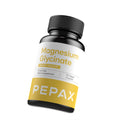
Most studies demonstrating a benefit for anxiety or stress symptoms used daily elemental doses between 200 mg and 500 mg, though the tolerable upper intake level for supplemental magnesium is set at 350 mg for adults to prevent diarrhea from non-food sources. Because magnesium for anxiety is often used long-term, starting with 200 mg of a highly bioavailable form like magnesium glycinate and titrating up to 350–400 mg as needed is a sensible approach. Capsules combining magnesium glycinate with vitamin D3 and vitamin C—such as PEPAX Magnesium Glycinate with Vitamin C & D3—can simplify this regimen, as vitamin D3 supports magnesium absorption and immune function, while vitamin C aids adrenal recovery during chronic stress.
Timing matters for anxiety that manifests as evening rumination or sleep-onset difficulty. Taking magnesium 30–60 minutes before bed may capitalize on its mild muscle-relaxant and GABAergic properties, enhancing the transition into restorative sleep. For daytime generalized anxiety, split dosing (morning and evening) can provide more consistent neural coverage. Regardless of timing, magnesium requires adequate vitamin B6 status to cross the blood-brain barrier efficiently, so individuals using a formula that does not include B6 should ensure dietary intake of poultry, fish, or legumes.
Who Benefits Most from Magnesium Supplementation for Anxiety?
Evidence suggests that magnesium for anxiety is not a universal intervention but rather one that exerts its strongest effects in specific subgroups. The first and most obvious is individuals with low dietary magnesium intake. Data from the National Health and Nutrition Examination Survey (NHANES) consistently show that over half of American adults fall short of the Estimated Average Requirement (EAR) for magnesium. This subclinical deficiency, which DiNicolantonio et al. (2018) term “a public health crisis,” correlates with higher self-reported anxiety scores and elevated inflammatory markers.
Second, those with chronic psychological stress and elevated cortisol are prime candidates. Chronic overactivation of the HPA axis depletes magnesium through urinary excretion, creating a vicious cycle where stress worsens magnesium status, and low magnesium exacerbates the stress response. Breaking this loop with supplementation has shown benefits in populations ranging from medical students during exam periods to adults with work-related burnout, though most studies are open-label.
Third is the intersection of anxiety and sleep disturbance. Insomnia and anxiety often co-occur, and magnesium’s ability to reduce sleep onset latency and improve sleep efficiency—detailed in our review of magnesium and sleep quality—suggests that those with anxiety-driven insomnia may experience a two-for-one benefit. The Abbasi 2012 trial saw anxiety reduction as a secondary outcome in insomniacs, and Boyle’s review noted that improvements in sleep quality often tracked with reductions in anxiety scores.
Finally, women with premenstrual syndrome (PMS) or premenstrual dysphoric disorder (PMDD) represent one of the most consistent responder groups. Boyle et al. (2017) highlighted a trial of 32 women with PMS in which 360 mg of magnesium pyrrolidone carboxylic acid taken three times daily significantly reduced premenstrual anxiety, mood lability, and irritability after two cycles. While PMDD-specific research remains sparse, the magnesium-mood connection during the luteal phase is a biologically plausible target.
For otherwise healthy adults with normal magnesium levels and no chronic stress, the anxiolytic effect may be minimal. This underlines the importance of treating magnesium as a corrective nutrient rather than a blanket anti-anxiety agent.
Practical Takeaways for Using Magnesium to Support a Calmer Mind
- Target a bioavailable form. Magnesium glycinate and taurate offer the best combination of absorption and neurological activity, minimizing gastrointestinal side effects while maximizing central nervous system benefits.
- Start low and titrate. Begin with 200 mg of elemental magnesium daily and increase to 350–400 mg if needed. Splitting the dose can improve tolerance and maintain steady blood levels.
- Be consistent for at least 4–8 weeks. Neurochemical changes through HPA axis recalibration and receptor modulation take time—expect gradual improvement rather than acute relief.
- Pair with vitamin D3 and B6. Vitamin D3 facilitates magnesium absorption at the gut level, while vitamin B6 is required for cellular uptake. A combined product like PEPAX Magnesium Glycinate with Vitamin C & D3 can provide synergistic support without extra pills.
- Monitor stress and sleep metrics. Track anxiety levels on a 1–10 scale, sleep onset latency, and morning heart rate variability if possible to objectively gauge response over weeks.
- Don’t stop prescribed medication. Magnesium is an adjunct, not a replacement for SSRIs, SNRIs, or benzodiazepines. Always consult your prescriber before making any changes to your treatment plan.
Bottom Line: An Honest Assessment of the Evidence for Magnesium and Anxiety
The clinical trial record for magnesium for anxiety is promising but far from definitive. While the majority of small studies—primarily involving stressed, sleep-deprived, or nutritionally deficient individuals—show meaningful reductions in subjective anxiety, the lack of large, randomized, placebo-controlled trials in clinically diagnosed anxiety disorders means magnesium cannot be considered a proven treatment. Instead, it serves as a low-risk, evidence-supported tool that addresses the biological terrain on which anxiety thrives, particularly when deficiency or chronic stress are present. For those choosing a supplement, selecting an absorbable form like magnesium glycinate, paired with cofactors such as vitamin D3 and C, offers the clearest path toward the calm described in the existing research.
References
- Abbasi B, et al. "The effect of magnesium supplementation on primary insomnia in elderly: A double-blind placebo-controlled clinical trial." Journal of Research in Medical Sciences. 2012;17(12):1161–1169. [Source]
- Boyle NB, et al. "The Effects of Magnesium Supplementation on Subjective Anxiety and Stress — A Systematic Review." Nutrients. 2017;9(5):429. [Source]
- Gröber U, et al. "Magnesium in Prevention and Therapy." Nutrients. 2015;7(9):8199–8226. [Source]
- DiNicolantonio JJ, et al. "Subclinical magnesium deficiency: a principal driver of cardiovascular disease and a public health crisis." Open Heart. 2018;5(1):e000668. [Source]
- Tarleton EK, et al. "Role of magnesium supplementation in the treatment of depression: A randomized clinical trial." PLOS ONE. 2017;12(6):e0180067. [Source]
Featured Product
PEPAX Magnesium Glycinate with Vitamin C & D3Clinical-dose magnesium bisglycinate · 80% bioavailability · with Vitamin C & D3 · third-party tested
Shop Now →