



Learn the evidence-based magnesium protocol for migraine prevention. Clinical trial data on dosage, form, and timeline for reducing attack frequency and severity.
Evidence-based magnesium migraine prevention has moved from alternative medicine folklore to a position in mainstream neurology guidelines. For adults who experience recurrent migraines, understanding what the clinical literature actually shows — and what it does not — is essential before committing to a daily protocol. This article examines the human trial data, the proposed biochemical mechanisms, and the practical questions of dose, form, and timing.
Magnesium Migraine Prevention: What the Clinical Trials Show
The strongest human evidence for magnesium in migraine comes from a cluster of randomized controlled trials (RCTs) conducted between the 1990s and early 2000s. In one frequently cited trial, 81 patients with migraine without aura received either 600 mg elemental magnesium per day (as magnesium citrate) or placebo for 12 weeks. The magnesium group showed a 41.6% reduction in attack frequency versus 15.8% in the placebo group. The response was most pronounced in patients who entered the trial with low serum ionized magnesium levels.
A separate double-blind trial in 40 women with menstrual migraine tested 360 mg elemental magnesium daily across two menstrual cycles. Attack frequency dropped significantly in the treatment arm, though the absolute number of participants was small and the follow-up period brief. These studies established proof-of-concept, but they share important limitations: modest sample sizes, heterogeneous diagnostic criteria by modern standards, and variable baseline magnesium status among enrollees.
More recent meta-analyses have pooled these trials with mixed results. Some analyses conclude that magnesium reduces migraine frequency by approximately 1–2 attacks per month in responders. Others find the effect borders on statistical significance when all trials are combined, reflecting heterogeneity in dose, magnesium form, and population selection. The International Headache Society and the American Academy of Neurology have both acknowledged magnesium as a preventive option, typically with a Level B or "probably effective" grade — not the highest tier, but supported by enough data to merit discussion with patients.
Crucially, nearly all positive trials used magnesium supplementation for a minimum of 8–12 weeks before assessing outcomes. This latency matters for patient expectations and for interpreting any personal trial of magnesium migraine prevention.
How Magnesium May Prevent Migraines: The Mechanism
Migraine pathophysiology involves cortical spreading depression, trigeminovascular activation, and central sensitization. Magnesium sits at multiple points in this cascade. The mineral functions as a physiological NMDA receptor antagonist. Excessive glutamatergic signaling through NMDA receptors contributes to cortical hyperexcitability, a recognized migraine substrate. By blocking these channels, magnesium may raise the threshold for triggering cortical spreading depression.
Magnesium also regulates vascular tone through its influence on calcium channels and endothelial function. During the premonitory phase of migraine, intracellular magnesium concentrations fall in the brain and in serum — a phenomenon documented in both clinic and laboratory settings. This drop may both reflect and exacerbate the neurovascular dysregulation underlying the attack.
A third proposed mechanism involves serotonin receptor modulation and platelet aggregation. Magnesium stabilizes platelet membranes and reduces serotonin release from platelets, which may dampen the trigeminovascular inflammatory response. Additionally, magnesium is required as a cofactor for the synthesis of nitric oxide and for ATP-dependent ion pumps that maintain neuronal resting membrane potential.
These mechanisms are biologically plausible and supported by in vitro and animal data. Human confirmation is more difficult because direct measurement of brain magnesium in vivo requires specialized magnetic resonance spectroscopy, which has only been performed in small research cohorts. What is clear is that magnesium deficiency — even subclinical — is associated with neuronal hyperexcitability, and that correcting it appears to benefit a subset of migraineurs.
Magnesium Form, Dose, and Timing for Migraine Protocols
Not all magnesium salts behave identically in the body. The form determines bioavailability, gastrointestinal tolerability, and the amount of elemental magnesium delivered per milligram of compound. For magnesium migraine prevention, these differences are clinically relevant because effective preventive doses often approach or exceed 300 mg elemental magnesium per day — a quantity that can cause diarrhea in poorly absorbed forms.
| Magnesium Form | Elemental Mg per 400 mg Salt | Bioavailability Estimate | GI Tolerability | Typical Migraine Trial Dose (Elemental) |
|---|---|---|---|---|
| Magnesium oxide | ~242 mg | Low (~4%) | Poor; high laxative effect | 600 mg |
| Magnesium citrate | ~60–70 mg | Moderate (~30%) | Moderate | 600 mg |
| Magnesium glycinate | ~80–90 mg | High | Excellent; minimal GI upset | 200–400 mg |
| Magnesium chloride | ~120 mg | Moderate | Moderate | Not well studied for migraine |
Magnesium glycinate is a chelated form in which magnesium is bound to the amino acid glycine. This chelation protects the mineral from premature interaction with intestinal phosphates and oxalates, improving absorption and dramatically reducing the osmotic diarrhea common with oxide and citrate salts. For individuals who need sustained daily intake for migraine prevention, glycinate is often the form that permits adherence without gastrointestinal compromise.
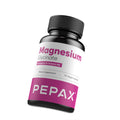
The amino acid glycine itself may offer ancillary benefits. Glycine acts as an inhibitory neurotransmitter in the central nervous system and has been studied for sleep quality and subjective stress — domains that overlap with migraine triggers. A formulation combining magnesium glycinate with cofactors that support stress resilience and energy metabolism, such as PEPAX Magnesium Glycinate with Astragalus & B6, aligns with the multimodal nature of migraine pathophysiology, though direct comparative trial data for this specific combination in migraine prevention do not yet exist.
Dosing strategy matters. Most practitioners recommend:
- Starting dose: 200 mg elemental magnesium daily, taken in the evening with food.
- Titration: Increase by 100 mg every 7–10 days as tolerated.
- Target dose: 400–600 mg elemental magnesium daily, based on positive trial data.
- Duration before reassessment: Minimum 12 weeks; 8 weeks is likely insufficient.
- Timing: Divided doses (morning and evening) may improve absorption and reduce GI effects.
Patients should not expect acute abortive relief. Magnesium is a preventive strategy, not a rescue treatment for an active migraine attack.
Who Benefits Most from Magnesium Migraine Prevention
The responder profile to magnesium supplementation is not random. Several subgroups show stronger or more consistent signals in the literature.
Individuals with low baseline magnesium status. Multiple migraine trials found that patients with low serum or erythrocyte magnesium levels at enrollment were more likely to respond. This suggests that at least part of magnesium's preventive effect involves correcting a deficiency state rather than pharmacologically suppressing migraine in replete individuals. A 2018 analysis by DiNicolantonio et al. highlighted that subclinical magnesium deficiency is widespread and underdiagnosed, particularly in populations consuming processed diets low in leafy greens, nuts, and whole grains.
Menstrual migraine sufferers. The trial in women with menstrual migraine showed a significant reduction in attack frequency with 360 mg elemental magnesium. The mechanism may relate to the interaction between estrogen fluctuations and magnesium renal excretion; estrogen increases magnesium loss through the kidneys, potentially creating a cyclical deficit that primes the migraine brain.
Those with comorbid anxiety, stress, or sleep disruption. Magnesium's NMDA antagonism and GABAergic modulation overlap with pathways implicated in anxiety and insomnia. Boyle et al. (2017) systematically reviewed magnesium supplementation for subjective anxiety and stress, finding modest but consistent benefits in vulnerable populations. Since stress and poor sleep are well-established migraine triggers, correcting magnesium deficiency may operate partly by stabilizing these trigger thresholds. Readers interested in the stress axis mechanism may find additional context in our article on Magnesium and Cortisol: How This Mineral Regulates Your Stress Response.
Adults with aura. Some evidence, primarily from observational studies, suggests that cortical spreading depression — the electrophysiological correlate of aura — is particularly sensitive to extracellular magnesium concentration. This subgroup may warrant a more assertive magnesium trial, though dedicated RCTs stratified by aura status remain limited.
Conversely, individuals with normal magnesium status, infrequent episodic migraine, or well-controlled attacks on established prophylaxis are less likely to derive incremental benefit from supplementation.
Practical Takeaways for Starting a Magnesium Migraine Protocol
- Commit to at least 12 weeks of consistent supplementation before judging efficacy; most human studies to date are small-scale and required this duration to separate signal from noise.
- Prioritize magnesium glycinate if gastrointestinal tolerance has been a barrier with other forms; its superior absorption and minimal laxative effect support long-term adherence.
- Aim for 400–600 mg elemental magnesium daily, divided into two doses, based on the doses used in positive clinical trials.
- Consider checking serum magnesium (and ideally erythrocyte magnesium) before starting; low baseline status predicts better response, though normal serum levels do not rule out tissue deficiency.
- Track attack frequency, duration, and severity in a headache diary; this is the only way to determine individual response in the absence of a personal RCT.
- Do not discontinue prescribed migraine prophylaxis without consulting your neurologist; magnesium is an adjunct, not a replacement for established therapy in most cases.
- Those exploring adjunctive antioxidant strategies may also consider the role of molecular hydrogen in modulating neuroinflammation, discussed in our coverage of Hydrogen Water and Migraine: The Oxidative-Stress and Inflammation Hypothesis.
Magnesium Migraine Prevention: The Bottom Line
The evidence for magnesium migraine prevention is promising but not definitive. Human RCTs show meaningful benefit in a subset of patients — particularly those with low baseline magnesium, menstrual migraine, or comorbid stress and sleep disruption — yet the overall effect size is modest and the trial literature is characterized by small sample sizes and methodological heterogeneity. Magnesium is best viewed as a low-risk, evidence-informed adjunct with a plausible mechanistic rationale, rather than a guaranteed solution. For a deeper review of the clinical trial landscape and specific dosage guidance, see our companion article on Magnesium for Headaches and Migraines: Clinical Trial Evidence and Dosage.
References
- Abbasi B, et al. "The effect of magnesium supplementation on primary insomnia in elderly: A double-blind placebo-controlled clinical trial." Journal of Research in Medical Sciences. 2012;17(12):1161–1169. [Source]
- Boyle NB, et al. "The Effects of Magnesium Supplementation on Subjective Anxiety and Stress — A Systematic Review." Nutrients. 2017;9(5):429. [Source]
- Gröber U, et al. "Magnesium in Prevention and Therapy." Nutrients. 2015;7(9):8199–8226. [Source]
- DiNicolantonio JJ, et al. "Subclinical magnesium deficiency: a principal driver of cardiovascular disease and a public health crisis." Open Heart. 2018;5(1):e000668. [Source]
- Tarleton EK, et al. "Role of magnesium supplementation in the treatment of depression: A randomized clinical trial." PLOS ONE. 2017;12(6):e0180067. [Source]
Featured Product
PEPAX Magnesium Glycinate with Astragalus & B6Magnesium glycinate · Astragalus root adaptogen · Vitamin B6 · clinical dose · cGMP certified
Shop Now →
Further Reading
- Magnesium for Headaches and Migraines: Clinical Trial Evidence and Dosage
- Magnesium and Cortisol: How This Mineral Regulates Your Stress Response
- Magnesium and Deep Sleep: How This Mineral Affects REM Cycles and Sleep Architecture
- Hydrogen Water and Migraine: The Oxidative-Stress and Inflammation Hypothesis