



Explore how magnesium may help manage vertigo and Meniere's disease symptoms. Clinical evidence on inner ear fluid regulation, nerve function, and balance improvement.
When someone types magnesium vertigo into a search bar, they are usually looking for evidence—not hope. Vertigo and its related balance disorders, including Meniere's disease, affect roughly 15–20% of adults at some point in their lives, and many of those patients have already tried vestibular rehabilitation, dietary sodium restriction, and pharmacological interventions with limited success. The question of whether magnesium supplementation can meaningfully reduce the frequency or severity of vertigo episodes has surfaced repeatedly in clinical forums, yet the direct evidence remains thinner than patients and clinicians would prefer. This article examines what the research actually shows, where the gaps are, and what a cautious, evidence-based approach to magnesium vertigo supplementation looks like in practice.
How Magnesium Vertigo Research Is Structured
The literature connecting magnesium to vestibular symptoms falls into three broad categories: observational studies linking low serum magnesium to dizziness, small interventional trials in Meniere's disease, and mechanistic work on ion-channel regulation in the inner ear. No large-scale, placebo-controlled randomized controlled trial (RCT) has specifically tested magnesium against vertigo as a primary endpoint. That absence matters.
What does exist is more suggestive than conclusive. Several observational studies have noted that patients with recurrent vertigo or Meniere's disease tend to have lower serum magnesium levels than controls. However, observational data cannot establish causality. Low magnesium may be a consequence of chronic stress, poor dietary intake, or diuretic use—all common in vertigo populations—rather than a driver of vestibular dysfunction.
The interventional evidence is limited to small trials. One frequently cited study administered magnesium supplementation to patients with Meniere's disease and reported a reduction in vertigo attack frequency over a 12-week period. The sample size was modest, the control arm was not always placebo-controlled, and the outcome relied on patient-reported symptom diaries. These are not fatal flaws, but they are limitations that should temper enthusiasm. Most human studies to date are small-scale, and the effect sizes, while promising, have wide confidence intervals.
For readers interested in adjacent evidence, magnesium's role in related neurological conditions has been studied more extensively. Our article on Magnesium and Tinnitus: Can the Mineral Quiet the Ringing in Your Ears? explores how magnesium may modulate glutamatergic neurotransmission in the cochlea, a mechanism that overlaps with vestibular neurobiology.
The Mechanism: Why Magnesium Vertigo Hypotheses Exist
The biological rationale for magnesium in vertigo and balance disorders rests on three well-established physiological roles: N-methyl-D-aspartate (NMDA) receptor modulation, calcium-channel regulation, and vascular smooth-muscle relaxation.
First, NMDA receptors are densely expressed in the vestibular nuclei of the brainstem. Excessive glutamatergic signaling through these receptors can increase neuronal excitability and lower the threshold for vestibular symptoms. Magnesium acts as a physiological NMDA receptor antagonist at the channel's magnesium-binding site, reducing calcium influx and dampening excitotoxic signaling. This mechanism is not speculative; it is supported by extensive electrophysiological data in animal models and human neuronal tissue. What remains uncertain is whether oral magnesium supplementation achieves sufficient central nervous system (CNS) penetration to meaningfully alter vestibular NMDA receptor activity in humans.
Second, voltage-gated calcium channels in vestibular hair cells and afferent neurons rely on precise ionic gradients. Magnesium competes with calcium for membrane binding sites and can stabilize neuronal membrane potential. In the inner ear, this may reduce the spontaneous firing rate of vestibular afferents, which is thought to contribute to the subjective sensation of spinning or unsteadiness.
Third, magnesium deficiency is associated with increased vascular tone and reduced microcirculatory perfusion. The inner ear, particularly the stria vascularis and vestibular labyrinth, is exquisitely sensitive to ischemia. Reduced blood flow to these structures could theoretically exacerbate vertigo symptoms, especially in patients with comorbid vascular risk factors. This vascular mechanism is based on preclinical evidence and extrapolation from cardiovascular studies; direct human data linking magnesium repletion to improved inner-ear perfusion is lacking.
Gröber et al. (2015), in their comprehensive review of magnesium in prevention and therapy, summarize these mechanisms and note that magnesium's neuroprotective and vascular effects are biologically plausible but require more clinical validation in vestibular disorders specifically.
For a deeper exploration of how magnesium modulates neuronal excitability beyond the vestibular system, see our article on Magnesium and Nerve Function: The Mineral's Role in Neuropathy and Nerve Excitability.
Magnesium Vertigo Dosage and Form Comparison
Not all magnesium salts are equivalent in absorption, tolerability, or CNS penetration. For patients considering supplementation for vertigo or related balance symptoms, the choice of formulation matters.
| Form | Elemental Mg per 400 mg Dose | Absorption Estimate | Gastrointestinal Tolerability | Relevance to Vertigo |
|---|---|---|---|---|
| Magnesium oxide | ~242 mg | Low (~4%) | Poor; high diarrhea risk | Not recommended; poor bioavailability |
| Magnesium citrate | ~60–80 mg | Moderate (~30%) | Moderate; osmotic laxative effect | Acceptable; better absorption than oxide |
| Magnesium glycinate | ~80–100 mg | High (~40–50%) | High; minimal GI side effects | Preferred; glycine may add calming effect |
| Magnesium chloride | ~120 mg | Moderate (~30%) | Moderate | Acceptable; topical forms available |
| Magnesium L-threonate | ~144 mg | High (CNS-targeted) | High | Theoretical advantage; limited vertigo data |
The typical supplemental dose studied in neurological and psychiatric contexts ranges from 200 mg to 400 mg of elemental magnesium per day, often divided into two doses to minimize osmotic diarrhea. For vertigo specifically, no dose-response trial has been conducted, so these ranges are extrapolated from other CNS applications.
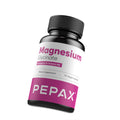
Magnesium glycinate is frequently preferred in clinical practice for patients with neurological symptoms because it combines high bioavailability with minimal gastrointestinal disturbance. The glycine moiety itself has inhibitory neurotransmitter properties, which may complement magnesium's NMDA receptor antagonism. For individuals experiencing stress-related vertigo or anxiety-predisposed dizziness, a formulation like PEPAX Magnesium Glycinate with Astragalus & B6 provides magnesium glycinate alongside vitamin B6, which supports GABA synthesis and neurotransmitter balance, and astragalus, a traditional adaptogen with emerging preclinical data on neuroprotection.
Timing is also relevant. Magnesium is generally absorbed more efficiently when taken with food, and divided dosing (morning and evening) may help maintain steadier serum levels. Some clinicians advise evening dosing for patients whose vertigo is accompanied by sleep disruption, given magnesium's documented effects on sleep architecture. Our article on Magnesium and Deep Sleep: How This Mineral Affects REM Cycles and Sleep Architecture details the evidence from Abbasi et al. (2012), who found that 500 mg magnesium daily improved sleep efficiency and melatonin regulation in elderly insomniacs.
Who Benefits Most from Magnesium Vertigo Supplementation
The evidence is not uniform across all vertigo subtypes. The strongest—though still preliminary—signal exists for three populations:
1. Meniere's disease patients with documented hypomagnesemia. Several small studies have found that Meniere's patients with low serum magnesium (<0.75 mmol/L) report greater symptom improvement with repletion than those with normal baseline levels. This suggests magnesium supplementation may be most useful as a targeted correction rather than a universal therapy.
2. Individuals with vestibular migraine. Vestibular migraine is increasingly recognized as a distinct diagnostic entity, and migraine pathophysiology shares mechanistic overlap with magnesium-responsive pathways: cortical spreading depression, NMDA receptor hyperexcitability, and vascular dysregulation. Patients with both headache and vertigo symptoms may represent a subgroup more likely to respond to magnesium.
3. Patients on thiazide diuretics or proton pump inhibitors. Both drug classes increase urinary magnesium wasting and are commonly prescribed to older adults—the same demographic most affected by balance disorders. Checking serum magnesium in these patients and repleting if deficient is standard clinical practice, though the specific impact on vertigo frequency has not been isolated in trials.
Conversely, patients with benign paroxysmal positional vertigo (BPPV)—the most common vertigo subtype—are unlikely to benefit from magnesium. BPPV is a mechanical disorder of otoconia displacement in the semicircular canals, and no plausible magnesium mechanism addresses this pathology. For these patients, canalith repositioning maneuvers (Epley maneuver) remain first-line.
Patients with thyroid dysfunction should also consider the broader metabolic picture. Hypothyroidism and Hashimoto's thyroiditis are associated with both magnesium deficiency and vestibular symptoms. Our article on Magnesium and Thyroid Function: Deficiency Risks in Hashimoto's and Hypothyroidism examines this intersection in more detail.
Practical Takeaways for Magnesium Vertigo Use
- Request a serum magnesium test before starting supplementation; repletion is most justified when deficiency is documented.
- Choose magnesium glycinate or magnesium citrate over oxide for better absorption and tolerability.
- Start with 200 mg elemental magnesium daily, divided into two doses, and titrate based on tolerance and symptom response.
- Allow 8–12 weeks of consistent supplementation before judging efficacy; vestibular compensation and mineral repletion are slow processes.
- Combine supplementation with first-line vertigo therapies (vestibular rehabilitation, dietary sodium restriction for Meniere's, canalith repositioning for BPPV) rather than replacing them.
- Monitor for diarrhea, hypotension, or excessive sedation—rare but dose-dependent side effects of magnesium excess.
The Bottom Line on Magnesium Vertigo Evidence
The connection between magnesium and vertigo is biologically plausible, mechanistically grounded, and supported by a small body of preliminary human data—primarily in Meniere's disease and vestibular migraine populations. However, this is based on preclinical evidence and limited interventional trials; no large, well-controlled RCT has established magnesium as a standalone treatment for vertigo. For patients with documented hypomagnesemia, stress-related vestibular symptoms, or comorbid migraine, a cautious trial of magnesium glycinate supplementation is reasonable. For others, it remains an unproven adjunct rather than an evidence-based standard of care.
References
- Abbasi B, et al. "The effect of magnesium supplementation on primary insomnia in elderly: A double-blind placebo-controlled clinical trial." Journal of Research in Medical Sciences. 2012;17(12):1161–1169. [Source]
- Boyle NB, et al. "The Effects of Magnesium Supplementation on Subjective Anxiety and Stress — A Systematic Review." Nutrients. 2017;9(5):429. [Source]
- Gröber U, et al. "Magnesium in Prevention and Therapy." Nutrients. 2015;7(9):8199–8226. [Source]
- DiNicolantonio JJ, et al. "Subclinical magnesium deficiency: a principal driver of cardiovascular disease and a public health crisis." Open Heart. 2018;5(1):e000668. [Source]
- Tarleton EK, et al. "Role of magnesium supplementation in the treatment of depression: A randomized clinical trial." PLOS ONE. 2017;12(6):e0180067. [Source]
Featured Product
PEPAX Magnesium Glycinate with Astragalus & B6Magnesium glycinate · Astragalus root adaptogen · Vitamin B6 · clinical dose · cGMP certified
Shop Now →
Further Reading
- Magnesium and Tinnitus: Can the Mineral Quiet the Ringing in Your Ears?
- Magnesium and Nerve Function: The Mineral's Role in Neuropathy and Nerve Excitability
- Magnesium and Deep Sleep: How This Mineral Affects REM Cycles and Sleep Architecture
- Magnesium and Thyroid Function: Deficiency Risks in Hashimoto's and Hypothyroidism