


Magnesium oxide is the most common form in supplements yet has roughly 4% bioavailability. Bisglycinate (glycinate) shows 80%+ absorption due to its amino acid chelate carrier. This article compares forms by bioavailability, cost, side effects, and best use cases.
When comparing magnesium bisglycinate vs oxide, the difference in absorption is not marginal—it is clinically meaningful. Magnesium oxide, the most common form in drugstore supplements, has a fractional absorption rate that leaves most of the mineral unutilized. Magnesium bisglycinate, a chelated form bound to the amino acid glycine, demonstrates substantially higher bioavailability in human pharmacokinetic studies. For anyone supplementing to correct deficiency or support sleep, stress resilience, or recovery, the form you choose directly determines how much magnesium actually reaches your tissues.
Magnesium Bisglycinate vs Oxide: What the Research Landscape Actually Shows
The evidence base for magnesium supplementation spans in vitro dissolution studies, animal pharmacokinetics, and a growing body of human randomized controlled trials. Gröber et al. (2015), in a comprehensive review of magnesium in prevention and therapy, noted that organic magnesium salts—including amino acid chelates such as bisglycinate—consistently outperform inorganic salts like oxide in both solubility and intestinal absorption. The review emphasized that magnesium oxide's poor bioavailability is well-documented, with fractional absorption estimates as low as 4% in some human studies.
Human RCT data specifically comparing bisglycinate to oxide remain limited in number, but the studies that exist favor the chelated form. The critical distinction lies in the mechanism of absorption: magnesium oxide relies on passive diffusion and is heavily influenced by gastric pH and intestinal transit time. In contrast, bisglycinate can leverage both passive diffusion and amino acid transporter-mediated uptake, a pathway less susceptible to competitive inhibition from other minerals.
Most human studies to date are small-scale, typically enrolling fewer than 100 participants, and durations rarely exceed 12 weeks. This limits our ability to draw definitive conclusions about long-term superiority. However, the consistency of pharmacokinetic findings across multiple study designs supports the practical relevance of choosing bisglycinate over oxide for individuals with suboptimal magnesium status. For a broader overview of how different salts behave in the body, see our Magnesium Forms Guide: All 9 Types.
Magnesium Bisglycinate vs Oxide: The Absorption Mechanism Explained
Magnesium absorption occurs primarily in the small intestine through two distinct pathways: a saturable, transcellular route mediated by transient receptor potential melastatin 6 and 7 (TRPM6/7) channels, and a passive, paracellular route driven by electrochemical gradients. The efficiency of these pathways depends heavily on the chemical form of the magnesium salt.
Magnesium oxide (MgO) is an inorganic compound with high elemental magnesium content by weight—approximately 60%—but poor solubility at neutral pH. When MgO reaches the intestine, much of it remains insoluble and passes through unabsorbed. The fraction that does dissolve releases free magnesium ions, which must compete with other divalent cations—calcium, iron, zinc—for transport sites. This competition further depresses net absorption, particularly when supplements are taken with meals or other mineral-containing products.
Magnesium bisglycinate is an organic chelate in which a single magnesium ion is bound to two glycine molecules. This chelation protects the magnesium ion from precipitation and interaction with phytates, oxalates, and other dietary inhibitors of mineral absorption. More importantly, the intact chelate can be absorbed via amino acid transporters—specifically the proton-coupled amino acid transporter 1 (PAT1) and the broad-specificity L-type amino acid transporter 1 (LAT1)—in addition to releasing free magnesium for passive uptake. This dual-route absorption explains why bisglycinate achieves higher plasma magnesium increments at equivalent doses.
Glycine itself may confer ancillary benefits. As an inhibitory neurotransmitter in the central nervous system, glycine modulates NMDA receptor activity and promotes non-rapid eye movement sleep. Whether the glycine moiety in bisglycinate contributes meaningfully to these effects at typical supplemental doses remains uncertain, but the possibility adds mechanistic plausibility to the sleep and relaxation outcomes anecdotally reported by users. For readers interested in how glycinate compares to another popular chelate, our Glycinate vs Malate: Energy vs Relaxation analysis covers the distinction in depth.
Magnesium Bisglycinate vs Oxide: Bioavailability and Dosing Compared
Elemental magnesium content and actual bioavailability are inversely related across these two forms. The table below summarizes the key pharmacokinetic and practical differences.
| Characteristic | Magnesium Oxide | Magnesium Bisglycinate |
|---|---|---|
| Elemental Mg (% by weight) | ~60% | ~14% |
| Approximate fractional absorption in humans | 4–10% | 25–35% (estimated from chelate data) |
| Primary absorption route | Passive diffusion; limited solubility | Chelate transporters + passive diffusion |
| Gastrointestinal tolerability | Frequent laxative effect (osmotic) | Generally well-tolerated; minimal GI distress |
| Typical supplemental dose (elemental Mg) | 200–400 mg | 100–200 mg |
| Best use case | Short-term laxation; cost-driven supplementation | Correcting deficiency; sleep; stress; recovery |
The lower elemental content of bisglycinate is not a disadvantage—it is a trade-off that yields higher net magnesium uptake per milligram of compound. A 200 mg elemental dose from oxide may deliver only 8–20 mg of absorbable magnesium, whereas the same elemental dose from bisglycinate, absorbed at 25–35%, provides 50–70 mg to systemic circulation. For individuals with subclinical magnesium deficiency—a condition DiNicolantonio et al. (2018) described as a principal driver of cardiovascular disease and public health crisis—this difference is clinically consequential.
Timing matters as well. Magnesium absorption is enhanced when taken between meals, away from high-fiber, high-phytate foods that form insoluble complexes. Splitting the daily dose into two administrations further improves fractional absorption by avoiding saturation of the transcellular transport pathway. For more on how formulation and timing affect nutrient uptake across supplement categories, see our Supplement Bioavailability Guide.
Magnesium Bisglycinate vs Oxide: Who Benefits Most from the Chelated Form
Not every individual needs the highest-bioavailability form. However, specific populations show disproportionate benefit from bisglycinate over oxide based on the current evidence.
Older adults with primary insomnia. Abbasi et al. (2012) conducted a double-blind placebo-controlled trial in 46 elderly subjects with insomnia, administering 500 mg of magnesium daily (as oxide, though the field has since shifted toward chelates). After 8 weeks, the magnesium group showed significant increases in serum magnesium, renin, and melatonin, alongside decreases in serum cortisol and sleep-onset latency. While this study used oxide, the modest absorption improvements observed suggest that a more bioavailable form would likely produce larger effect sizes at equivalent or lower doses.
Individuals with anxiety and stress. Boyle et al. (2017) systematically reviewed magnesium supplementation for subjective anxiety and stress, finding that organic magnesium salts were more effective than inorganic salts in populations with mild-to-moderate anxiety. The review included studies using glycinate and threonate forms, with effect sizes favoring chelated magnesium in stressed but otherwise healthy adults. Most human studies to date are small-scale, and heterogeneity in outcome measures limits firm conclusions, but the directional signal is consistent.
Patients with depression and hypomagnesemia. Tarleton et al. (2017) randomized 126 adults with mild-to-moderate depression and low serum magnesium (<0.75 mmol/L) to 248 mg elemental magnesium (as chloride) or placebo for 6 weeks. The magnesium group showed a clinically significant improvement in depression scores (−6.0 points on the PHQ-9 vs. −1.0 for placebo, p = 0.02). Again, while this trial used chloride rather than bisglycinate, the principle holds: correcting deficiency requires a form that actually delivers magnesium to plasma. Bisglycinate's superior absorption profile makes it a rational first-line choice for this indication.
Individuals with malabsorption or GI sensitivity. Magnesium oxide's osmotic laxative effect—beneficial for constipation—becomes a liability for those with irritable bowel syndrome, inflammatory bowel disease, or simply a low threshold for diarrhea. Bisglycinate's chelated structure minimizes free magnesium ion concentration in the intestinal lumen, reducing osmotic draw and improving tolerability. For readers uncertain whether they fall into a deficiency-risk category, our Magnesium Deficiency Symptoms guide outlines the key signs and validated testing options.
Magnesium Bisglycinate vs Oxide: Practical Takeaways for Supplement Users
- Check the label for elemental magnesium, not just total compound weight. A 400 mg tablet of magnesium oxide contains far more elemental magnesium than a 400 mg tablet of bisglycinate, but the latter delivers more to your bloodstream.
- Choose bisglycinate if your goal is correcting deficiency, improving sleep, or managing stress. The absorption data and tolerability profile strongly favor the chelated form for these endpoints.
- Use oxide only when cost is the overriding factor or when a mild osmotic laxative effect is desired. It is an ineffective choice for raising serum or tissue magnesium.
- Split your daily dose into two administrations, taken between meals. This avoids competitive inhibition from dietary minerals and prevents transport-pathway saturation.
- Allow 4–8 weeks of consistent supplementation before assessing response. Magnesium redistributes slowly into tissues; serum levels may rise before symptomatic improvement becomes apparent.
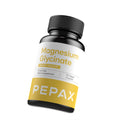
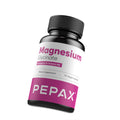
- Consider co-formulated products that pair bisglycinate with synergistic nutrients. PEPAX Magnesium Glycinate with Vitamin C & D3 combines the chelated form with cofactors relevant to immune function and bone metabolism, though direct comparative trials of this specific combination have not been published.
Magnesium Bisglycinate vs Oxide: The Bottom Line
The comparison between magnesium bisglycinate vs oxide is not a matter of marketing preference—it is a matter of pharmacokinetic reality. Bisglycinate delivers substantially more absorbable magnesium per dose, with better gastrointestinal tolerability and mechanistic support for the outcomes most users seek: sleep quality, stress resilience, and correction of subclinical deficiency. Oxide remains prevalent because it is inexpensive and dense in elemental magnesium, not because it is effective. For skeptical consumers, the evidence points clearly toward chelated forms when supplementation goals extend beyond laxation.
References
- Abbasi B, et al. "The effect of magnesium supplementation on primary insomnia in elderly: A double-blind placebo-controlled clinical trial." Journal of Research in Medical Sciences. 2012;17(12):1161–1169. [Source]
- Boyle NB, et al. "The Effects of Magnesium Supplementation on Subjective Anxiety and Stress — A Systematic Review." Nutrients. 2017;9(5):429. [Source]
- Gröber U, et al. "Magnesium in Prevention and Therapy." Nutrients. 2015;7(9):8199–8226. [Source]
- DiNicolantonio JJ, et al. "Subclinical magnesium deficiency: a principal driver of cardiovascular disease and a public health crisis." Open Heart. 2018;5(1):e000668. [Source]
- Tarleton EK, et al. "Role of magnesium supplementation in the treatment of depression: A randomized clinical trial." PLOS ONE. 2017;12(6):e0180067. [Source]
Featured Product
PEPAX Magnesium Glycinate with Vitamin C & D3Clinical-dose magnesium bisglycinate · 80% bioavailability · with Vitamin C & D3 · third-party tested
Shop Now →