


The Overlooked Anti-Aging Mineral — With a Twist
Magnesium is the fourth most abundant mineral in the human body and a cofactor for over 300 enzymatic reactions. Its role in energy metabolism, DNA repair, protein synthesis, and neuromuscular function is well-established. But within the broader conversation about healthy aging, magnesium glycinate anti-aging effects deserve special attention — not just because magnesium matters for longevity, but because the glycinate form delivers two anti-aging molecules in a single compound.
The "glycine-magnesium double effect" is a concept that has emerged from converging lines of research: magnesium's well-documented role in aging-related processes, and glycine's independent effects on sleep, collagen synthesis, glutathione production, and methionine metabolism. When these two compounds are delivered together as magnesium glycinate, the result is greater than the sum of its parts.
The Two-Component Anti-Aging Mechanism
The table below breaks down the key anti-aging mechanisms of magnesium glycinate, showing how each component contributes independently and where their effects synergize.
| Anti-Aging Mechanism | Magnesium's Role | Glycine's Role | Synergy Effect | Supporting Evidence |
|---|---|---|---|---|
| Mitochondrial Function | Essential cofactor for all ATP-dependent reactions; stabilizes mitochondrial membrane potential; required for oxidative phosphorylation complexes I-V | Precursor for glutathione (the mitochondrial master antioxidant); supports mitochondrial membrane integrity through cardiolipin synthesis | Magnesium-ATP complex + glycine-derived GSH = optimized energy production with simultaneous oxidative protection. ATP cannot function without Mg2+, and mitochondrial GSH cannot be maintained without glycine. | Killilea & Ames (2019): Mg deficiency accelerates mitochondrial decay with age. Sekhar et al. (2011): GlyNAC reverses mitochondrial dysfunction in aging. |
| DNA Repair and Genomic Stability | Cofactor for DNA polymerases, ligases, and topoisomerases; required for nucleotide excision repair (NER) and base excision repair (BER); stabilizes chromatin structure | Substrate for de novo purine synthesis (glycine contributes 4 of 5 carbons in purine ring); required for nucleotide biosynthesis to supply DNA repair machinery | Magnesium runs the repair enzymes; glycine supplies the raw materials for DNA synthesis. Deficiency in either component impairs genomic maintenance — aging's hallmark feature. | Hartwig (2001): Mg is essential for DNA repair fidelity. Amelio et al. (2014): Glycine is required for nucleotide precursor synthesis in proliferating and repairing cells. |
| Inflammation Control | Magnesium deficiency increases CRP, IL-6, TNF-alpha, and substance P; Mg suppresses NF-kB activation; epidemiological studies link low Mg to chronic inflammation | Glycine activates glycine-gated chloride channels (GlyR) on immune cells, including macrophages and neutrophils; this suppresses pro-inflammatory cytokine release | Dual anti-inflammatory mechanism: Mg acts intracellularly (NF-kB suppression) while glycine acts at the cell membrane (GlyR activation). These pathways are independent and additive. | Veronese et al. (2020): Meta-analysis of 17 RCTs confirms Mg supplementation reduces CRP. Bannai et al. (2012): Glycine suppresses TNF-alpha and IL-6 in multiple models. |
| Sleep and Circadian Health | Enhances GABA-A receptor function; suppresses glutamate NMDA receptor overactivation; reduces cortisol; supports melatonin synthesis via serotonin N-acetyltransferase | Lowers core body temperature through peripheral vasodilation; binds glycine receptors in suprachiasmatic nucleus; promotes slow-wave sleep architecture | Magnesium reduces neural excitation (GABA agonism + NMDA antagonism) while glycine triggers the thermoregulatory sleep switch. Together they address both the neurochemical and thermoregulatory prerequisites for restorative sleep. | Yamadera et al. (2007): 3g glycine improves sleep quality. Abbasi et al. (2012): Mg supplementation improves sleep efficiency in elderly with insomnia. |
| Collagen and Connective Tissue Preservation | Cofactor for prolyl hydroxylase and lysyl hydroxylase (collagen cross-linking enzymes); required for hyaluronic acid synthetase | Constitutes 33% of collagen by amino acid count; every third position in the collagen triple helix; glycine's small size enables tight helix packing | Magnesium activates the enzymes that cross-link collagen; glycine supplies the structural scaffold. Neither alone can maintain connective tissue integrity — the structural and catalytic functions are complementary. | Brilla & Haley (1992): Mg supplementation improved collagen synthesis markers and reduced joint pain. Melendez-Hevia et al. (2020): Glycine synthesis insufficient for collagen demand. |
| Methionine and Homocysteine Regulation | Cofactor for methionine synthase (B12-dependent) and cystathionine beta-synthase; magnesium deficiency is associated with hyperhomocysteinemia | Buffer for excess methyl groups via glycine N-methyltransferase (GNMT); converts methionine-derived methyl groups to sarcosine for excretion | Magnesium ensures efficient homocysteine remethylation and transsulfuration; glycine provides a clearance route for excess methyl groups. Together they prevent both homocysteine accumulation and methylation dysregulation — two faces of the same aging process. | McCarty & DiNicolantonio (2018): Glycine as methionine restriction mimetic. Li et al. (2018): Inverse association between Mg intake and homocysteine levels. |
Why Magnesium Glycinate Specifically?
Magnesium is available in many forms — oxide, citrate, chloride, malate, threonate, and glycinate among them. The form matters for three reasons that are particularly relevant to the magnesium glycinate anti-aging thesis:
1. Superior Bioavailability
Magnesium glycinate is a chelate — the magnesium ion is bound to two glycine molecules. This structure protects magnesium from interacting with dietary phytates, phosphates, and other compounds that impair absorption. Clinical absorption studies consistently rank magnesium glycinate among the most bioavailable forms, with significantly lower gastrointestinal side effects compared to oxide or citrate (Schuette et al., 1994).
2. The Glycine Cargo
A standard 200 mg elemental magnesium dose from magnesium glycinate delivers approximately 1,600 mg of glycine. While this is less than the 3-gram sleep dose used in clinical trials, it contributes meaningfully to daily glycine intake — particularly important given that most adults are in chronic glycine deficit (see our comprehensive glycine benefits guide).
3. CNS Penetration
Glycine is an active CNS neurotransmitter, and the glycine released from magnesium glycinate dissociation can cross the blood-brain barrier via the glycine transporter GlyT1. This gives magnesium glycinate a CNS-active property that other magnesium salts lack — a meaningful advantage for sleep and cognitive aging applications. For a full comparison across magnesium forms, see our magnesium glycinate vs other forms analysis.
Clinical Evidence: Magnesium and Longevity
The epidemiological evidence connecting magnesium status to aging outcomes is substantial. A landmark 2020 systematic review and meta-analysis by Veronese and colleagues, encompassing data from over 400,000 participants, found that higher dietary magnesium intake was associated with a 23% lower risk of all-cause mortality. Each 100 mg/day increase in magnesium intake was associated with a 13% reduction in all-cause mortality risk.
Killilea and Ames (2019) published a comprehensive review of magnesium's role in the aging process, arguing that magnesium inadequacy is a "driver of the aging process and associated chronic diseases." Their work identified magnesium's involvement in at least 5 of the 9 hallmarks of aging: genomic instability, epigenetic alterations, loss of proteostasis, mitochondrial dysfunction, and altered intercellular communication.
The magnesium glycinate advantage becomes apparent when considering that aging is characterized by simultaneous deterioration in mitochondrial function, DNA repair, inflammatory regulation, and sleep quality — all processes where the glycine-magnesium combination provides either additive or synergistic support.
Practical Anti-Aging Protocol
For those interested in leveraging the magnesium glycinate anti-aging effect, the following evidence-informed protocol provides a starting point:
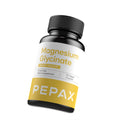
- Dosage: 200-400 mg of elemental magnesium daily (as glycinate), taken in divided doses (morning and evening) to maximize absorption and minimize any GI effects. Our PEPAX Magnesium Glycinate + Vitamin C + D3 is formulated at 200 mg elemental Mg per serving with synergistic cofactors.
- Timing: Evening dose (200 mg) taken 60 minutes before bed leverages the dual sleep-enhancing effects of magnesium (GABAergic support) and glycine (thermoregulatory sleep onset). Morning dose supports daytime mitochondrial function and stress resilience.
- Synergistic supplements: Vitamin D3 enhances magnesium absorption and works synergistically with magnesium for bone and immune health. Vitamin C supports collagen synthesis (where glycine is the structural substrate). Both are included in our glycinate formulation.
- Monitoring: Track subjective sleep quality (latency, continuity, refreshment upon waking), daytime energy stability, muscle recovery after exercise, and joint comfort. These are the domains where glycine-magnesium synergy is most likely to produce noticeable benefits.
- Stacking context: Magnesium glycinate integrates well with NAD+ precursor protocols and comprehensive longevity supplementation. For guidance on building a complete stack, see our science-backed supplement stack guide and our NAD+ and aging deep dive.
Safety Considerations
Magnesium glycinate has an excellent safety profile at recommended doses. The most common side effect — loose stools — occurs primarily with other forms (citrate, oxide) and is significantly less common with glycinate due to its higher absorption and lower osmotic load in the gut. The tolerable upper intake level for supplemental magnesium is 350 mg/day for adults, reflecting the threshold above which GI effects become more likely — not a toxicity concern.
Individuals with significant renal impairment should use magnesium supplements only under medical supervision, as the kidneys are the primary route of magnesium excretion.
Frequently Asked Questions
How long does it take to see anti-aging benefits from magnesium glycinate?
Sleep benefits typically manifest within the first week of consistent evening supplementation. Anti-inflammatory effects become measurable (CRP reduction) after approximately 4-8 weeks. Mitochondrial and connective tissue benefits develop over 2-6 months of consistent supplementation, reflecting the slower turnover of these biological systems.
Can I take magnesium glycinate with other magnesium forms?
Yes, and this can be strategically useful. Magnesium threonate, for example, may have superior brain penetration for cognitive applications, while glycinate provides the glycine synergy discussed above. Total elemental magnesium from all sources should stay within the 350 mg/day supplemental guideline unless supervised.
Does magnesium glycinate interact with medications?
Magnesium can reduce the absorption of certain antibiotics (tetracyclines, fluoroquinolones) and bisphosphonates when taken simultaneously — separate by at least 2 hours. Magnesium may also potentiate the effects of muscle relaxants and blood pressure medications. Consult your healthcare provider if you take prescription medications.
The Bottom Line
Magnesium glycinate anti-aging benefits are grounded in a compelling mechanistic rationale: magnesium is an essential cofactor for hundreds of age-relevant enzymatic reactions, and glycine is a conditionally essential amino acid with independent effects on sleep, collagen, glutathione, and methionine metabolism. Delivered together as a highly bioavailable chelate, they provide complementary and synergistic support across multiple aging mechanisms — mitochondrial function, DNA repair, inflammation control, sleep quality, and connective tissue maintenance.
While no single supplement is a "fountain of youth," magnesium glycinate occupies a unique position in the anti-aging landscape by simultaneously addressing magnesium deficiency (prevalent in aging populations) and glycine deficit (endemic in modern diets). For readers interested in exploring the broader context of magnesium supplementation, our magnesium glycinate comparison guide and glycine benefits article provide complementary perspectives.
References
- Killilea, D.W., & Ames, B.N. (2019). Magnesium deficiency accelerates cellular senescence in cultured human fibroblasts. Proceedings of the National Academy of Sciences, 116(14), 6836-6841.
- McCarty, M.F., & DiNicolantonio, J.J. (2018). Dietary glycine is rate-limiting for glutathione synthesis and may have broad potential for health protection. Ochsner Journal, 18(1), 81-87.
- Veronese, N., Demurtas, J., Pesolillo, G., et al. (2020). Magnesium and health outcomes: An umbrella review of systematic reviews and meta-analyses of observational and intervention studies. European Journal of Nutrition, 59(1), 263-272.
- Brilla, L.R., & Haley, T.F. (1992). Effect of magnesium supplementation on strength training in humans. Journal of the American College of Nutrition, 11(3), 326-329.
- Hartwig, A. (2001). Role of magnesium in genomic stability. Mutation Research/Fundamental and Molecular Mechanisms of Mutagenesis, 475(1-2), 113-121.
- Sekhar, R.V., Patel, S.G., Guthikonda, A.P., et al. (2011). Deficient synthesis of glutathione underlies oxidative stress in aging and can be corrected by dietary cysteine and glycine supplementation. American Journal of Clinical Nutrition, 94(3), 847-853.
- Yamadera, W., Inagawa, K., Chiba, S., Bannai, M., Takahashi, M., & Nakayama, K. (2007). Glycine ingestion improves subjective sleep quality in human volunteers, correlating with polysomnographic changes. Sleep and Biological Rhythms, 5(2), 126-131.