


Review clinical evidence on how magnesium supplementation may support women during menopause, addressing hot flashes, sleep disruption, and mood changes.
Magnesium and Menopause is a clinically relevant topic because sleep disruption, perceived stress, fatigue, and cardiometabolic risk often become more noticeable during the menopausal transition. The important distinction is that magnesium has plausible roles in these symptoms, but the provided clinical literature does not establish magnesium as a proven treatment for menopausal hot flashes or as a replacement for menopause-focused care.
Magnesium and Menopause: What the Research Landscape Actually Shows
The direct evidence for magnesium as a menopause treatment is limited. None of the clinical trials in the reference list tested magnesium specifically for vasomotor symptoms in perimenopausal or postmenopausal women, such as objectively measured hot-flash frequency, hot-flash severity, estradiol, follicle-stimulating hormone (FSH), or luteinizing hormone (LH). That matters: evidence from insomnia, stress, or depression studies cannot be treated as proof that a supplement reduces hot flashes.
The most relevant human evidence is indirect. Magnesium supplementation has been studied in older adults with primary insomnia, adults with mild-to-moderate depression, and mixed populations reporting anxiety or stress. These outcomes overlap with common concerns during hormonal transition, particularly fragmented sleep, lower resilience, and mood changes, but they are not interchangeable with menopause-specific outcomes.
In a double-blind, placebo-controlled trial, Abbasi et al. (2012) studied 46 older adults with primary insomnia. Participants received 500 mg/day of magnesium for eight weeks. Compared with placebo, the magnesium group showed improvements in subjective insomnia measures and sleep-related parameters, including sleep efficiency, sleep onset latency, early-morning awakening, and serum melatonin; serum cortisol also decreased. This is useful clinical context for menopause-related sleep complaints, but the participants were elderly adults with primary insomnia rather than women selected for menopause symptoms.
For mood, Tarleton et al. (2017) conducted a randomized crossover trial in 126 adults with mild-to-moderate depression. Participants used 248 mg of elemental magnesium per day as magnesium chloride for six weeks. The study reported a mean improvement of 6.0 points in Patient Health Questionnaire-9 (PHQ-9) depression scores and 4.5 points in Generalized Anxiety Disorders-7 (GAD-7) anxiety scores compared with control periods. These are clinically meaningful symptom measures, but this was not a menopause trial and cannot tell us whether magnesium changes reproductive hormone dynamics.
A systematic review by Boyle et al. (2017) concluded that the available evidence suggested potential benefit for subjective anxiety and stress, while also emphasizing heterogeneity in study designs, magnesium forms, doses, baseline nutrient status, and outcome measures. Most human studies to date are small-scale, and many do not establish whether people with lower magnesium status benefit more than people who already meet their needs through diet.
For readers considering magnesium and menopause, the evidence hierarchy is straightforward: direct menopause evidence is insufficient; evidence for sleep and mood-related outcomes is suggestive but condition-specific; and mechanistic plausibility does not prove symptom relief. This is not a reason to dismiss magnesium, but it is a reason to set realistic expectations.
Magnesium and Menopause Symptoms: Why Biology Makes the Question Plausible
Magnesium is an essential cofactor in energy metabolism, neuromuscular signaling, and stress-related physiology. It participates in hundreds of enzymatic reactions, including reactions involving adenosine triphosphate (ATP), the molecule cells use to transfer energy. ATP is commonly bound to magnesium in biological systems, so magnesium availability is relevant to normal cellular energy handling.
Magnesium also contributes to ion-channel regulation and neuronal excitability. It influences calcium handling, supports normal muscle and nerve function, and modulates N-methyl-D-aspartate (NMDA) receptor activity. These mechanisms help explain why inadequate magnesium intake or status may be discussed in relation to muscle tension, restlessness, sleep quality, and stress perception. They do not demonstrate that magnesium corrects the estrogen decline that drives the menopausal transition.
Estrogen changes can affect thermoregulation, sleep continuity, mood, bone turnover, and vascular function. Hot flashes are generally understood as vasomotor events associated with altered hypothalamic thermoregulatory sensitivity during declining or fluctuating estrogen exposure. Magnesium does not function as estrogen, and there is no basis in the cited studies to claim that it normalizes estradiol, suppresses FSH, or directly prevents vasomotor episodes.
The more defensible hypothesis is narrower: if a woman entering perimenopause has low dietary magnesium intake, gastrointestinal losses, medication-related depletion, or suboptimal status, correcting that gap may support systems involved in sleep, stress response, and normal neuromuscular function. DiNicolantonio et al. (2018) reviewed concerns about subclinical magnesium deficiency and its potential cardiovascular implications, while noting that serum magnesium alone may not fully reflect total-body magnesium status.
That measurement issue is clinically important. Serum magnesium is tightly regulated and represents only a small fraction of total body magnesium. A “normal” serum result does not always exclude lower intracellular stores, yet there is also no single universally accepted test that precisely defines magnesium status in every outpatient setting. Dietary history, symptoms, medications, kidney function, and the broader clinical picture are often more informative than interpreting one isolated result.
Magnesium may also be relevant to the sleep–stress loop that makes menopausal symptoms harder to tolerate. Repeated nighttime awakenings can heighten daytime stress; elevated stress can then worsen sleep initiation and perceived symptom burden. Readers interested in that pathway can review our discussion of magnesium and cortisol regulation, while keeping in mind that cortisol biology is complex and a single supplement is not a complete stress intervention.
Magnesium and Menopause Sleep: What Human Trials Can and Cannot Tell Us
Sleep is the menopause-related concern with the clearest indirect clinical relevance for magnesium. Perimenopause and postmenopause are associated with more frequent awakenings, difficulty returning to sleep, and sleep disruption caused by hot flashes or night sweats. Yet a treatment that improves insomnia measures is not automatically a treatment for nocturnal vasomotor symptoms.
Abbasi et al. (2012) provides the strongest study in this reference set for sleep outcomes. In 46 older adults with primary insomnia, 500 mg/day of magnesium over eight weeks was associated with improved Insomnia Severity Index scores, sleep efficiency, sleep time, sleep-onset latency, and early-morning awakening compared with placebo. The investigators also reported higher serum melatonin and lower serum cortisol in the magnesium group.
Several limitations should shape interpretation. The sample was small, the study duration was only eight weeks, and the population was not limited to menopausal women. Sleep outcomes included self-reported measures, which are valuable but not identical to polysomnography or actigraphy. The trial therefore supports the possibility that magnesium can help some people with insomnia symptoms; it does not establish a specific effect on rapid eye movement (REM) sleep, hot-flash awakenings, or menopausal insomnia.
Magnesium and menopause sleep questions also require basic clinical triage. Snoring, witnessed pauses in breathing, morning headaches, severe daytime sleepiness, restless legs symptoms, new palpitations, or persistent insomnia deserve evaluation rather than automatic supplementation. Obstructive sleep apnea, iron deficiency, thyroid disease, depression, anxiety disorders, alcohol use, medication effects, and vasomotor symptoms can all contribute to poor sleep during midlife.
When sleep disruption is mild and there are no red flags, magnesium may be one component of a lower-risk routine alongside regular wake times, reduced late-evening alcohol, caffeine timing, a cool sleep environment, and evidence-based insomnia care when needed. For a more detailed explanation of sleep architecture, see our article on magnesium and deep sleep and REM cycles.
| Clinical question | Evidence from the provided studies | What it means during menopause |
|---|---|---|
| Primary insomnia | Abbasi et al. (2012): 46 older adults; 500 mg/day for 8 weeks; improved subjective sleep measures and sleep-related parameters. | Suggests possible support for insomnia symptoms, but not proven relief of hot-flash awakenings. |
| Depressive and anxiety symptoms | Tarleton et al. (2017): 126 adults; 248 mg elemental magnesium/day as magnesium chloride for 6 weeks; improved PHQ-9 and GAD-7 scores. | Relevant to mood symptoms, but not specific to perimenopause or postmenopause. |
| Hot flashes and night sweats | No menopause-specific hot-flash RCT is included in the provided reference list. | Do not assume magnesium reduces vasomotor symptoms without direct evidence. |
| Hormone transition | No cited trial demonstrates changes in estradiol, FSH, LH, or progesterone from magnesium supplementation. | Magnesium is nutritional support, not hormone therapy. |
Magnesium and Menopause: Forms, Doses, and Safety Considerations
The best magnesium form and dose depend on tolerance, elemental magnesium content, medications, and the symptom being addressed. “Magnesium” on a front label can be misleading because different salts provide different proportions of elemental magnesium. A label should state both the compound, such as magnesium glycinate or magnesium chloride, and the amount of elemental magnesium per serving.
The provided trials used different forms and doses. Abbasi et al. (2012) used 500 mg/day of magnesium in older adults with insomnia, while Tarleton et al. (2017) used 248 mg/day of elemental magnesium as magnesium chloride. Those results should not be treated as a universal dosing prescription, particularly for people with kidney disease, substantial gastrointestinal sensitivity, or complex medication regimens.
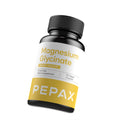
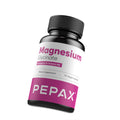
Magnesium glycinate is commonly chosen by people who want a form that is generally well tolerated from a gastrointestinal perspective, although the cited studies do not prove that glycinate is superior for menopause symptoms. A product such as PEPAX Magnesium Glycinate with Astragalus & B6 may fit a routine focused on stress and energy support, but its value should be assessed by the total elemental magnesium provided, individual tolerance, and whether the broader formula is appropriate for the person.
Astragalus is traditionally used as an adaptogenic botanical, but the references provided here do not establish that astragalus treats hot flashes, changes menopause hormones, or improves menopause-specific outcomes. Vitamin B6 participates in amino-acid metabolism and neurotransmitter synthesis, but adding B6 does not turn magnesium into a proven vasomotor therapy. Combination products should be evaluated ingredient by ingredient rather than assumed to have the same outcomes as a magnesium-only clinical trial.
Supplemental magnesium can cause loose stools, abdominal cramping, or nausea, especially with higher doses or less well tolerated forms. The risk of clinically significant magnesium accumulation is higher with impaired kidney function because the kidneys regulate magnesium excretion. People with chronic kidney disease should consult a qualified clinician before using a magnesium supplement unless they have been specifically advised otherwise.
Medication timing also matters. Magnesium can interfere with absorption of certain oral medications, including some antibiotics and thyroid hormone replacement. Separation by several hours is often used in practice, but the appropriate interval depends on the medication; confirm it with a pharmacist or prescriber. Do not use magnesium supplements to self-manage chest pain, new arrhythmia symptoms, severe weakness, or unexplained neurological symptoms.
Who May Benefit Most From Magnesium During Menopause?
The most plausible candidates are people with a likely nutrition gap or a symptom pattern that overlaps with studied magnesium outcomes. This does not mean every woman in perimenopause needs a supplement. It means the expected benefit is more reasonable when there is a clear rationale rather than a vague hope that magnesium will solve all hormonal-transition symptoms.
One group is women with sleep-onset difficulty, frequent early waking, or nonrestorative sleep who have already addressed obvious contributors such as late caffeine, alcohol, irregular sleep timing, and a hot bedroom. The insomnia findings from Abbasi et al. (2012) make this a reasonable area for a monitored trial, especially when sleep symptoms are mild to moderate and a clinician has not identified another urgent cause.
A second group is people with low magnesium intake. Food sources include legumes, nuts, seeds, whole grains, leafy green vegetables, and some mineral waters. Restrictive diets, low overall food intake, chronic gastrointestinal issues, and high reliance on highly refined foods may reduce intake. Dietary improvement remains foundational because it brings fiber, potassium, protein, and other nutrients that capsules alone do not provide.
A third group is women whose menopausal transition coincides with increased perceived stress or mild mood symptoms. Tarleton et al. (2017) and Boyle et al. (2017) support cautious interest in magnesium for symptom domains related to depression, anxiety, and stress. They do not justify using a supplement instead of assessment for major depression, suicidal thoughts, panic disorder, trauma-related symptoms, or severe functional decline.
Women with persistent heavy bleeding in perimenopause need a different conversation. Magnesium may be part of general nutrition, but heavy or prolonged bleeding warrants clinical evaluation because anemia, fibroids, endometrial pathology, thyroid disease, and other conditions can drive fatigue and sleep disruption. Our article on magnesium for PMS and menstrual cramps addresses reproductive-age menstrual symptoms, but menstrual-cramp evidence should not be extrapolated automatically to menopausal vasomotor symptoms.
Magnesium and Menopause: Practical Takeaways for Hot Flashes, Sleep, and Stress
Magnesium can be approached as targeted nutritional support, not as a substitute for evidence-based menopause treatment. If hot flashes, night sweats, insomnia, or mood symptoms are affecting daily life, it is reasonable to discuss the full symptom pattern with a clinician. Menopausal hormone therapy and nonhormonal options have separate evidence bases and require individualized risk assessment.
- Do not describe magnesium as a proven treatment for hot flashes: the provided references contain no menopause-specific randomized controlled trial showing reduced vasomotor symptom frequency or severity.
- Consider sleep evidence separately: in 46 older adults with primary insomnia, 500 mg/day of magnesium for eight weeks improved several sleep measures in Abbasi et al. (2012).
- Check the label for elemental magnesium, not just the total weight of a magnesium compound or blend.
- Start with diet when possible: nuts, seeds, legumes, leafy greens, and whole grains improve overall nutrient quality alongside magnesium intake.
- Review kidney function and medication timing before supplementing, especially with chronic kidney disease, thyroid medication, or certain antibiotics.
- Track one or two measurable outcomes—such as sleep-onset latency, number of awakenings, PHQ-9 score, or hot-flash diary entries—for several weeks rather than judging benefit from a single night.
A symptom diary is especially useful for separating causes. Record bedtime, awakenings, alcohol and caffeine intake, exercise, medication changes, menstrual pattern if applicable, night sweats, and daytime function. If a magnesium intervention is helpful, the pattern should be consistent enough to detect rather than based solely on expectation or a brief fluctuation in symptoms.
For people choosing a glycinate-based supplement, a formulation such as PEPAX Magnesium Glycinate with Astragalus & B6 should still be used within this evidence-aware framework. The goal is to support a sensible routine where magnesium is appropriate, not to imply that a blended supplement has been clinically proven to treat menopause itself.
Magnesium and Menopause: The Bottom Line on Evidence
Magnesium and menopause are connected most convincingly through sleep, stress, nutritional adequacy, and general health—not through proven correction of hormonal transition or hot flashes. Small human trials support possible benefits for insomnia and mood-related outcomes in non-menopause populations, while direct evidence for vasomotor symptoms remains insufficient.
For women with likely low intake or sleep and stress symptoms, magnesium may be a reasonable, monitored adjunct after considering safety and other causes. Persistent or severe hot flashes, mood changes, bleeding changes, or insomnia deserve menopause-focused clinical evaluation rather than relying on supplementation alone.
References
- Abbasi B, et al. "The effect of magnesium supplementation on primary insomnia in elderly: A double-blind placebo-controlled clinical trial." Journal of Research in Medical Sciences. 2012;17(12):1161–1169. [Source]
- Boyle NB, et al. "The Effects of Magnesium Supplementation on Subjective Anxiety and Stress — A Systematic Review." Nutrients. 2017;9(5):429. [Source]
- Gröber U, et al. "Magnesium in Prevention and Therapy." Nutrients. 2015;7(9):8199–8226. [Source]
- DiNicolantonio JJ, et al. "Subclinical magnesium deficiency: a principal driver of cardiovascular disease and a public health crisis." Open Heart. 2018;5(1):e000668. [Source]
- Tarleton EK, et al. "Role of magnesium supplementation in the treatment of depression: A randomized clinical trial." PLOS ONE. 2017;12(6):e0180067. [Source]
Featured Product
PEPAX Magnesium Glycinate with Astragalus & B6Magnesium glycinate · Astragalus root adaptogen · Vitamin B6 · clinical dose · cGMP certified
Shop Now →